


The 1987 movie Tom Hanks always regretted: “There are problems with it”

Adaptations are part and parcel of the film business, and like almost every other actor of mainstream renown, Tom Hanks has starred in more than his fair share.
It’s been an inconsistent association, though, ranging from the Academy Award-winning cultural juggernaut that was the literary adaptation Forrest Gump to the self-proclaimed “hooey” of Ron Howard’s mystery trilogy that kicked off by way of The Da Vinci Code via cult curios like Cloud Atlas and the star-studded disaster that was The Bonfire of the Vanities.
However, in terms of how many times it had been put through the wringer and recycled across various formats, there’s one entry in Hanks’ back catalogue that sticks out as the single most unoriginal thing he’d ever made, if only because he co-starred in the fifth different iteration of the property.
Kicking off with the radio serial of the same name that ran between 1949 and 1957, Dragnet was brought to the small screen in 1951 and lasted for eight seasons and almost 300 episodes. During that time, it spawned a feature film in 1954 before the TV show was revived over a decade later for another four seasons.
After almost 20 years of no Dragnet at all, Hanks was drafted in to star alongside co-writer and contemporary Dan Aykroyd in a big screen caper that existed somewhere between remake, reboots, reinvention, and parody, with the pair playing Pep Streebeck and Joe Friday respectively.
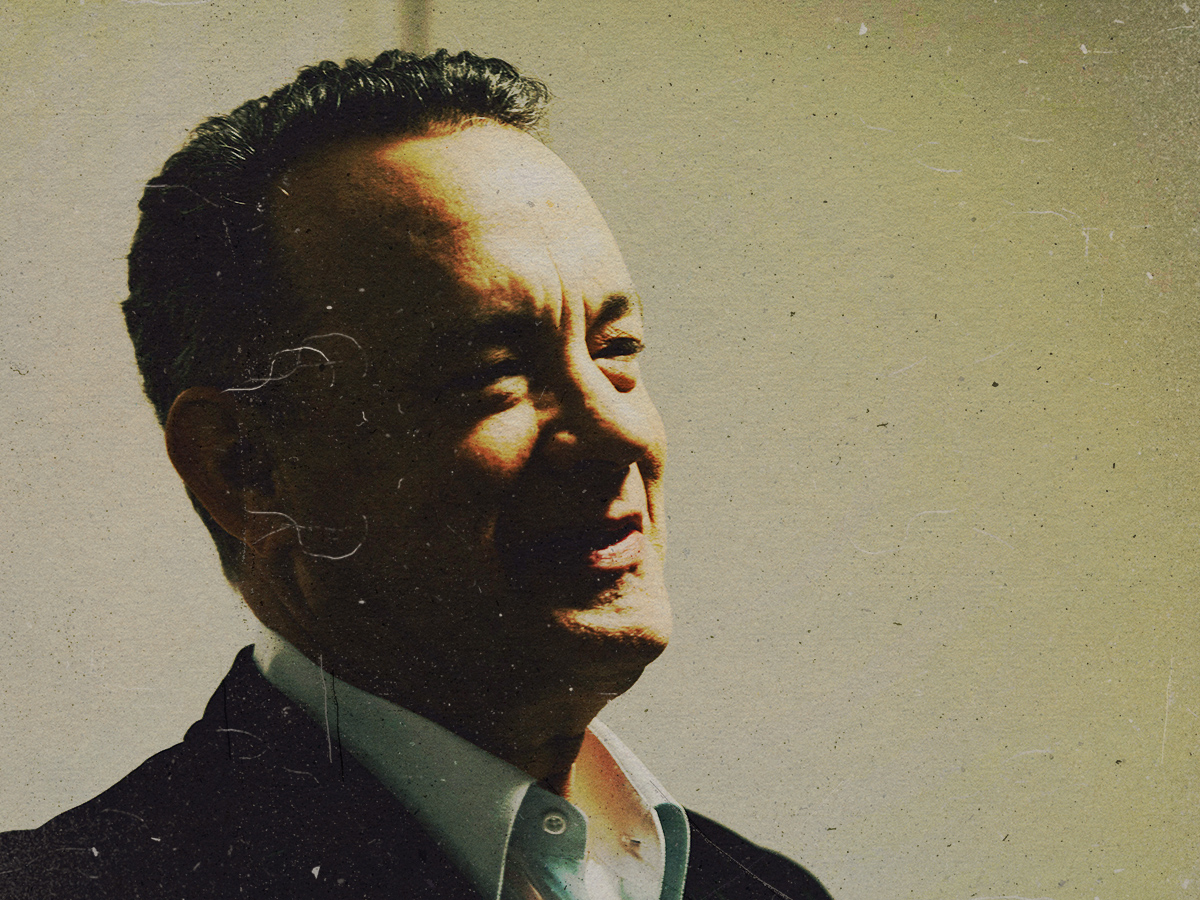
The bickering odd couple are tasked to investigate an unsettling string of ritual murders, tracing the evidence back to a cult, before a romance with one of the group’s almost-victims, who was saved from sacrifice, throws several spanners in the works. There’s an awful lot going on, to put it lightly, something Hanks acknowledged when he reflected on his participation.
In an interview with David Sheff, the two-time Oscar winner admitted that even though Dragnet “made a lot of money,” the financial returns were “probably not nearly as much as anticipated”. The film recouped its $20million budget more than three times over from cinemas, but the actor was of the belief the storyline was too unwieldy for its own good.

Calling the narrative “convoluted,” Hanks conceded that “there are problems with it”. In what’s surely a cardinal sin for a comedy starring a proven talent in that arena opposite the co-creator and star of The Blues Brothers and Ghostbusters, he even said Dragnet “should be funnier”.
That admission gets to the heart of why the film never fully clicked. With so many moving parts and tonal shifts, it struggled to find a clear identity, drifting between satire and straight-faced storytelling without committing fully to either. For a project built around strong comedic talent, that lack of focus ultimately worked against it.
It also highlights the risk that comes with revisiting well-worn material. Even with experienced performers and a recognisable brand, success is far from guaranteed if the execution does not align with the concept. In the case of Dragnet, the ingredients were all there, but the final result never quite came together in the way its creators had intended.
He’s not wrong, but despite the fifth version of the concept leaving its leading man feeling underwhelmed, there was still plenty of gas left in the Dragnet tank. It was revived on television in 1989 and 2003, but if Hanks and Aykroyd couldn’t make it work to their satisfaction then their successors didn’t really stand a chance.
