


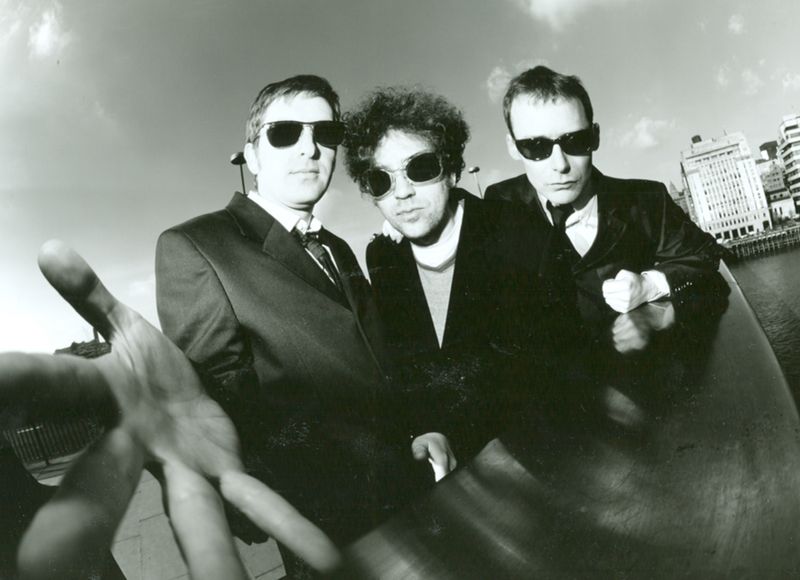
Watch the 1985 television debut for The Jesus and Mary Chain

The Jesus and Mary Chain was the brainchild of brothers Jim and William Reid. The pair grew up in East Kilbride, a desolate, sleepy town just South of Glasgow. After being spoiled by the late 1970s punk explosion, the brothers felt cheated by the turn toward synth-pop in the ’80s and set their sights on bringing a rough edge back to rock music.
“It was perfect timing because there weren’t any guitar bands. Everybody was making this electronic pop music,” William said of the band’s formation in a 2002 interview.
Before forming the Mary Chain, the Reid brothers had spent five years on the dole, during which they wrote a handful of songs at home while manifesting a bad-boy image for the band to come. In the early 1980s, their father gave them £300 from a redundancy payout, with which they bought a Portastudio to record some early demo tapes.
In 1983 they sent out the demos with little interest in return from record companies. Undeterred, the Reids welcomed bassist Douglas Hart and drummer Murray Dalglish to the band. The initial set-up was notably crude, with Dalglish’s drum kit limited to just a floor tom and a snare. Taking a leaf from The Velvet Underground’s Moe Tucker, he would play the floor tom upright by hand. Meanwhile, Hart played his bass guitar with three strings; this string count was whittled down to just two by 1985. “That’s the two I use,” Hart would explain. “I mean, what’s the fucking point spending money on another two? Two is enough.”
Barely equipped, the four-piece struggled to clinch gigs in their local circuit and often stole fleeting stage exposure by turning up at venues and claiming to be a support act. As their dream dictated, the sound was unlike anything heard on the British charts at the time. William’s guitar would drone out of tune with a heavy feedback effect, bringing a new definition to the term “noise-rock”.
“Onstage, we’re one of the sexiest groups you can imagine,” Jim said of the band in 1985. “Three or four guys in leather, rolling around and showing their backsides to the audience,” he added, referring to their unorthodox alienating habit of facing away from the crowd during performances.
After having very little impact in the Glasgow catchment, the band relocated to Fulham, London, in May 1984. Within weeks, one of their early demos fell under the nose of Creation Records boss Alan McGee, courtesy of Bobby Gillespie. After hearing a screeching and ostensibly intriguing soundcheck, McGee signed the Mary Chain to Creation Records and became their first manager.
November 1984 saw the release of the group’s debut single, ‘Upside Down’. At around this time, Daglish quit the band over money disputes, and was swiftly replaced by Gillespie, who had already formed Primal Scream in 1982.
In a twist of fate for the Mary Chain, ‘Upside Down’ became a roaring success in the underground music scene, topping the UK Indie Chart in February 1985 for a 76-week stint. After this public exposure – and a helping hand from broadcaster Trevor Dann – the band were invited to play their first televised gig on The BBC’s Old Grey Whistle Test on March 12th, 1985.
“The [Jesus and Mary Chain] was the first big thing we’d had since the Sex Pistols,” Dann said of the band’s BBC debut.
For their appearance on the Old Grey Whistle Test, The Jesus and Mary Chain played ‘In a Hole’, which would appear on their seminal debut album, Psychocandy, later in the year. Watch the intense performance below.
