


The 1981 Cure song inspired by Robert Smith’s favourite book: “I was obsessed”

After punk exploded in the mid-1970s, a wave of musicians decided to take this energy and channel it into something else, adding a broader scope of instruments and influences to their sound. Alongside bands like Joy Division, The Fall and Siouxsie and the Banshees, The Cure emerged in the late 1970s, helping to define a new genre: post-punk.
Within a few months of releasing their debut album, Three Imaginary Boys, in 1979, The Cure supported Siouxsie and the Banshees on their UK tour. Lead vocalist Robert Smith was tasked with replacing the Banshees’ guitarist, John McKay, and this experience helped to further develop The Cure’s sound.
Smith once explained, when taking part in Siouxsie & the Banshees: The Authorised Biography: “On stage that first night with the Banshees, I was blown away by how powerful I felt playing that kind of music. It was so different to what we were doing with the Cure. Before that, I’d wanted us to be like the Buzzcocks or Elvis Costello; the punk Beatles. Being a Banshee really changed my attitude to what I was doing.”
The Cure, alongside the Banshees, were vital players in developing gothic rock. With the release of their second and third albums, Seventeen Seconds and Faith, The Cure cemented their dark and gloomy sound. Shortly after the release of Faith, the band released the non-album single ‘Charlotte Sometimes’, which paid homage to one of Smith’s favourite books of the same name by Penelope Farmer.
As The Cure’s music became increasingly atmospheric, Smith’s lyrics followed a similarly introspective path. Rather than relying on straightforward storytelling, he became fascinated by dream logic, shifting identities and the uneasy spaces between memory and reality, drawing as much inspiration from novels as he did from the records filling his collection.
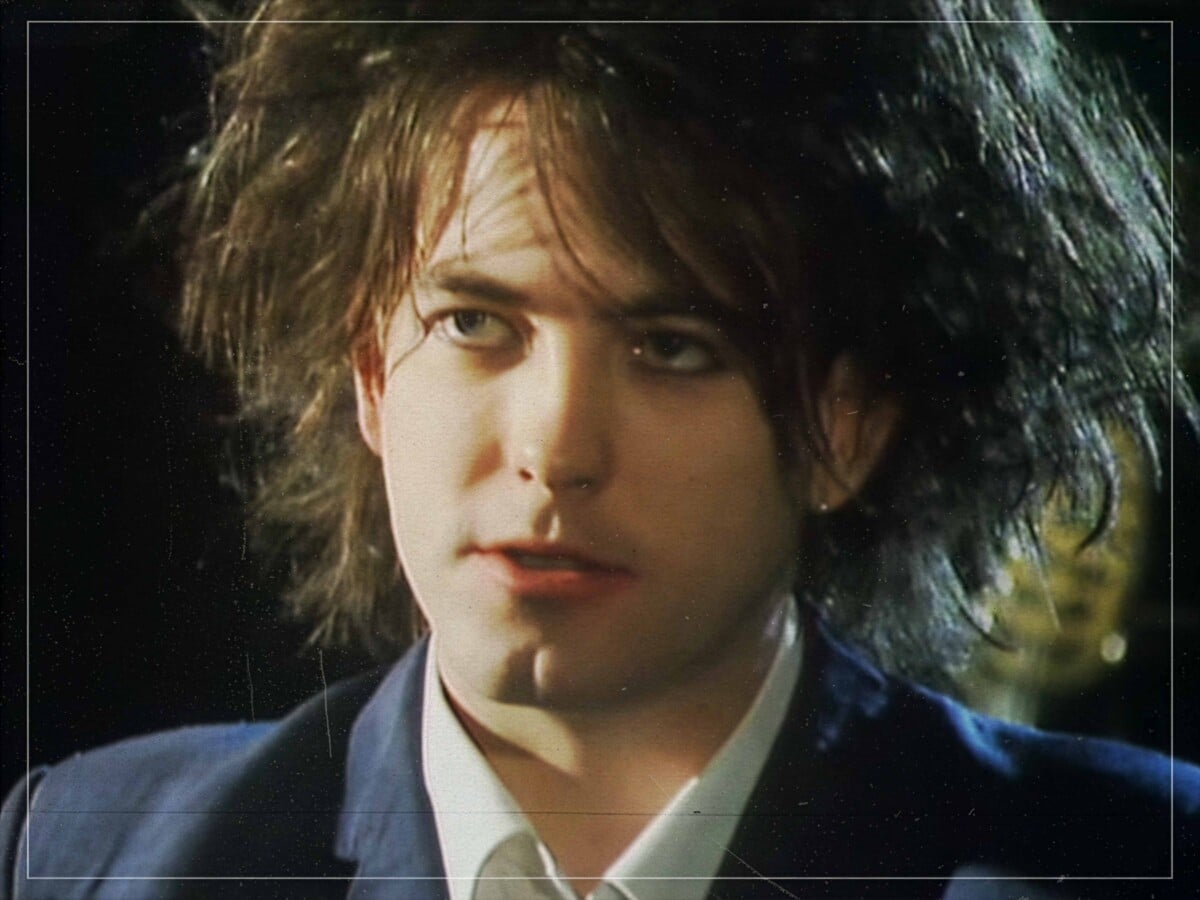
Literature would become one of the defining pillars of Smith’s songwriting throughout the early 1980s. Whether borrowing existential ideas from Albert Camus or the surreal anxieties of Franz Kafka, he found that books often offered the same emotional ambiguity he was searching for in music. It made adapting elements of a beloved novel feel less like an experiment and more like the natural next step in The Cure’s artistic evolution.
Within the song, Smith sings lines more or less directly lifted from the children’s novel, which was published in 1969. The book explores the idea of a double identity, with the protagonist waking up to discover she is someone else, switching places each night. The book’s opening lines, “By bedtime all the faces, the voices, had blurred for Charlotte to one face, one voice,” were emulated by Smith with “All the faces/All the voices blur/Change to one face/Change to one voice”.
Smith once shared a list of his favourite books, with Charlotte Sometimes making the cut alongside the likes of The Stranger by Albert Camus (which influenced ‘Killing An Arab’) and all of Franz Kafka’s work. Discussing Farmer’s novel, Smith explained: “I was obsessed with Charlotte Sometimes, this idea of temporal downfall, of duality, of personality trouble and the torture that follows.”
“Charlotte, after her first night in boarding school, wakes up, 40 years back and in another body. This connects with the theme of twins, which Penelope Farmer wrote a fascinating book about (Two or the book of twins and doubles, 1996). I’ve always dreamed of having a twin, somebody you can’t fool, who would always be there, like a mirror.”
Listen to the song below.
