


The 1970s legend Phil Collins was never able to please: “It doesn’t go like that”

It’s hard to really judge any music fan if they hate and love Phil Collins at the same time.
Even though he was one of the biggest stars of the 1980s for a reason and made some of the greatest hits that the decade ever produced, seeing him become a pinup star after showing everyone his progressive side had to sting for every Genesis fan who loved records like Nursery Cryme. This was like watching Collins devolve, but even if he still knew how to throw it down behind the kit, he still had an uphill battle when working with some of his contemporaries.
Because as much as Collins liked to experiment, there were always going to be people who weren’t exactly his cup of tea. There’s no shortage of interview clips that show Noel Gallagher slagging him off for making nothing but soppy shit, and even though Collins loved The Beatles every single time he played their records, there were more than a few times he was disappointed meeting someone like Paul McCartney for the first time.
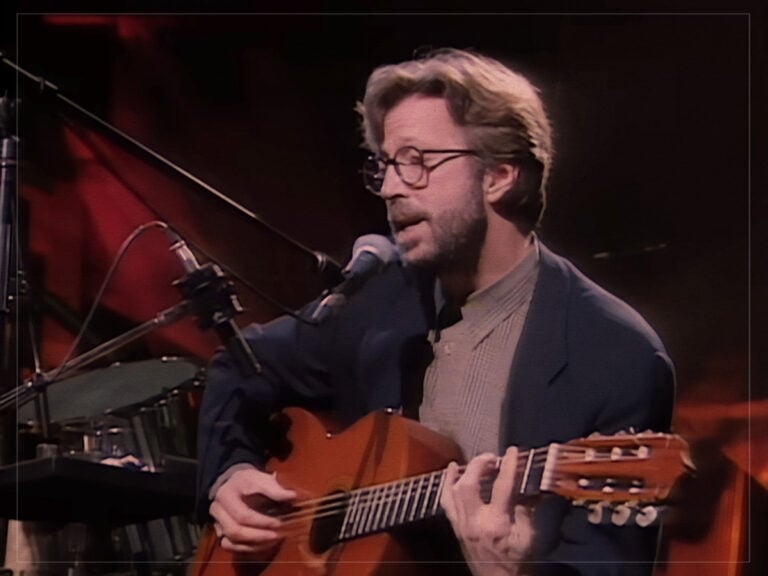
Most of his heroes could have easily been a letdown, but if Collins was willing to put in the work, it took no time to get certain projects off the ground. He was already responsible for helping kickstart Eric Clapton’s solo career all over again in the 1980s, and even though he may have gone a little bit overboard with collaborations, it’s better to live in a world where ‘Easy Lover’ exists than to complain about whatever he was working on.
But if there’s one mantle that no one should touch, it’s Led Zeppelin, and Collins was prepared to fall on his sword when he first began performing at Live Aid. He had already overcommitted himself to playing with Sting and doing his own set before jamming with the industry giants, but from the word go, Collins was already behind the eight-ball when Jimmy Page started questioning why he was even there.
Tony Thompson was already set to play drums, and while Collins was prepared to work his ass off to get what he wanted, he remembered Page being absolutely ruthless to him when he started, saying, “Robert [Plant] said: ‘Jimmy is belligerent.’ Page says: ‘We’ve been rehearsing!’ And I said: ‘I saw your first gig in London, I know the stuff!’ He says: ‘Alright, how does it go, then?’ So I sort of… [play the part], and Page says: ‘No, it doesn’t! It doesn’t go like that!’ Then Page says: ‘One drummer was halfway across the Atlantic and didn’t know the stuff.’ And I got pissed off.”
And while anyone else would have decided to take everything in stride, Page hasn’t let up in the years since about what a trainwreck the gig was. He always saw Zeppelin as his baby, and if someone was going to come in and make a mockery out of what he had built, he was going to make sure that they learned about their screwup and lived with it for the rest of their lives. But that was a blip on the radar compared to Collins’s schedule.


He couldn’t really be stopped in the 1980s, and even when working on a massive trainwreck like that, Collins was still happy to keep notching up as many hits as possible. None of them were ever going to feature Page on guitar, but he figured that getting his own revenge would be to make the best music that he could, and maybe even find some time to work with Plant in the future.
So while Page was notoriously protective of what he wanted Zeppelin to be, it’s not like Collins was ever at the risk of losing his entire reputation. He was already halfway towards being a rock legend in his own right, and while he didn’t always click with his heroes, it would have been impossible to expect anyone to go out there on such short notice and play anywhere near what John Bonham used to do.

Never Miss A Beat
The Far Out Led Zeppelin Newsletter
All the latest stories about Led Zeppelin from the independent voice of culture.
Straight to your inbox.