


The 1957 song The Rolling Stones always regretted covering: “What’s the point”

It’s a truth universally acknowledged by now that pop music, in its limitless forms and evolutions, is an art form. There’s something wonderful about that, make no mistake, but up until the 1960s, there was a weird sense of utility to the medium, too, and there’s no better example of this than an obscure little group from the time; I hope you’ve heard of them, they’re called The Rolling Stones?
You see, up until fairly recently, “the music industry” wasn’t a shadowy cabal of a few multi-millionaires in Chinos making streaming deals but an actual group of working people at a grassroots level. The foundations that the music industry we know today were built on, established mainly within the 1930s and 1950s, were predicated on musicians being less artists than workers.
A jobbing instrumentalist wouldn’t be prioritising their artistic ambitions or their burgeoning solo career; they’d be (ideally) playing gigs four or five times a week in the multitude of local bands in the area. As with most things about modern culture, the 1960s came along and wrecked all that, which is where The Stones come in. They began life as, essentially, a covers band. Their very presence was a necessity based on how parochial and grassroots the music industry of the time was.
All the blues records that the young Mick and Keef were rhapsodising over weren’t common knowledge or readily available. They were available to two teenagers in Dartford via a very expensive import to the UK or the privilege of knowing someone who had the hookup and was kind enough to lend it to you. Only in a few very specific and rare cases would a record label stump up the cash to release these records officially, so bands were formed not so much out of artistic expression but because it was the only way the music you loved would impact where you lived.
Such was the case with The Stones. Their first incarnation formed as the adorably named Blues Boys in 1961 before Jagger and Richards struck up a friendship with Brian Jones, Ian Stewart, and Charlie Watts of the band Blues Incorporated. Thus, the first incarnation to actually be named The Rolling Stones was formed, and none of them, absolutely none of them, had any interest in actually writing songs.
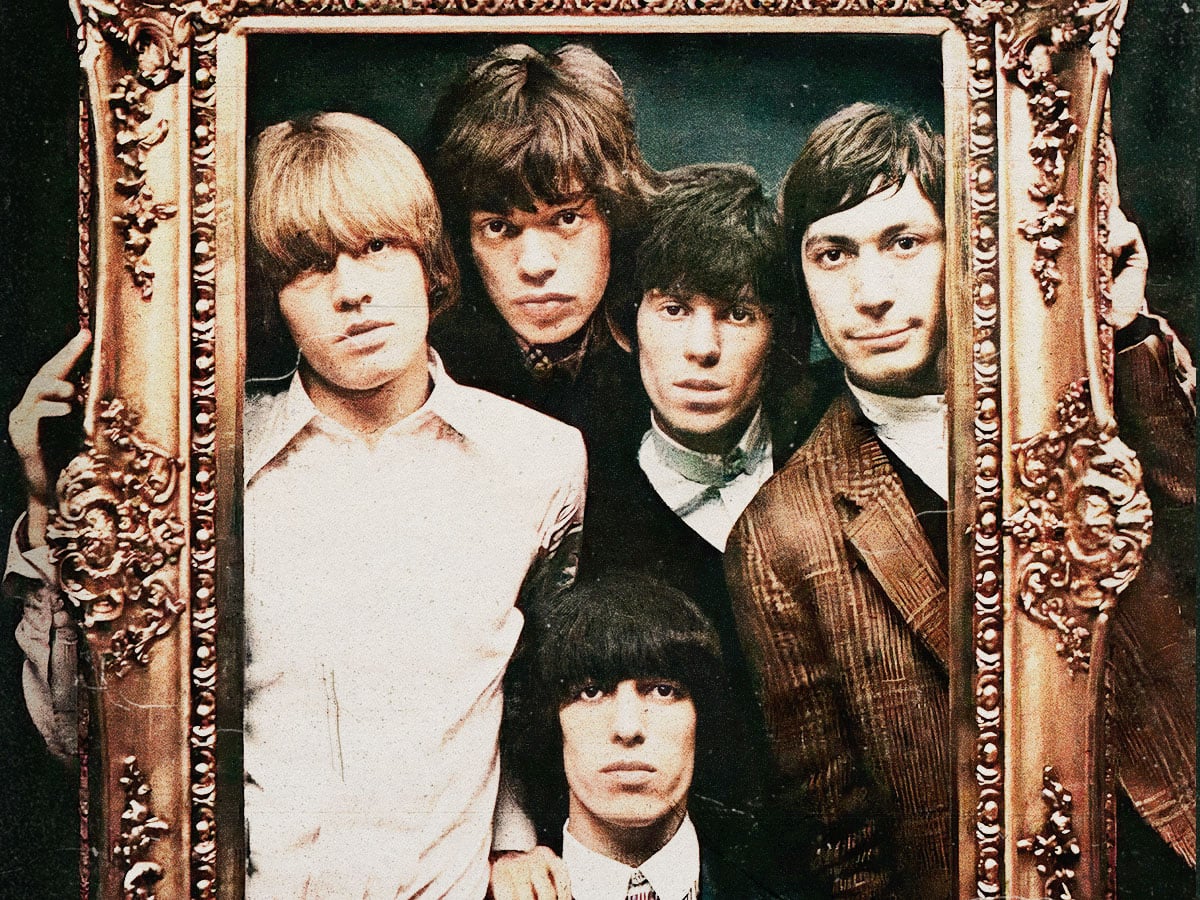
It’s a detail that feels almost unthinkable when looking back from a modern perspective. The idea that one of the most revered songwriting partnerships in rock history began with no intention of writing anything at all speaks volumes about how different the industry landscape was at the time. Creativity wasn’t the primary currency yet, access was, and bands like The Stones were simply conduits for sounds that hadn’t travelled far enough on their own.
That shift from replication to creation didn’t just define The Rolling Stones, it mirrored the wider transformation of pop music itself. As the decade wore on and audiences became more curious, the expectation changed, and suddenly, being a great interpreter wasn’t enough. Bands had to become originators, whether they liked it or not, and in that moment, The Stones found themselves evolving from a necessity into something far more enduring.

Why would they? Their reputation was built as a live act on the club circuit, and any time spent putting their own material together would distract from what would actually make a name for themselves, being tighter live than Sandy’s keks at the end of Grease. By the time they were releasing albums, though, which mainly consisted of those same covers, certain members of the band were starting to look beyond mere replication. After all, even they knew those covers weren’t a patch on the originals!
By 1968, Jagger himself was taking aim at the version of Slim Harpo’s ‘I’m A King Bee’ that opens side two of their self-titled debut album. He said: “You could say that we did blues to turn people on, but why they would be turned on by us is unbelievably stupid. I mean what’s the point in listening to us doing ‘I’m a King Bee’ when you can hear Slim Harpo do it?”
To answer his question for him, the point is that Slim Harpo’s version of the track would have been nigh-on impossible for all but the most discerning, dedicated music fans to find at the time. It’s a testament to how fast the world moved even then that four years later, that very idea was as passe as it is today.
