


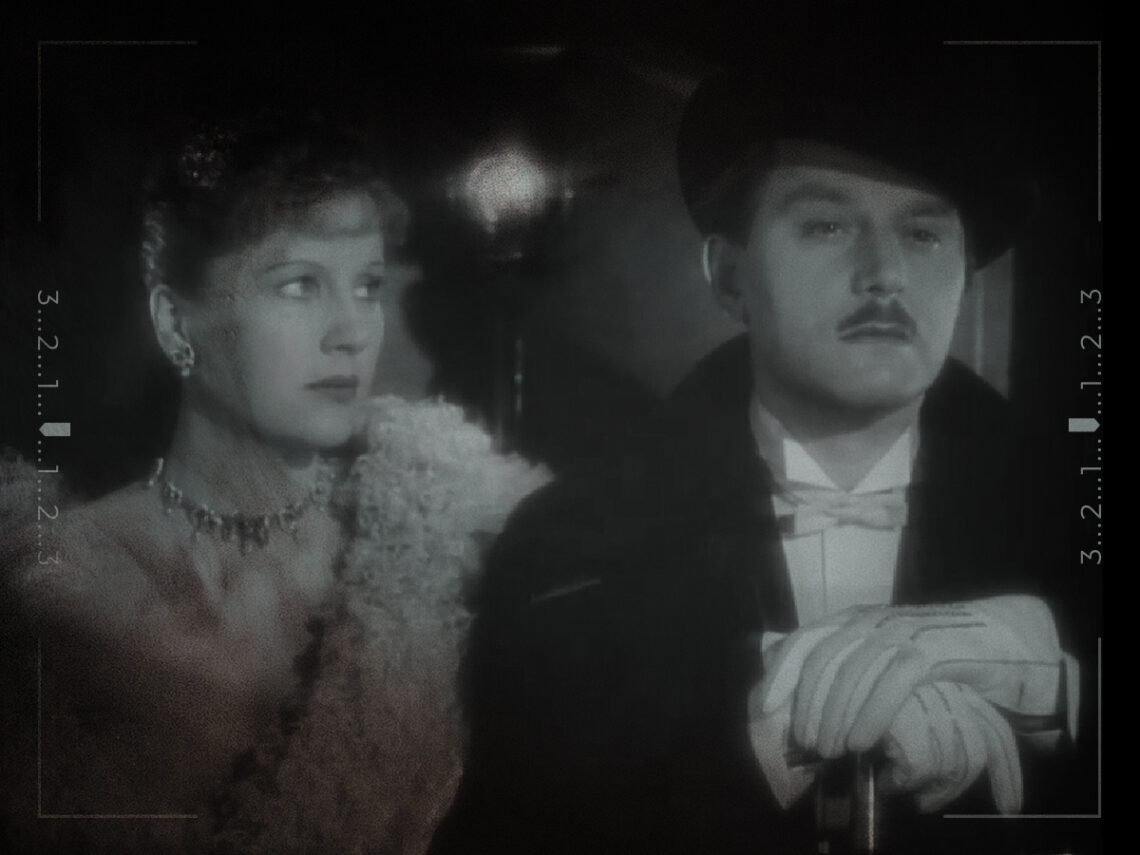
The 1940s movie shot in a Buckinghamshire village that redefined 21st-century culture

Plenty of movies have had a transformative impact on culture, but not many of them wait until seven decades after the fact, and only one of them was filmed in Buckinghamshire.
Films that seize the zeitgeist, influence and inspire people in all walks of life, and become accepted parts of the lexicon usually have that effect as soon as they’ve been released, so there’s a lot to be said about a quaint picture that’s distinctly British in every respect, managing to accomplish that in the 21st century.
That’s not an understatement, either: the psychological thriller was born from a stage production written by a playwright born in Sussex, adapted for the screen by two Londoners, directed by a Bristolian, and helped usher in a term that was initially used to encapsulate the arc of a character played by an actor from Lewisham.
All very local, then, but the number of people who use the term ‘gaslighting’, relative to the people who know how it originated, is no doubt highly skewed toward the former. While George Cukor’s 1944 movie starring Ingrid Bergman tends to take the credit, that’s not even remotely true.
The first feature-length adaptation of Patrick Hamilton’s Gas Light was shot at D&P Studios in Denham, a village and civil parish with a population of under 10,000. Thorold Dickinson’s picture, Gaslight, was released in the United Kingdom in June 1940, four years before Cukor’s version. It wasn’t even released in America until 1952, and even at that, it was renamed Angel Street to avoid any confusion with its own remake.
Diana Wynard’s Bella Mallen and her new husband move into a house where a murder had been committed 20 years previously, and she spends the majority of the story being repeatedly assured that the unusual and suspicious goings-on in the property are figments of her imagination, particularly the way the gaslights in the home dim as if having been lit by someone else, hence the term.
While ‘gaslighting’ has existed for over 80 years as a turn of phrase, and was used infrequently from the film’s release on, it wasn’t until the 2010s that it truly began its cultural absorption, and it’s now one of the most commonly used ways to describe any form of emotional or psychological manipulation.
In 2022, no less of an authority on the English language than Merriam-Webster, the oldest and most notable dictionary publisher on the planet, declared ‘gaslighting’ to be its Word of the Year, 82 years on from Dickinson, his cast, and his crew committing its origins to cinema for the first time.
It might be one of the 21st century’s most well-known descriptors, but the history of gaslighting, which has become one of modern culture’s most ubiquitous terms, can have its beginnings traced all the way back to Bristol, where creator Hamilton hailed from, and Buckinghamshire, where Dickinson’s movie was shot.
