


Unlucky For Some: The 13 most underrated songs from 1968

1968 was a year of tumult, turmoil and musical triumph. With civil rights movements in full swing and simmering tensions regarding the Vietnam War taking to the streets, the bubbling pot of a troubled year finally spilt over in tragedy with the catastrophic assassination of Martin Luther King Jr.
It was a tragedy that the music world tried to transfigure into something meaningful, perfectly embodied by a lyric in the big hit of the year ‘Hey Jude’: “Take a sad song and make it better.”
The response of music to unrest was universally brilliant, producing albums such as; Van Morrison’s ethereally beautiful journey into the mystic with Astral Weeks, Otis Redding’s dreamy escapism with The Dock of the Bay, Aretha Franklin’s scintillating Lady Soul, Simon & Garfunkel’s eternally excellent Bookends, and of course, The Beatles’ White Album, as well as literally hundreds of other classics.
The fracas that the world found itself in created a hive of artistry. The revibrating boom of psychedelia, proto-punk and profuse protest songs can still be felt to this. ‘Hey Jude’ may well have been the big song taking front and centre, but in another edition of our ‘Unlucky for Some’ feature we’re turning the spotlight onto the little guys that snuck under the swinging radar of the sixty’s penultimate fanfare.
Without further ado, let’s take a look at the thirteen hits that are unlucky no longer, all wrapped up in a playlist at the bottom of the piece.
The 13 unlucky gems from 1968:
13. ‘Grazing in the Grass’ by Hugh Masekela
Perhaps a South African jazz trumpeter was never fated for instant universal acclaim back in an era where there was so much going on in the happening scene of good old ‘Rock and Roll’ to compete with. Masekela was a pioneer in fusion, mixing vibrant trumpet and flügelhorn tones with typical South African rhythms.
With ‘Grazing in the Grass’ Hugh offered up a vibrant slice of instrumental summer that proves just as perfect for garden parties as it does for a Saturday morning shower. The toe-tapping cowbell meddles brilliant with the swinging horn-led groove. It is the sort of music that you get the impression is near enough impossible to play without a smile on your face, and as James Baldwin once said, “[the musicians] triumph, when he triumphs, is ours.”
12. ‘Jackie’ by Scott Walker
At this stage, Scott Walker has been touted by so many big stars as an inspiration, from Bowie to Arctic monkeys, that it saves time just to assume that he’s your hero’s hero. Despite his seismic influence, however, the literary songwriter was never quite catapulted to the wider acclaim that he deserved.
‘Jackie’ displays all of his trademark stylings, cinematic in both scope and production and as verbose a David Foster-Wallace rap track in delivery. It is a soaring piece of music that translated Jacques Brel’s original in superb style. It transports you back to the sixties in a kaleidoscopic time machine of rolling Western movie drums and a narrative tale of liberating yourself by means of reinvention.
11. ‘Dance On Through’ by The Human Beinz
The Human Beinz may well have been best known by their first single under the quirky band name with ‘Nobody But Me’ which just about broke into the Billboard Top 40, but sadly their follow-up peaked at 80 and the early impetus of chart success was never seized upon. The band, however, received a bit of a revival boost when Tarantino featured ‘Nobody But Me’ in Kill Bill: Vol. 1 and then once again entered a score on Scorsese’s The Departed.
This use of the band in modern movies is symptomatic of the sort of quintessential heavy-groove sixties sound that they create. ‘Dance On Through’ offers up singalong repetition with a pleasant melodic tune. All in all, a very underrated record.
10. ‘Lonely Little Girl’ by Mothers of Invention
Before Frank Zappa went his own strange way in a solo career, he was laying down funny foundations with Mothers of Invention. Their third solo album We’re Only in It for the Money was an utterly berserk piece of satire that even took on Sgt. Pepper with the front cover art.
This track might only be one minute and ten seconds long, but it’s one that feels a whole lot longer in the best possible way. In short, it is the sound of incredibly talented musicians having incredibly irreverent fun, pushed through the sieve of some pretty intelligent satire.
9. ‘Holy Are You’ by The Electric Prunes
By the time of ‘Holy Are You’ The Electric Prunes had been pretty much highjacked as an act by iconic American music producer David Axelrod. He composed much of the album, Release of an Oath, from which this track is taken, and when the band were unable to play much of his complex arrangement, it led them to disband.
Music historian Richie Unterberger perhaps encapsulated the sound of the band best when he described their sound as having “an eerie and sometimes anguished ambience.” To put the style of ‘Holy Are You’ down on paper makes it sound very jarring when in actual fact the song unfurls in a wild but smooth cascade of psychedelic influences. It is quite easy to see why such a richly eclectic sonic palate never matched with mainstream taste, but that’s no reason not to give them a whirl.
8. ‘La-La Means I Love You’ by The Delfonics
The Delfonics are an American R&B vocal group with more soul than a dyslexic shoe shop. This track was the band’s first big hit and represents perhaps the best-known track on the list, but it warrants a place, if even just to capture the rather more innocent edge to the sixties.
This song dances around on a soaring string melody, and if it were any sweeter, it would come with a health warning about daily sugar intake. This easy-going and sanguine charm imbues the song with a sort of near-novelty brilliance, staying just the right side of the line owing to a glossy-eyed sincerity. It’s a sugar-coated piece of music ideal for a Sunday morning.
7. ‘Fire By The River’ by Harumi
The story of Harumi is one of ethereal mystery, befitting of this song. The record sprung forth from the ether sometime in 1968 and then the artist disappeared back into it just as quickly. The album is the product of eternally enigmatic Japanese artist Harimi Ando, it was crafted in New York and little else in known without an explorative deep-dive.
You can pull the eclectic influences and meddle in the melee of sounds from Eastern Folk to psych all you like but what is most notable about this oddity is just how wonderfully listenable it proves to be. Aside from all the complex stylistic embellishments, what we are left with is a deeply melodic piece of hypnotic pop, and it’s just about as gorgeous as it is mysterious.
6. ‘A Tout Casser’ by Johnny Hallyday
If there was ever a song fit to score an opening sequence of a French motorbike film made by the blacklisted American director John Berry operating in exile, then ‘A Tout Casser’ is the one. It may have been a hit in France, but the song never received the same global acclaim as some of the earlier Godard inspired exports.
The track couldn’t possibly sound more like the total distillation of all sixties rock and roll if it tried. If you were to chuck Elvis Presley, Easy Rider, French New Wave and The Lovin’ Spoonful into a big sixties mixing bowl, then this would saunter out, sucking on a cigarette, and steal your girl.
5. ‘7AM’ by Jacqueline Taïeb
We may as well stay in La République for the next little forgotten gem. Born in Tunisia, Jacqueline moved to France aged eight in 1956 and released her first single ten years later to much acclaim. By the early ‘70s, however, she had taken a break and faded from the forefront of people’s minds and later the studio too.
‘7AM’ is a meta-track well ahead of its time. The lyrics roll through a time capsule of teenage infatuations in the era, cut over a quintessential French rock groove. From The Who to Paul McCartney and all the Gone With The Wind references the song is a glorious ode to pop-culture and the joyous way in which it is consumed.
4. ‘The Beehive State’ by Randy Newman
Randy ‘The Musical Dean of Satire’ Newman, the master of many Pixar movie musical moments, proclaims that he has only ever had a tiny global fanbase that fluctuates around a peak of 200,000 when it comes to his solo work. Taken from his first solo outing, ‘The Beehive State’ is a solid introductory single that the wider public failed to pick up.
The song asks Senator’s from rural states to take the floor before congress and stake their claim. “We gotta tell this country about Utah,” Newman drawls, “’Cause nobody seems to know.” It propagates the vast wealth of wit that Newman has dispensed throughout his career, but it does it with a catchy piano melody to boot.
3. ‘Fly Me to the Moon’ by Bobby Womack
Womack earned his stripes in the studio long before he got the chance to have a crack at the whip himself. Although his superb version of ‘California Soul’ may well be the most well-known take from his 1969 solo debut, the titular take on the Bart Howard classic seems to be most scintillatingly Womack-esque, and it was released as a single just before the 1968 cut-off.
His composition of the classic piece is chocked full of all that is best about his style of soul. The gentle intro riff could peel apart your curtains, and then the horns and vocals bring the spring in through your window on a gentle breeze. The track is a sensual piece of soul brilliance that should have catapulted his star into the stratosphere if only the world were fair.
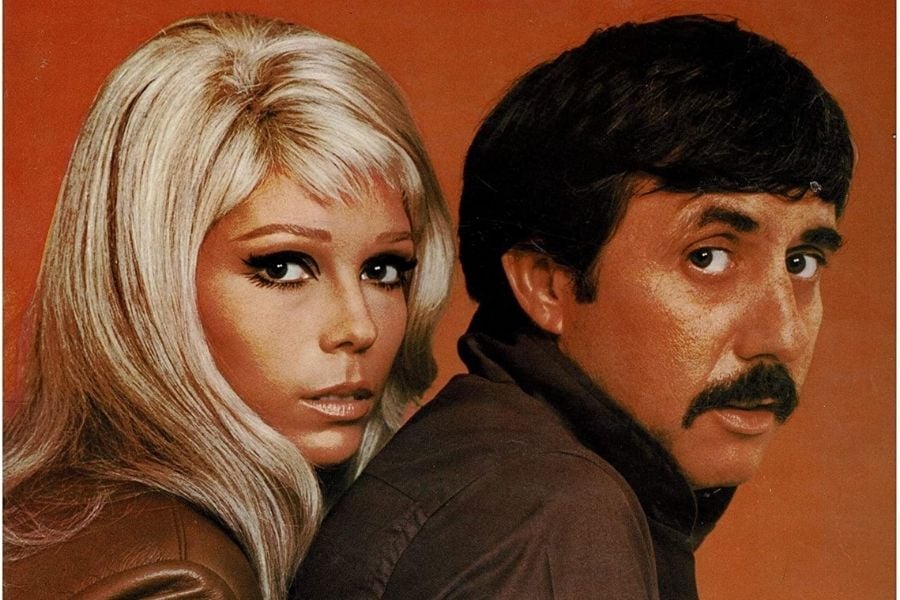
2. ‘Some Velvet Morning’ by Lee Hazlewood & Nancy Sinatra
Although technically versions of this song did feature publicly in late 1967 as the soundtrack to Nancy Sinatra’s television special Movin’ with Nancy, we’re going with the definitive version on the collaboration record Nancy & Lee.
The song is an innovative epic that turns the classic complimentary duet on its head with Hazlewood’s moody operatic section performed in a 4/4 time structure and for Nancy to take the mic and sing over twinkling strings in 3/4 time. This mashing-up of melodies may well be jarring, maybe even dementing sometimes, but there is an undeniable brilliance to the innovation, and there is no way you can listen through without interest.
1. ‘Courtyard’ by Bobbie Gentry
Bobbie Gentry was one of the first female artists to compose and produce her own material and she did it with swathes of style and grace. Following her 1967 smash hit ‘Ode to Billie Joe’ she took to the studio to record The Delta Sweete, on which she played almost every instrument on the album, including piano, guitar, banjo, bass and vibes. There is no sign of jack-of-all-trades-master-of-none incompetence, but there is plenty of the bravura that comes from a singular expression of heart-baring soul.
Away from all the mayhem that was unfolding in the real world, Bobbie Gentry constructed a dreamy courtyard of peaceful exultation. She sings of “white marble fountains” and “clear sparkling pools” and takes you for a dip with her. The closing lyric of “illusions of all I’m living for,” adds a note of poignancy to the otherwise dreamy melody that proceeds it. A beautiful piece of music and a stellar bit of songwriting.
