


The 10 worst twists in cinema history

If there’s one thing about moviegoers that will always be true, it’s this: we love a good twist ending. Everyone can remember watching a film for the first time and sitting there, mouth agape, when the big reveal happened. The best twists fire the synapses of our brains like few other things in cinema, making us ponder the implications of what we’ve just seen in whole new ways.
Of course, this is not to say that all twists are created equal. For every mind-blowing twist that we excitedly have to tell friends and family about, there are infinitely more twists that don’t work at all.
These films either telegraph their reveals too much, or there’s not enough information in the film for the twists to feel satisfying. Some twists simply don’t stand up to any kind of scrutiny and make you feel like the filmmakers are insulting your intelligence.
This list looks at the ten worst twists in cinema history—and we’ve pinpointed some truly disastrous ones. As this is all very subjective, though, please don’t come for us when you see the “It’s actually set in modern times” twist from The Village isn’t on the list. We love that twist and will forever defend its sheer audacity.
10 worst movie twists:
Planet of the Apes (Tim Burton, 2001)
This abysmal twist has the dubious distinction of referencing one of the best twist endings in cinema history. In that way, it’s like the evil mirror universe version of the twist from the original 1968 Planet of the Apes – but any way you slice it, it’s not good. It’s so bad, in fact, that several of the film’s actors have spoken out against it over the years. A confused Tim Roth once mused, “I cannot explain that ending. I have seen it twice, and I don’t understand anything,” while Helena Bonham Carter more charitably offered, “I thought it made sense, kind of.” We’re inclined to side with Roth on this one, though.
You see, when Mark Wahlberg’s astronaut Leo travels through an electromagnetic storm and crash lands in Washington DC in front of the Lincoln Memorial, what follows is meant to be a quick jolt before credits roll. He looks up in horror and sees the memorial is now a monument dedicated to Roth’s villainous ape, General Thade, and then police officer apes and news reporter apes descend on him. The audience is meant to think, “Oh no, the apes have taken over”, and then not think too much more about it. Because if you do think about it for even a few seconds, it doesn’t really make a lick of sense.
Righteous Kill (John Avnet, 2008)
While it was never destined to reach the lofty heights of Heat or The Godfather Part II, 2008’s Righteous Kill seemed like it could at least offer some straightforward Hollywood entertainment. Robert De Niro and Al Pacino teaming up again as two world-weary NYPD detectives hunting a serial killer? Sounds like a perfect way to spend 101 minutes on a Friday night, right? Wrong.
Right from the start, it’s obvious that Righteous Kill isn’t going to be a good film. However, it didn’t have to be a terrible film – yet that is exactly what director Jon Avnet and writer Russell Gewirtz gave the world. As the minutes unfold in this turgid, anti-thrilling “thriller”, it becomes horrifyingly clear that even the two best actors who ever lived can’t save a story this silly. By the end, when it’s revealed that Pacino’s cop has been the killer all along, and he forced his partner De Niro to read his confession to the world, the only sensible reaction is an eye roll.
Signs (M Night Shyamalan, 2002)
By the time M Night Shyamalan released Signs in 2002, he had already become synonymous with twist endings. His first two breakout films, The Sixth Sense and Unbreakable, both had incredibly effective rug-pulls at the end that reframed everything about their stories and made Shyamalan seem like some kind of genius at cinematic misdirection. Then came Signs, which is a very good movie but has a twist that is simultaneously low-key and obvious yet also wildly unbelievable.
The reveal that the aliens who have been plaguing Mel Gibson’s farm – and the world at large – have one major weakness makes sense. After all, how else should a regular family man defeat them? Finding out that water is toxic to the aliens strains credibility a little too much, though. It makes the audience ponder questions like, “Why would an advanced alien race invade a planet that is 71% covered in water if that is their one weakness?” and “Is Shyamalan even trying any more?”
The Game (David Fincher, 1997)
This twist ending was so divisive that, in later years, the movie’s star professed to love it, while the director admitted it was a dud. The Game was David Fincher’s follow-up to Se7en, and for 90% of its runtime, it’s vintage Fincher. Michael Douglas’ a bored and unfulfilled investment banker, is given an unusual birthday present by his brother Sean Penn – an invitation into “the game”, an elaborate scenario that soon wrecks his life, all while blurring the lines between reality and fiction. The audience is constantly guessing what the final outcome of the “game” will be. When Douglas’ life is destroyed so fully that he commits suicide, it looks like Fincher has given us another one of his trademark nihilistic endings.
Only that’s not the case. It turns out that Penn staged the game and a variety of other people in Douglas’ life to show him what is really important in his life. Indeed, the whole idea was to make him a better person. In 2015, Douglas told Collider, “Most movies you get halfway through, and you can kind of guess the ending. The Game, you could never figure out what the ending was going to be.” Fincher, though, confessed to IndieWire that he shouldn’t have directed the film at all – and it’s because he didn’t nail the twist.
He mused, “We didn’t figure out the third act, and it was my fault because I thought if you could just keep your foot on the throttle, it would be liberating and funny.”
Last Christmas (Paul Feig, 2019)
Sometimes, a plot twist is so bad that people figure it out when they see the trailer and then spend their entire time watching it, hoping it doesn’t play out that way. This was the case with Last Christmas, a 2019 holiday-themed rom-com starring Emilia Clarke and Henry Golding. When keen internet cinephiles caught a glimpse of this tale of a depressed Christmas shop worker who forms a relationship with a mysterious, handsome dude standing outside her store, their interest was piqued.
In the trailer, it’s revealed that Emilia Clarke’s character had been ill the previous year. When eagle-eyed viewers connected this with the title—a nod to the iconic Wham song—everything fell into place. That’s right: in Last Christmas, the lyric “I gave you my heart” is taken painfully literally. The twist is that Henry Golding’s character is actually the ghost of an organ donor who died in a bike accident the previous year. His heart was transplanted into Clarke’s character, and his spirit inexplicably begins romancing the woman who now carries it.
Remember Me (Allen Coulter, 2010)
Coming-of-age romantic dramas don’t usually come with plot twists, but 2010’s Remember Me had the bravery to say, “I do. And it’s a doozy.” In this generally well-acted, fairly involving film, Robert Pattinson and Emilie de Ravin play Tyler and Ally, two good-looking New Yorkers who share tragic pasts: his brother committed suicide while her mother was murdered. Over the course of the film, they fall in love, and their relationship helps each one deal with their trauma. They become more well-adjusted people, and their future together looks bright. Then, he dies in the 9/11 terrorist attacks.
The final moments of the film, which see Tyler go to the World Trade Centre to meet the father he has a strained relationship with, are a true masterclass in a film blindsiding an audience. He is shown in his father’s office, gazing out over the city, before the screen cuts to black, and we see the people in his life looking upward in abject horror. The twist was so ruthless and out of place that it didn’t teach people anything or make them see the story in a new light. Instead, it just offended everyone.
Now You See Me (Louis Leterrier, 2013)
In some ways, complaining that an element of the plot in Now You See Me doesn’t make sense is missing the point. The film is designed to take the audience from one exciting moment to another, and all we’re supposed to think is, “Whoa, the Four Horsemen are geniuses.” This tale of a team of magicians who traverse the globe pulling off daring heists while using their powers of sleight-of-hand, misdirection, and illusion to stay two steps ahead of Mark Ruffalo’s pursuing FBI agent is pure hokum – but very entertaining hokum. Then, the house of cards collapses on itself.
As you watch the film, we’d be surprised if a thought didn’t keep creeping into the back of your mind. “Wouldn’t it be crazy if Ruffalo was actually in on it?” you wonder. “But there’s no way that could make any sense, so it won’t happen.” Unfortunately, the screenwriters must have also had this very thought because the film’s ending reveals that Ruffalo has been masterminding the exploits of the Horsemen, all while pretending to be obsessed with putting them away. He even acts obsessed when he’s alone and has no reason to keep up the charade. Oh dear.
The Devil’s Advocate (Taylor Hackford, 1997)
Is it inherently absurd to argue that a twist ending in a supernatural thriller where Al Pacino plays the Devil is too silly? Perhaps. But is the twist at the end of The Devil’s Advocate aggravating at best and downright insulting at worst? Absolutely. The “It was all a dream” or “It was all a vision” trope is always risky, as it instantly undermines the weight of everything that came before, making it feel less significant than the audience believed. Worse still, it opens the door to endless questions about the film’s internal logic—never a good thing for a story striving to maintain its credibility.
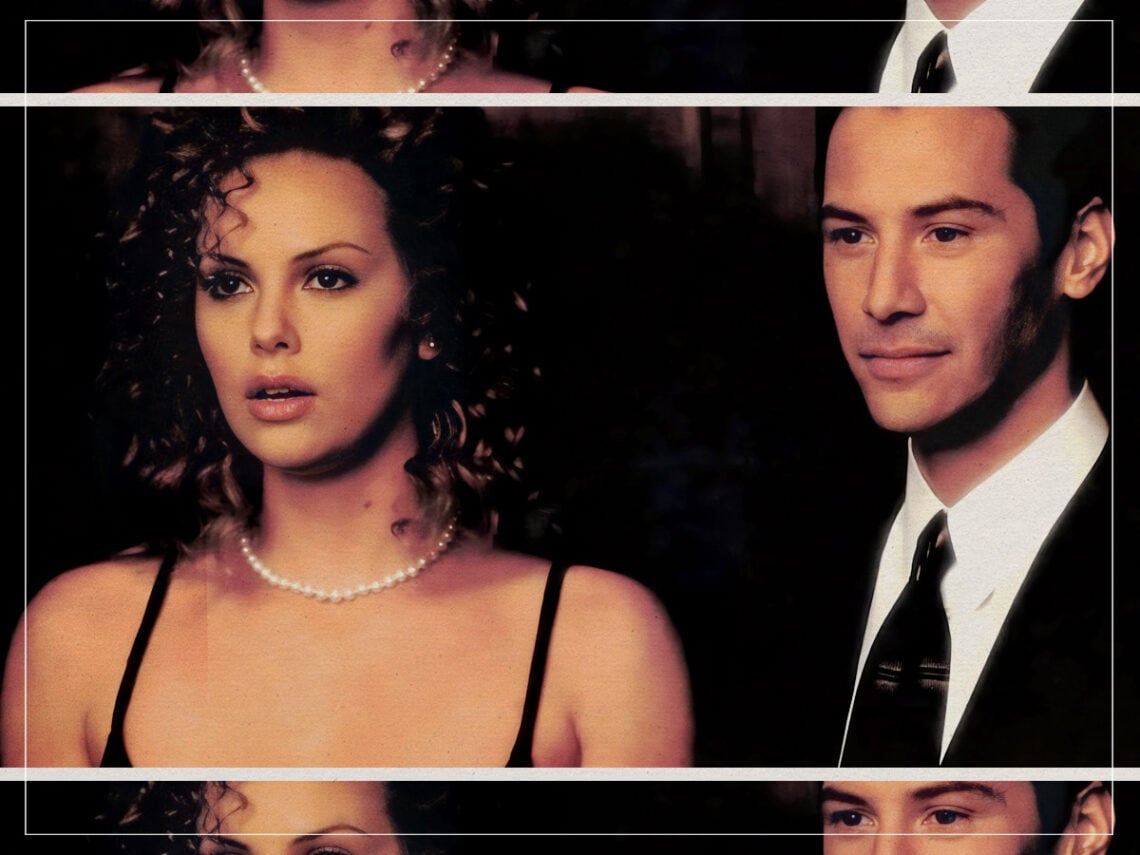
It’s a real shame because, up until its egregious final scene, The Devil’s Advocate is tremendous fun. Keanu Reeves stars as a virtuous lawyer slowly corrupted by working at a law firm run by the Devil himself—played with gleeful excess by Al Pacino. The result is a darkly entertaining, ghoulish thriller that never takes itself too seriously. However, the ending completely unravels the film. It’s revealed that everything involving Pacino’s villainous John Milton was imagined by Reeves’ character while deciding whether to defend a child molester he knows is guilty. He makes the moral choice to refuse the case and walks out of the courtroom, only to meet a reporter who morphs into Pacino. With a grin to the camera, Pacino delivers the line, “Vanity—definitely my favourite sin.” No. Just… no.
Sweet Girl (Brian Andrew Mendoza, 2021)
To say that the twist ending in this 2021 Jason Momoa vehicle is preposterous would be an understatement. Momoa stars as Ray Cooper, a man who loses his wife to cancer and swears vengeance on the pharmaceutical company that kept a miracle drug which could have saved her life off the market. He goes on a rip-roaring rampage of revenge with his daughter Rachel in tow, brutally tangling with bodyguards and hitmen on his way to the company’s evil CEO.
For much of its runtime, Sweet Girl is a decent action picture, but it mostly trades on Momoa’s inherent believability as a pumped-up tough guy capable of doling out punishment. Then the film does something unforgivable – it reveals that Ray has been a figment of Rachel’s imagination the whole time, and it’s actually the 5 foot 1 inch “sweet girl” who has been beating up bad guys. For a film that had already been straining credibility, this twist obliterates it into a million tiny pieces.
Halloween II (Rick Rosenthal, 1981)
This twist is fascinating because it has been retconned by the new David Gordon Green Halloween trilogy, and the decision to do that splits the franchise’s fanbase down the middle. You see, when John Carpenter was tasked with writing Halloween II, he struggled to develop a script that was more than simply a collection of kills loosely strung together. He contended that there was no more story to Michael Myers, and the only thing he could think of to give himself any creative juice was to reveal that Jamie Lee Curtis’ Laurie Strode was actually Myers’ sister.
Some fans loved this twist and felt it added an extra layer to the relationship between the franchise’s hero and villain. Others thought it completely missed the point of Myers, who was always intended to be a faceless, emotionless instrument of evil with no motivation. Then, when Gordon Green retconned the series and revealed that Myers wasn’t Strode’s brother and he wasn’t targeting her in particular in the first movie, it divided fans again. After all, if he wasn’t always coming after Laurie because he loves killing family members, what reason was there for her to keep appearing in the series?
