


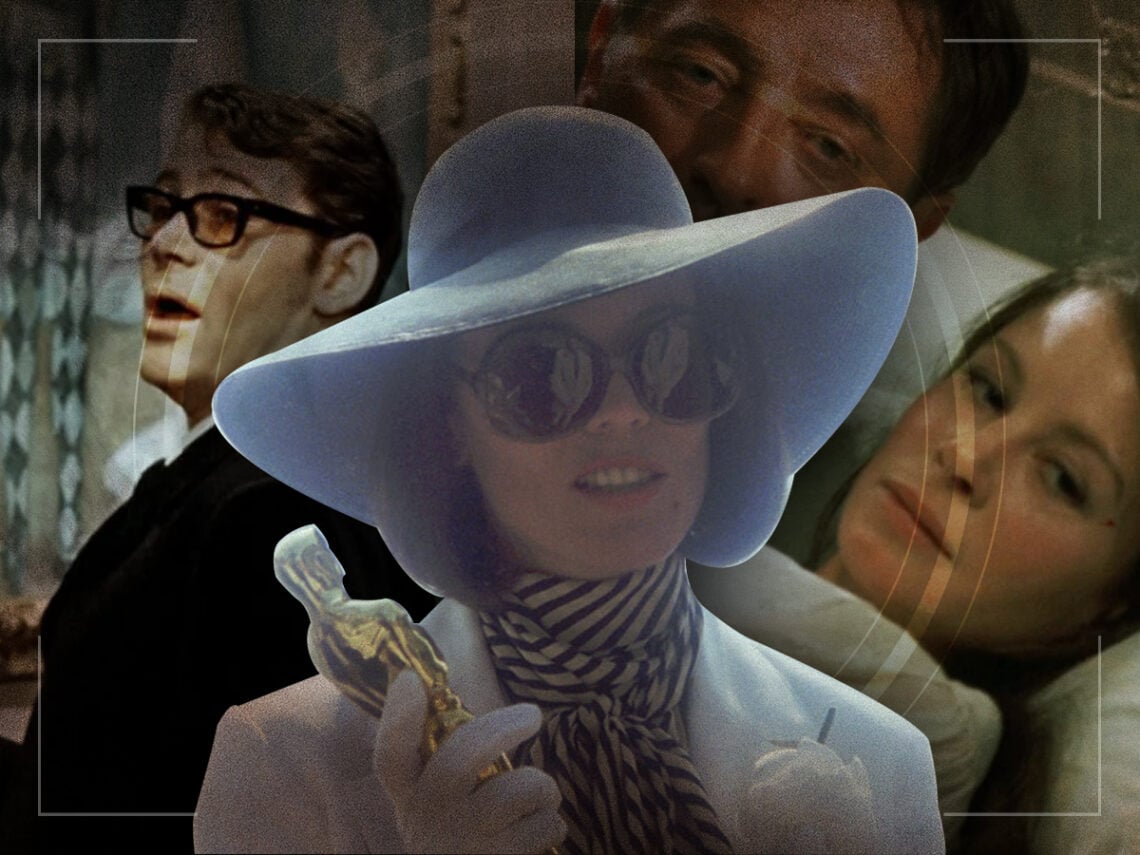
10 underrated movies by major directors that deserve a second chance

In an age of streaming curation and social media consensus, it can be hard to dig up movies that feel like true discoveries. There are, of course, plenty of films from underrated directors that fly under the radar, but it’s also true that some of the most acclaimed directors have near-masterpieces hiding in their filmographies in plain sight.
Movies get lost in the shuffle for all sorts of reasons. Sometimes, they’re made after the director hits their peak. Billy Wilder and Joseph L Mankiewicz are examples of filmmakers who were making excellent films later in their careers that no longer fit the zeitgeist. Other directors made outstanding movies before they became famous. Then, there are those like Sidney Lumet, who took a brave stab into new territory that audiences weren’t prepared for.
In most cases, these hidden gems are not the crowning achievements of their respective directors’ careers, but they are much better than their low profiles suggest. Some of them, like Wilder’s Fedora, still have an air of disgrace about them that needs to be dispelled. Others simply fell through the cracks somewhere along the line.
The movies you won’t find on this list are ones that have become cult classics after languishing in obscurity. William Friedkin’s Sorcerer is perhaps the most salient example. After being derided for decades, it is now seen as one of the director’s best. If you haven’t seen it, it definitely belongs on your list, but not before these 10.
‘The Honey Pot’ – Joseph L Mankiewicz (1967)

Joseph L Mankiewicz will forever be known as the man who made All About Eve, one of the rare masterpieces that people recognised as such when it was released. The showbiz drama starred Bette Davis as an fading grand dame of the stage and earned 14 Oscar nominations, four of which were for female actors, which is a record that still stands. A more dubious claim to fame is Cleopatra, an extravagant debacle starring Elizabeth Taylor that remains a cautionary tale in Hollywood.
There are two Mankiewicz films that could have made this list – 1949’s A Letter to Three Wives and 1967’s The Honey Pot. However, since the former was nominated for multiple Oscars and won two, it seems more fitting to go with the latter. Made directly after the scarring experience of Cleopatra, The Honey Pot is a much lighter affair, though no one who ever worked with Rex Harrison had an easy time of it.
Harrison stars as an ageing aristocrat named Cecil Fox who lives in a Venetian mansion and decides to amuse himself by playing a joke on three of his former lovers (Susan Hayward, Capucine, and Edie Adams). He hires an unsuccessful actor (Cliff Robertson) to help him pretend to be on his deathbed. Inevitably, deaths do occur, and none of them are from natural causes. The Honey Pot is far from a masterpiece, but it is an incredibly good time. Mankiewicz was excellent at imbuing his characters with the real-world baggage that their stars brought with them, and this is no exception.
‘Brad’s Status’ – Mike White (2017)

The White Lotus is such a cultural phenomenon that it has overshadowed everything else in Mike White’s back catalogue, or at the very least, given us collective amnesia about his contributions to beloved movies. He is the guy, after all, who wrote the screenplay for School of Rock. He was also, unfortunately, a screenwriter on that beyond-terrible Emoji Movie, but we can all agree to resume the amnesia over that one.
One film that flew under the radar is the 2017 dark comedy Brad’s Status, which stars Ben Stiller as the CEO of a non-profit organisation whose disappointment with his middle-class life comes to the fore during a trip with his son to visit potential universities. He compares himself to his old college friends, who are rich and seemingly successful, and wallows in self-pity about his life decisions.
It explores similar territory to The White Lotus–a privileged American feels desperately sorry for himself despite obvious reasons not to–but Stiller’s character isn’t completely irredeemable, even if he is hard to like. He’s a self-absorbed nihilist who stays that way from start to finish, but in the end, there is still an arc of self-awareness and acceptance that will be comforting and maybe even aspirational for all the cynics out there.
‘Fedora’ – Billy Wilder (1978)

How can a man who made only 26 feature films and earned 21 Oscar nominations have an underrated film? Well, Billy Wilder was just that good. You might know him for movies like Sunset Blvd, Some Like It Hot, Double Indemnity, and The Apartment. As one of Hollywood’s greatest writer-directors, he was renowned for his pitch-perfect dialogue, but it was his ability to direct stars to their most acclaimed performances that made him a true icon. Audrey Hepburn, William Holden, Marilyn Monroe, Gloria Swanson, and Jack Lemmon did some of their greatest work with him, proving that he was more than just a witty writer.
The film that is most frequently overlooked in Wilder’s catalogue in Fedora, his penultimate feature and an uneven one. It stars Holden as a washed-up Hollywood producer trying to uncover the whereabouts of a reclusive actor who used to be his lover.
Wilder himself despised the film, believing that its female lead, Marthe Keller, was not able to deliver a satisfactory performance. It’s a strange story about false identities and irrevocable pasts, and there is no denying that it lacks the sharpness of the director’s previous classics. However, there is also a hint of melancholy about it that seems fitting for a man whose glory days were long gone, and its hint of Hollywood melodrama is as gorgeous and ridiculous as you could hope for.
‘Deathtrap’ – Sidney Lumet (1982)

12 Angry Men is such a mic drop that Sidney Lumet could have quit right then, but he just kept going, turning out classic after classic. Dog Day Afternoon, Network, The Pawnbroker, Serpico, and even Murder on the Orient Express exemplified his unwavering commitment to stories about moral courage and rough justice. He took several playful deviations over the years, most famously with 1978’s The Wiz, but the more overlooked example is the 1982 mystery satire Deathtrap.
It stars Michael Caine as an acclaimed playwright suffering from writer’s block after enduring a series of flops. When his student (Christopher Reeve) asks him for input on his new script, the playwright plots to murder him and claim the work as his own.
It’s a twisty thriller that bears resemblances to everything from Clouzot’s Diabolique to Jonathan Lynn’s Clue. When it was released, critics made comparisons to the 1972 Michael Caine/Laurence Olivier film Sleuth, but it isn’t as direct a replica as one might fear from the similar set-ups. There isn’t much of Lumet’s signature style or subject matter in Deathtrap, but it’s clear that it is made by a cinematic master. Nasty, comedic, and constantly surprising, it’s a gem that deserves more acclaim.
‘Postcards from the Edge’ – Mike Nichols (1990)

Mike Nichols had a way of making horrific relationships entertaining. And I’m not talking about the reality TV type of horrific relationship, though Closer is probably a more realistic version of romantic cruelty than Love Island could ever hope to be. Nichols chose inconvenient and messy stories, whether it was the college graduate having an affair with his girlfriend’s mother despite hating her guts in The Graduate or a vicious couple addicted to decades of vitriol in Who’s Afraid of Virginia Woolf? His movies can make you want to crawl out of your skin while keeping your eyes glued to the screen.
Although Nichols often explored romantic complexity, he also made a film about familial relationships in the 1990 dark comedy Postcards from the Edge. It’s strange that this movie isn’t more beloved, because it’s pretty much a slam-dunk. Based on Carrie Fisher’s semi-autobiographical novel, it stars Meryl Streep as a recovering drug addict who has to reconnect with her movie star mother (Shirley MacLaine) in order to salvage her career as an actor.
Nichols, who got his start in comedy, was the perfect director for Fisher’s pitch-black sense of humour. Streep and MacLaine are equally perfect in their roles, and even if you can’t relate to being a struggling actor with a Hollywood icon as a parent, pretty much everyone can relate to the push-pull between love and resentment between a parent and child.
‘The Abyss’ – James Cameron (1989)

James Cameron doesn’t need anyone’s sympathy. He’s made several of the most successful movies of all time and is, by many accounts, a bit of a tyrant on set. He’s made less than two dozen movies over the years, including hits like Aliens, The Terminator, Avatar, and, of course, Titanic.
Some people might argue that his most overlooked film is True Lies, a marital romance set against the backdrop of international terrorism. If you were being perverse, you might name-check Piranha II: The Spawning. But I put my money behind the 1989 deep-sea thriller, The Abyss. Starring Ed Harris and Mary Elizabeth Mastrantonio, it follows a search and recovery team who are trying to find a sunken submarine when they begin to experience inexplicable disturbances. It’s a plot that has been done many times in everything from Leviathan (released just five months before The Abyss) to the 2020 Kristen Stewart vehicle Underwater, but none have executed the idea quite as masterfully as Cameron.
As usual for the director, the production was hellish for the actors, who were forced to spend an ungodly amount of time underwater in diving gear. But the results are undeniable. It’s pulse-poundingly suspenseful, making you feel like you are also trapped miles below the surface of the ocean with an extraterrestrial presence bearing down upon you, and Harris and Mastrantonio provide a delightfully spiky nearly-divorced dynamic.
‘How to Steal a Million’ – William Wyler (1966)

William Wyler was one of the greatest directors of Hollywood’s Golden Age, making such classics as the postwar drama The Best Years of Our Lives, Audrey Hepburn’s debut Roman Holiday, and the historical epic Ben-Hur. He earned more Oscar nominations for ‘Best Director’ than any other filmmaker in history, racking up 12. Like Howard Hawks, he was a genre chameleon, seamlessly switching between comedies, intimate dramas, and sweeping action movies with record-breaking budgets.
One film that often flies under the radar despite the calibre of its stars is the 1966 crime caper How to Steal a Million. It stars Audrey Hepburn as the daughter of a wealthy art forger who hires a highly successful thief (Peter O’Toole) to steal one of her father’s pieces from a museum so that it cannot be evaluated and exposed as a fake.
Central to the charm of this film is the absurdly winning performances of Hepburn and O’Toole. They are perfect together, trading sparks and insults like the greatest screwball comedy duos of the ’30s. If you like the Oceans franchise and want some true throwback glamour, How to Steal a Million is pretty perfect, and it’s one of Hepburn’s most underrated films.
‘Kate & Leopold’ – James Mangold (2001)

James Mangold might be known as the guy who turned Timothée Chalamet into Bob Dylan in A Complete Unknown, but he’s got plenty more in his back pocket. In fact, given his filmography, he should be a household name. The only reason he isn’t is probably because he works in nearly every genre and has a knack for shepherding actors to movie-stealing performances. Girl, Interrupted, Walk the Line, 3:10 to Yuma, and Logan were all directed by the same guy, even if they are largely remembered for their actors.
One of Mangold’s greatest accomplishments is annoyingly underrated. It was his first collaboration with his future Loganstar, Hugh Jackman, and it was a time-travelling romantic comedy. Kate & Leopold stars Meg Ryan as a New Yorker with a very 2000s haircut who falls in love with a 19th-century dandy who her ex-boyfriend accidentally pulls into a time portal during a physics experiment.
The set-up is riddled with rom-com red flags – early 2000s, time travel, science, bad hair, etc – but trust me when I tell you that this movie is charming as hell and far superior to Ryan’s previous rom-com, You’ve Got Mail. To the credit of the moviegoing public, Kate & Leopold was relatively well-received when it came out, even though the genre was on its last legs. For whatever reason, though, it hasn’t been given the ‘classic’ status that it deserves.
‘Ryan’s Daughter’ – David Lean (1970)

It’s very cool right now to dismiss David Lean as a fossilised empire apologist who was massively overrated during his lifetime. And he indeed tended to exoticise and ‘other’ cultures outside of white British ones. However, as a visual storyteller, he remains unparalleled. Most people would cite Lawrence of Arabia, The Bridge on the River Kwai, and Passage to India as his most striking, but his 1970 critical failure, Ryan’s Daughter, deserves to be in the mix.
Set between 1917 and 1918, the film tells the story of a young Irish woman in a small coastal village who impulsively marries a much older man before embarking on a passionate affair with a British officer. When it was released, it was bashed for being overwrought, grandiose, and far too long (it’s three and a half hours). But while it may have seemed like a backslide into ‘50s melodrama at the time, it’s hard to see it in a similar light in the 21st century.
For anyone who has marvelled at the natural environment in Terrence Malick’s work or Peter Weir’s Picnic at Hanging Rock, Ryan’s Daughter is at least as awe-inspiring. Like Akira Kurosawa, Lean uses the elements to extend his characters’ moods, from the promise and tenderness of dappled sunlight in a forest to the intensity and impending darkness of a blood-red sunset. You don’t have to take my word for it, either. Christopher Nolan has hailed Ryan’s Daughter as ‘pure cinema,’ saying that its “relationship of geographical spectacle to narrative and thematic drive” is an inspiration. Coming from a filmmaker known for spectacle, that’s high praise indeed.
‘Duel’ – Steven Spielberg (1971)

Steven Spielberg is the highest-grossing director of all time, and I won’t patronise anyone by listing every movie he’s ever made. He’s a household name, a filmmaker so successful that pretty much everyone has seen or knows of at least one of his films. When you stop to take stock of the movies he’s directed, it can be a little overwhelming to realise that one person can be so darn excellent at what he does. When he released Jaws in 1975, he invented the summer blockbuster.
To make matters more annoying, it turns out that Spielberg had the goods from the very beginning. If you haven’t seen his first feature, Duel, you’re in luck. It is just as suspenseful and masterfully made as any of his later movies, even if it lacks the scale of the Indiana Jones franchise or Jurassic Park.
You know how everyone talks about what a stroke of genius it was to make a movie about a predatory shark without showing the shark hardly at all? Spielberg previewed that concept in Duel, a film about a salesman who is hounded by a truck driver on a stretch of lonely highway in the California desert. You never see the truck driver. Instead, his hulking vehicle becomes a character in itself. Spielberg even made it look human by choosing a model with an almost face-like construction. Like Hitchcock’s Rear Window and Rope, Duel is successful because of its constraints rather than despite them. Terrifying and breathlessly suspenseful, this is Spielberg at his finest.
