


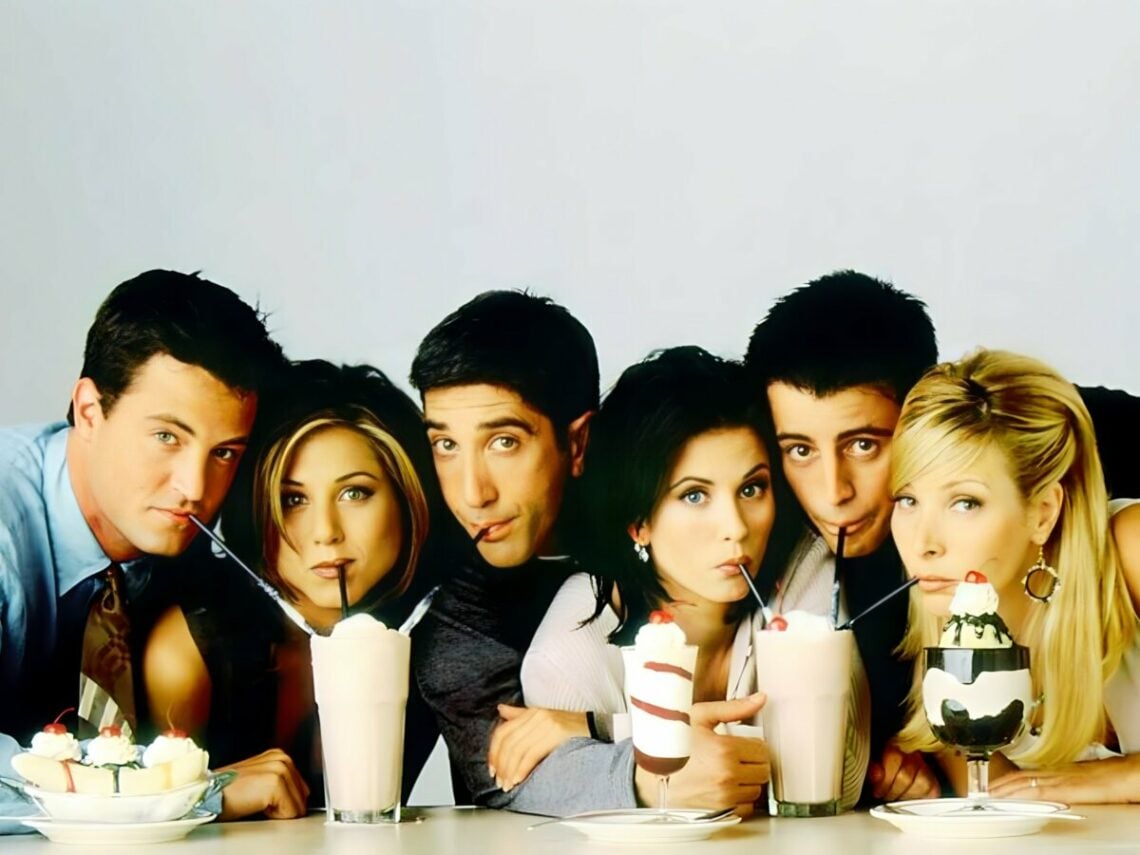
10 TV shows that have aged terribly

Many of the greatest TV shows ever made have a timeless quality that ensures they’ll hold up just as well half a century from now as they did during their first time on the airwaves, but it’s not obligatory.
In fact, there are plenty of episodic favourites that were clearly reflective and representative of the times in which they were made, and by extension, that means that certain elements haven’t stood the test of time.
Whether it’s societal attitudes towards sex, gender, and identity, the objectification of characters, or troublesome instances of sexism and misogyny, not every massively popular series is held up as a continued bastion of small screen excellence as the sands of time continue to slip through the hourglass.
That’s not to say the following ten titles have seen their reputations, standing, and status as shows capable of maintaining a captive audience completely diminished over time, but the rose-tinted glasses of nostalgia aren’t so thick that viewers are able to overlook the aspects that have aged horrendously.
10 TV shows that have aged terribly:
10. Dawson’s Creek (1998-2003)
The definitive teen TV drama for an entire generation, the trials and tribulations of the central characters kept audiences engrossed at the peak of its popularity, but it would be fair to say Dawson’s Creek doesn’t really stand up under modern-day scrutiny.
Joshua Jackson’s Pacey ends up bedding a 38-year-old teacher who describes The Graduate to signify the subtleties on display, while Katie Holmes’ Joey names her sister being “impregnated by her black boyfriend” as a reason why people wouldn’t like her. Then there’s James Van Der Beek’s Dawson, in general, just a thoroughly terrible, obnoxious, self-centred, and altogether odious human being.
The entire show is gallingly sexist and dismissive of virtually everyone who doesn’t fit the same social, societal and aesthetic template as the core crew, and as much as it was must-see television in its pomp, it’s significantly less seminal a quarter of a century on.
9. I Dream of Jeannie (1965-1970)
A whimsical fantasy it may have been, and very much a product of its time, having premiered in the mid-1960s, but I Dream of Jeannie wasn’t even particularly progressive TV for its time.
Barbara Eden’s title character is entirely submissive towards Larry Hagman’s Tony Nelson, and in one of the earliest episodes, she shows a vested interest in feminism that is quickly dismissed. That’s without mentioning the blonde-haired and blue-eyed Eden playing a character explicitly hinted as being Persian, which doesn’t exactly fly in the 21st century.
I Dream of Jeannie was controversial at the time because it dared show a woman’s exposed midriff, but nobody batted an eyelid at a wish-fulfilment seasons-long arc of a mythological being trapped against her will and forced to spend an eternity obediently adhering to the wants, needs, and wishes of a man. Popular at the height of its airing but hardly a forward-thinking feminist masterpiece.
8. Buffy the Vampire Slayer (1997-2003)
While Buffy the Vampire Slayer should be commended for the way in which it handled serious issues that weren’t all too prevalent on television in the late 1990s and early 2000s, some of its more questionable moments haven’t stood the test of time.
Nicholas Brendon’s Xander is a sexual harassment lawsuit waiting to happen. There was something undeniably creepy about so many characters played by grown men developing an infatuation with a hero portrayed as a teenage girl, and Buffy had serious issues with the notion of consent more than once.
The notorious ‘Bury Your Gays’ trope reared its head to the detriment of the show’s quality, too, and the way sexuality is used as a weapon both for and against Sarah Michelle Gellar’s title hero is all the more troubling knowing the accusations of inappropriate conduct that would emerge around creator Joss Whedon.
7. Friends (1994-2004)
Comfort viewing for millions, as popular as Friends continues to be 20 years on from airing its last episode, certain recurring gags sure don’t land like they used to.
Thinly-veiled – and occasionally blatant – homophobia ran rampant at numerous points, overweight people were largely treated as figures of fun who existed solely to be mocked, and then there was the unsavoury transphobia that Chandler’s mother was constantly subjected to, even when the character wasn’t on-screen.
Joey’s womanising ways are more lecherous than anything else, too, and the lack of diversity was something the showrunners have even acknowledged in the years since. Friends is never going to lose its status as one of the most beloved shows ever, but it’s still going to continue ageing like milk.
6. Frasier (1993-2004)
Kelsey Grammer’s Cheers spinoff was watched by tens of millions of viewers each week during its time on the airwaves, but certain elements of the TV series have aged so poorly that it’s hardly a shock they were largely swept under the rug for the recent revival.
Roz is the subject of much slut-shaming over the course of the show, while Daphne ends up being a regular target for fat-shaming, while the latter essentially being stalked relentlessly by Niles for years on end is played for light-hearted and frivolous laughs, even if they did get together in the end.
The most notable is the way cultural stereotypes surrounding the title character and Niles are made the butt of so many jokes. They’re well-spoken, highly-educated men who aren’t oozing machismo from every pore, so thus, it demands to be repeatedly intimated that they must be gay.
5. Ally McBeal (1997-2002)
An awards season favourite that won plenty of acclaim during its five-season run, Ally McBeal hardly escaped unscathed from the hot coals of criticism when it was on television, never mind revisiting it today.
Many professional women found Calista Flockhart’s character to be demeaning to the hard work they’d put in mastering their chosen field, which was even mocked in the second season when Ally poked fun at a scathing op-ed by sharing a dream she had where she’d been dubbed “the face of feminism”.
Apart from that, there’s voluminous instances of sexual harassment being used for the sake of comedy, a subplot when a potential sexual predator gets a second date with his date – or victim – and the viewer is supposed to be fully supported, hallucinations manifesting as the ticking of a biological clock because it’s apparently something everyone must oblige, discomfort at a colleague dating a transgender woman, and Ally’s confession that she “associates a lifestyle of promiscuity with bisexuality.”
4. Glee (2009-2015)
Where to even begin with Glee? The song-and-dance extravaganza won over a legion of converts with its musical interludes and energy, but digging even the tiniest bit under the surface exposes a myriad of problems with the series.
At various points, characters are asked why they’d be ashamed to be victims of abuse; underage drinking and promiscuity were a regular feature, while there was blackmail of a sexual nature, making light of eating disorders, bullying, misogyny, all of which came from characters that were supposed to be likeable.
Matthew Morrison’s Mr Shue was the worst by far, though, whether he was coercing people into joining the glee club in the first place, referring to the collective as a minority with a startling lack of social awareness, or just generally being a person who should never realistically be allowed anywhere near high school-age people.
3. Entourage (2004-2011)
The easiest way to establish that Entourage has not aged well is by remembering creator Doug Ellin falling hook, line, and sinker for a satirist posing an HBO executive who offered that the series would be undergoing “sensitivity readings” to determine if it was suitable for the modern viewer.
Blasting the entirely fabricated revisions as the work of “a talentless hack”, Ellin hammered home a point echoed by many, which is that Entourage hits entirely different when it’s viewed as an intentional deconstruction of bro culture, misogyny, and chauvinism. Except that’s not what it is.
Treating women as nothing more than objects, masculinity so toxic it required a hazmat suit, and vulgar homophobia were all major parts of both Entourage and the personalities of its central cast. When the person who created it blamed the show’s declining reputation on “righteous PC culture,” then that pretty much says it all.
2. Sex and the City (1998-2004)
Back in the day, everybody wanted to know whether they were a Carrie, Charlotte, Samantha or Miranda, but as far as the original Sex and the City goes, it’s highly preferable to be none of the above under the bright lights of New York City.
It was never going to be a realistic drama, considering it followed the high-flying lifestyles of four reasonably well-off women, but its depictions of that which existed outside of the core quartet’s social bubble was hardly treated with any great amount of respect, grace, or dignity.
They wouldn’t trust Mexican food when they were in Mexico, bisexuality was dismissed as “a layover on the way to Gay Town,” gender and sexuality, in general, was regularly reduced to a punchline, and the cattiness featured no shortage of verbiage that doesn’t hold up today. It was a fairly groundbreaking show at the time for discussing the inner lives of women in a way that didn’t happen too often, but it was still a product of its time dialogue-wise, and not in a good way.
1. Baywatch (1989-2001)
David Hasselhoff may have spent a great deal of time exposing his hairy chest for the world to see, but it’s hardly a revelation to say that Baywatch was such a popular TV hit because it featured so many telegenic women running in slow motion wearing bathing suits.
That’s the entire appeal of the show in a nutshell, and if anyone disagrees, then try to remember five individual long-running storylines that unfolded in the 241 episodes comprising the original series. Can’t do it? Try remembering the opening credits, then. See? That’s precisely the point being made.
Objectification to an insanely popular degree, Baywatch was syndicated in close to 150 countries during its time in the cultural spotlight, but all it’s remembered for now is slow-motion running and its revolving cast of beautiful people being stuffed into skimpy costumes, which is admittedly all there was to it.
