


10 terrible performances in great movies

Bad acting isn’t necessarily restricted to the realm of bad movies, and the same sentiment is true of great acting in great movies, with more than a few phenomenal features managing to overcome a performance that’s ill-at-ease with the rest of the film.
If anything, it makes the end result all the more impressive when everybody else in the cast and crew is firing on all cylinders to guarantee the one bad apple in the performative barrel doesn’t single-handedly tank the production with a jarring failure to achieve what’s asked of them.
There have been box office sensations, awards season favourites, cult classics, and trailblazing blockbusters dogged with a terrible performance that stands out in direct opposition to the work being put in by the rest of the cast, and it hasn’t done a thing to dampen the project in question’s success or popularity.
The following ten interminable turns all came in widely celebrated examples of cinematic excellence, comfortably overcoming one distractingly dismal effort to ensure that the ship couldn’t be sunk by the strength of embarrassing acting.
10 bad performances in great movies:
10. Orlando Bloom as Balian of Ibelin (Kingdom of Heaven, Ridley Scott, 2005)
The theatrical edition may have been underwhelming, but when Ridley Scott released his Kingdom of Heaven director’s cut with 50 minutes of footage reinserted, the extended version immediately became renowned as arguably the finest of his many forays into the historical epic.
Despite expanding and adding multiple subplots and deepening both the relationships and dynamics between its most important characters, though, Orlando Bloom’s performance was beyond salvation. He’s enjoyed a successful career that’s spanned more than two decades, but at no point has The Lord of the Rings and Pirates of the Caribbean star come close to being regarded as a top-tier thespian.
In an ideal world, Kingdom of Heaven would be anchored by the world-weariness, gravitas, and steely determination that drove grieving warrior Balin to seek a new calling, but Bloom never conveys a shred of that in the film’s 154 or 194-minute iterations. Instead, he comes across as a sullen and brooding one-note archetype, but the strength of the supporting ensemble, production design, and direction just about papers over the many cracks the leading man created.
9. Katie Holmes as Rachel Dawes (Batman Begins, Christopher Nolan, 2005)
Christopher Nolan’s game-changing Batman Begins inspired much more than the superhero genre, with “dark and gritty” instantly becoming the industry’s latest buzzwords anytime a recognizable property was being rebooted.
Impeccably cast from almost top to bottom, Christian Bale, Michael Caine, Morgan Freeman, Gary Oldman, Cillian Murphy, and Liam Neeson were all as fantastic as their respective reputations would suggest, with several of them becoming the definitive interpretations of their characters to fans all over the world.
In Katie Holmes’ case, though, she was recast for the sequel. It’s a lot easier to buy into Bale and Maggie Gyllenhaal having the lifelong infatuation and shared history with each other in The Dark Knight, with the Dawson’s Creek alumni’s glaring lack of emotional range and dramatic depths resolutely failing to sell it in the opening chapter.
8. Stephen Lack as Cameron Vale (Scanners, David Cronenberg, 1981)
Despite its lo-fi aesthetic and grisly content, David Cronenberg’s Scanners was hardly a shoestring production, with the filmmaker awarded a budget of $4million for another descent into the madness of grotesque body horror.
Evidently, the money being funnelled into the unforgettable visual effects must have been siphoned from the casting costs, with Stephen Lack living up to his name with a one-dimensional performance that’s devoid of any screen presence, charisma, or ability to convincingly recite the words in the script as if they were being spoken by a human being.
The argument could be made that it’s in keeping with Cameron Vale’s personality as presented on the page, but looking at the sheer volume of memorable protagonists Cronenberg has crafted throughout his career as played by a multitude of actors boasting entirely different skills, something with at least a small degree of energy and personality would have been a major upgrade.
7. Kate Capshaw as Willie Scott (Indiana Jones and the Temple of Doom, Steven Spielberg, 1984)
Steven Spielberg was obviously enamoured by Kate Capshaw from the start, considering they’ve been together ever since Indiana Jones and the Temple of Doom and married since 1991, but her second-ever feature film credit hardly signalled the arrival of a superstar-in-waiting.
The blame can’t be entirely laid at her door when the primary function of Willie Scott through great swathes of the film is to do little else but shriek uncontrollably, repeatedly voice her displeasure at almost every situation she finds herself in, and find herself in constant need of rescue, but dialling it down by a notch or ten would have stopped her sticking out like an agonising sore thumb in the darkest Indy adventure.
Capshaw never again snagged a role as high-profile as Temple of Doom for the remainder of her career, and while several of her subsequent credits proved she was far from being devoid of any talent whatsoever, her breakthrough remains a source of irritation for new and old supporters of the franchise alike.
6. Darryl Hannah as Darien Taylor (Wall Street, Oliver Stone, 1987)
Michael Douglas won the Academy Award for ‘Best Actor’ for Oliver Stone’s searing indictment of capitalist culture in what was Wall Street‘s one and only Oscar nomination. Meanwhile, Darryl Hannah took home the Golden Raspberry Award for ‘Worst Supporting Actress.’
Her star was firmly on the rise at the time after she gained prominence through the likes of Splash, The Pope of Greenwich Village, and Roxanne, and she continued to find success afterwards, so it was much more a case of blatant miscasting than any doubts over Hannah’s talent as a performer.
As the trophy girlfriend of Charlie Sheen’s Bud Fox, the character was diametrically opposed to Hannah’s own idealistic beliefs, a difference she could never reconcile on-screen in a glaringly unconvincing performance. Stone knew it, too, admitting that “I should have let her go” after noticing “my crew wanted to get rid of her after one day of shooting.” They stuck it out in the end, which was the completely wrong call.
5. Quentin Tarantino as Frankie (Django Unchained, Quentin Tarantino, 2012)
It’s apparent that Quentin Tarantino has always fancied himself as an actor, but it’s also abundantly clear that his talents as a thespian aren’t even in the same stratosphere as his abilities as a filmmaker, with Robert Rodriguez and Adam Sandler tellingly the only two people to award him major on-screen roles that he hadn’t written for himself.
No stranger to being criticised for his gratuitously verbose cameos, the worst offender of the bunch is comfortably Django Unchained, with Tarantino somehow convincing himself that his inability to master accents other than his own was a hidden talent that needed to be shared with the world.
His name has become such an adjective of cinema that at no point does his scene as Frankie come across as anything other than Tarantino awkwardly shoehorning himself into a Tarantino movie to shatter immersion for the sake of it, a self-indulgent black mark against an otherwise spectacular Western.
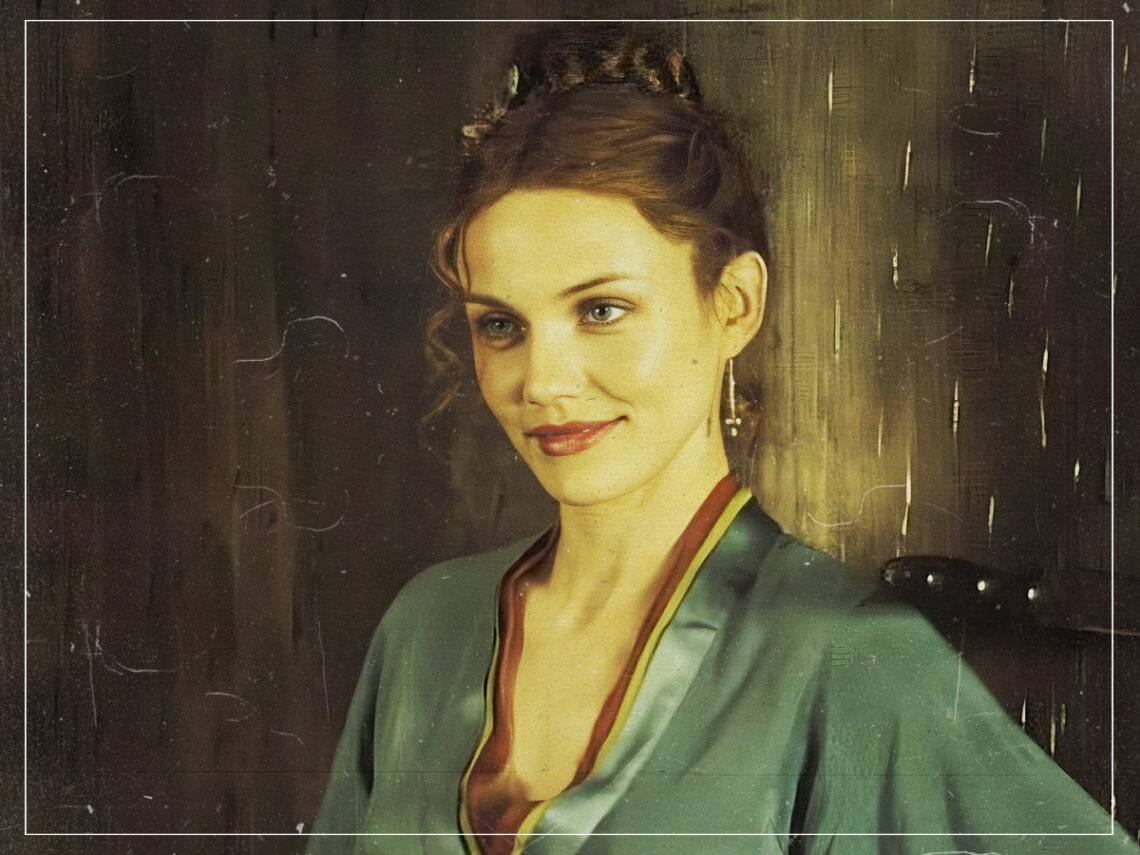
4. Cameron Diaz as Jenny Everdeane (Gangs of New York, Martin Scorsese, 2002)
Cameron Diaz can’t be faulted for trying, with the actor clearly and evidently giving her all to an against-type performance in Martin Scorsese’s long-gestating passion project, but it would be an understatement to say that she failed to pull it off.
The legendary director’s filmography isn’t exactly known for its terrible acting, which makes Diaz’s Jenny Everdeane all the more noticeable. Months of accent training proved to be worth nothing in the end, and it can’t be a coincidence that she never sought a part that would require her to stretch herself to this degree again before her self-imposed exile from the industry.
Very much a case of a 21st-century superstar failing to disappear into the part of a 19th-century grifter, Gangs of New York ultimately left the Academy Awards completely empty-handed despite notching ten nominations, although Diaz did at least secure a baffling and borderline inexplicable Golden Globe nod for ‘Best Supporting Actress’.
3. Sofia Coppola as Mary Corleone (The Godfather Part III, Francis Ford Coppola, 1990)
A byword for terrible acting and nepotism run amok, Winona Ryder dropping out of The Godfather Part III forced Francis Ford Coppola to rope in his daughter to play Mary Corleone at short notice, outlining for all to see that this Coppola was not cut out for silver screen stardom like so many of her relatives.
Of course, she’d overcompensate by becoming an Academy Award-winning filmmaker in her own right, but the shadow of her disastrously poorly executed turn in the trilogy-capper continues to loom over her life and career. One demonstrably awful piece of acting shouldn’t follow a creative mind of Coppola’s calibre everywhere she goes, but it was so atrocious that it did.
Reflecting on how “all these years later it’s still a thing” with The Times three decades later, the fact she never wanted to be an actor in the first place and showed no inclination of following up The Godfather Part III still hasn’t been enough to overcome the reputation her legendarily diabolical turn garnered.
2. Russell Crowe as Javert (Les Misérables, Tom Hooper, 2012)
There are plenty of actors who harbour dreams of enjoying a secondary career as a successful musical act, but despite repeated attempts to carve out that exact path, Russell Crowe’s musical endeavours have hardly ever been the recipient of much acclaim.
Whether that was his 1980s single, ‘I Want to Be Like Marlon Brando’ as Russ le Roq, the three studio albums released by 30 Odd Foot of Grunts, or his subsequent bands The Ordinary Fear of God and Indoor Garden Party, his talents as a lead vocalist hardly stack up to his Academy Award-winning day job.
Nonetheless, he was tasked to bring Javert to life in Tom Hooper’s lavish three-time Oscar winner Les Misérables, where he was rightfully pilloried for his distracting absence of singing ability. Growling his way through the proceedings as his co-stars showed off their pipes, it was a swing and a significant miss from both director and star.
1. Keanu Reeves as Jonathan Harker (Bram Stoker’s Dracula, Francis Ford Coppola, 1992)
As one of cinema’s greatest-ever action stars, Keanu Reeves has endured and remained as popular as ever despite his entire career being dogged by repeated accusations that he’s an awful actor.
While that might be true to a certain extent, it doesn’t mean he isn’t one of the best at what he’s good at, with any fleeting attempts at going against the grain typically ending in disaster. The most egregious by far is unquestionably Francis Ford Coppola’s Dracula, where Reeves’ Jonathan Harker sinks without a trace in the midst of his co-stars being on such towering form.
The accent, the affectations, the vapid expression that remains etched on his face, the startling lack of emotion, and the preposterous greying wig he adopts in the latter stages are ill-at-ease with the Gothic opulence seeping out of the three-time Oscar winner’s every sumptuous frame, forever etching Reeves into both the bad accent and despicable performance hall of shame.
