


10 songs that were written at death’s door

Not every rock song is meant to be a walk in the park. From the early days of the genre back in the 1950s, artists were dealing with the sour side of life, either through breakup songs or losing someone they care about. Although talking about love gone bad might have been tough, some of the biggest names, like Neil Young and Pink Floyd, have made a living out of dealing with mortality through music.
Throughout their runtime, these tunes go for a much more gloomy tone. While the song might have done well for the artists in question, it was a cover-up for what was happening behind the scenes as musicians went through production hell. Whether sick in bed or on the verge of their demise, these musicians poured all of their feelings into song.
Not every one of these tracks is meant to be sad all the way through, however. Sometimes being in that dire state will inspire a song to help pull you out of those emotional doldrums. Often, the listener will latch onto these songs and enjoy what they’re hearing, only to realise that the tune has mentally deceived them the entire time.
Despite having a dark streak to them, every fan identified with these tracks gains comfort knowing that someone else out in the world knew what it felt like to be truly alone. It would seem that looking death in the eye can often serve as the perfect muse for something amazing.
10 songs that were written at death’s door
‘Kickstart My Heart’ – Mötley Crüe
Mötley Crüe always lived up to their persona as the misfits of Los Angeles. As the band got bigger and bigger off the back of albums like Shout at the Devil, their need for thrills was only matched by the amount of junk they were putting in their veins. It was a matter of time before the Grim Reaper called, and Nikki Sixx came dangerously close to the afterlife in 1985.
Right when they were due to go out on tour, Sixx overdosed on heroin and was pronounced dead at the scene before being revived by paramedics. After taking two adrenaline needles to the chest, Sixx realised how badly he messed up, leaving a note on his answering machine saying he couldn’t get to the phone because he was dead.
Inspired by his frail state at the time, Sixx wrote ‘Kickstart My Heart’ about the experience of coming back from the afterlife. Although the song is meant to celebrate his excessive lifestyle, the Crüe were all newly sober by the time they ended up recording the tune. They may have taken every thrill ride there was to take, but this ratty punk-tinged song was all about getting high on life.
‘Back in Black’ – AC/DC
In the early 1980s, no other hard rock band competed with AC/DC. Although the Aussie’s ode to the road Highway to Hell was crazy successful, it also gave the Young brothers a mantle of pressure that they didn’t want to deal with. Little did they know that their frontman’s time was running out.
After completing the demos for what would become ‘Back In Black’, Bon Scott listened to the song and was set to work on lyrics when he went out to hit up the pub. When his friend came to check on him the next morning, Scott was unresponsive, having rolled over during the night and dying after choking on vomit.
While the trauma had a huge impact on AC/DC, Angus Young vowed not to let this be the end of their hard-rocking days, drafting in Brian Johnson and framing the next album as a tribute to Scott’s memory. Though ‘Back in Black’ might have the swagger of AC/DC’s glory days, it’s all about celebrating Scott’s legacy as the ultimate hell-raiser.
‘Red Mosquito’ – Pearl Jam
Pearl Jam never wanted to play the game of stardom. After the massive rollout behind their debut album Ten. Eddie Vedder withdrew from the public eye, refusing to appear in music videos and trying to diminish his spotlight as much as possible. No amount of cameras can stop food poisoning from rearing its head, though.
When Vedder stepped up onstage at Golden Gate Park on June 24th, 1995, he fell ill with food poisoning and only made it through seven songs before cutting the set short. While Vedder eventually made up the date, the beginnings of ‘Red Mosquito’ were started that day, being a collaboration from every single band member.
Written in a waltz feel, the entire song simulates the uneasiness you get with food poisoning, being slightly on edge one minute and not having an inner sense of balance. When the song got to the studio, Mike McCready also laid down slide guitar, which added a certain amount of menace to the final track. Though No Code was designed to be an impersonal record, ‘Red Mosquito’ puts you in the mind of one of Vedder’s most painful performances.
‘Draw the Line’ – Aerosmith
Every member of Aerosmith was out of their mind on drugs by the late 1970s. Although The Bad Boys From Boston remained one of the biggest acts in the world thanks to singles like ‘Walk This Way’, the next album, Draw the Line, would be marred by controversy, with drugs flying around the studio. When they finally got the desire to create, the title track had all the frayed nerves built into its grooves.
Although the song’s central message revolves around a girlfriend that Steven Tyler is calling out, what was going on behind the mixing desk was so much worse. Now that they were wealthy, Aerosmith had their drug dealers deliver mountains of cocaine to the studio, where they spent days with no work getting done.
Adding even more fuel to the fire, the band took to having a gun range in the attic of their studio, firing off pistols in their free time and even bringing one of the revolvers into the studio for some press photos. The album might have finally come out after some time, but for any band member, it was only a matter of time before any of them wound up in a box somewhere.
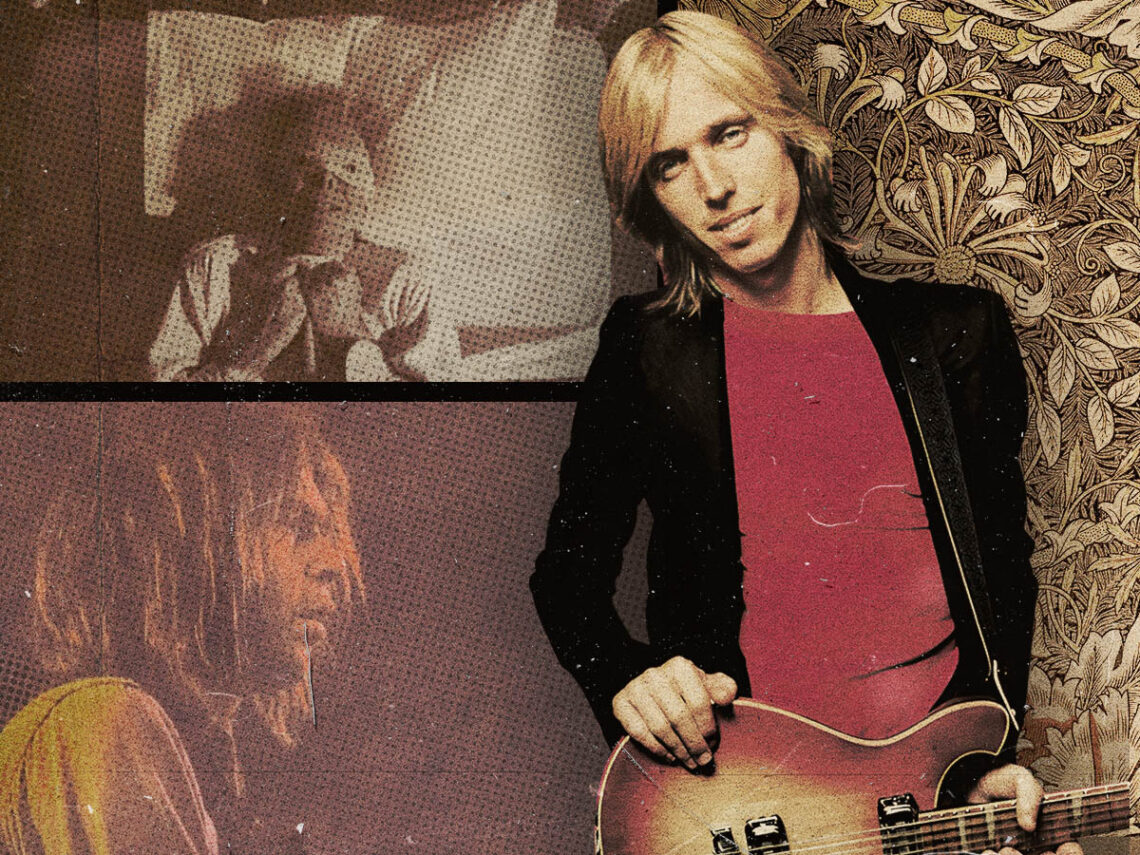
‘Swingin” – Tom Petty and the Heartbreakers
Tom Petty was in a terrible headspace when he wrote the album Echo. While he may have shown up to the studio and written the songs, he was slowly becoming desensitised to his bandmates due to his public divorce from his wife. Petty may have been suffering in silence, but the real horror show was happening within the Heartbreakers.
During the song’s recording, bassist Howie Epstein was struggling with heroin addiction and starting to lose his grip on reality. As much as Epstein may have wanted to have a presence on the record, one of his final performances was on ‘Swingin’, adding his trademark high vocal harmonies that made the chorus come alive.
By the time the cover shot the album cover, Petty had lost his patience with Epstein, deciding to shoot the cover without him after Epstein claimed to have missed the plane. The Heartbreakers soldiered on with the album, but any chance to help Epstein was beyond their reach. He passed away from an overdose in 2003. Although the Heartbreakers were reborn with original bassist Ron Blair back in the fold, Petty thinks the real tragedy of the Heartbreakers’ story is losing Epstein to addiction.
‘On the Mend’ – Foo Fighters
Most Foo Fighters fans needed some time to adjust to In Your Honor. Looking to mix up their usual formula, Dave Grohl had the idea of making two separate discs of new material: high-energy rock and roll on one side and slow-burning acoustic ballads on the other. The unplugged record gave fans an inside look at Grohl, and ‘On the Mend’ detailed just how close he came to losing one of his best friends.
During the tour for One By One, Taylor Hawkins overdosed and was put into a coma to recuperate. As Grohl lay by his bedside, he said he felt helpless trying to ensure he didn’t lose any more of his friends to drugs. Although Hawkins eventually woke up, Grohl penned ‘On the Mend’ about those few wanton days in the hospital.
Since there’s no distortion, Grohl’s soothing voice evokes the feeling of coming out of a stupor, finally having his head on straight and moving on. Though Hawkins had played the song on the Foos’ tour, Grohl had never told him it was about those few days in the hospital. It was a long way back to normalcy after Hawkins’s overdose, but writing this song was the first step towards healing.
‘Comfortably Numb’ – Pink Floyd
The touring life isn’t always what it’s cracked up to be. Although running across the world with your friends might seem like fun, the need to be at the front of the stage for those few hours every night is bound to take its toll on anyone’s body. And when Roger Waters nearly collapsed backstage before a gig when Pink Floyd got to the end of one of their touring cycles, he was immediately inspired.
After falling ill with hepatitis before a show, paramedics gave Waters a muscle relaxant that was so strong he could barely feel himself playing his instrument. When it came time for the band’s next ambitious project, Waters’ horrible gig became the perfect backdrop for the story of a rock star slowly isolating himself from society.
In the context of The Wall, Waters channelled all of his memories from that gig into the song, remarking about how his hands felt like two balloons. When the character of Pink is dealt the same muscle relaxants, he has to go perform a show where he is completely numb to the world and proceeds to go into a drug-induced tirade onstage. The high of putting on a rock show is a drug by itself, but ‘Comfortably Numb’ is what happens when you become too desensitised to your musical dreams.
‘Fever Four’ – Neil Young
Neil Young has never been one to mince words. Throughout his entire career, Young answered to no one but his muse, and the rest of his career has been about following whatever creative endeavour came his way. Then again, none of that matters when the body decides to shut down.
While in bed with a high fever, Young was working on the songs for Everyone Knows This Is Nowhere and came up with four of his greatest hits. Over the few days he was recovering, Young made classics like ‘Cinnamon Girl’, ‘Cowgirl in the Sand’, ‘Down By the River’, and the title track.
Although Young had been more productive than ever, he was grateful that he got sick, thinking it helped him focus on the music rather than any of his other daily activities. Young might not have had that much success out of Buffalo Springfield before this, but if these are the kind of tunes he makes in this state, he could afford to get sick more often.
‘Lazarus’ – David Bowie
By the early mid-2010s, David Bowie knew that he wouldn’t be long for this world. After being diagnosed with terminal cancer, Bowie decided to spend his final days in the studio, working on music until he couldn’t anymore. While Blackstar was about meditating on his death, ‘The Starman’ had something special in mind for the song ‘Lazarus’.
Framed as one of Bowie’s final singles, his singing on this track sounds like he’s already in the afterlife, talking to us about the scars that can’t be seen anymore. Although Bowie could have taken this opportunity to thank the fans, ‘Lazarus’ acts as a meditation on his fame, looking out over the world and how everybody knows him now that he’s passed on.
Whereas most other artists would approach death with fear, Bowie offers up an air of acceptance, as he sings about the freedom he’ll get from finally leaving his fame on the shelf. Bowie didn’t need to make a record like this, but his ethos was always about his music, and he would follow his muse to the grave.
‘Mother Love’ – Queen
It is astonishing to see how long Freddie Mercury lived passed his original AIDs diagnosis. Despite being told that his case was terminal and he would probably not see the end of the 1980s, Mercury continued to work and made it to 1991 before passing away. Though he stayed out of the public eye towards the end of his life, Mercury continued working s that his bandmates could have something after he left.
As the rest of his bandmates worked around him, most of Queen’s swansong Made in Heaven was constructed during Mercury’s better days when he could work on some of the material. Though ‘Mother Love’ began life as a slow ballad, Mercury soars towards the end of the song, going for some of his highest notes while having to fight pneumonia simultaneously.
However, Mercury would never see the completion of this song, dying before it was finished. Brian May stepped in to sing the final verse instead. While Mercury knew that his days were numbered, he would not let the gloom of death get in the way of entertaining his audience.
