


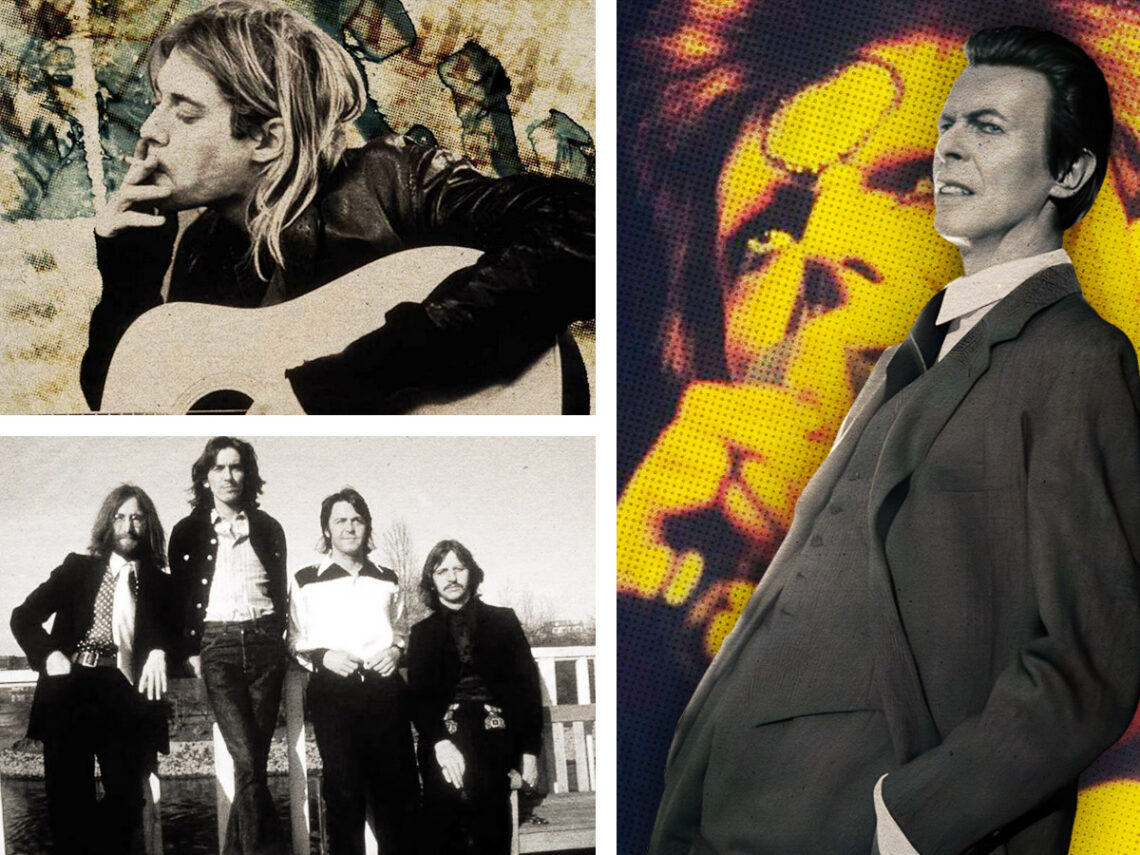
10 rock artists that reinvented themselves

Being a star in the public eye tends to feel like a double-edged sword after a while. Even though it might seem like the greatest job in the world having fans ogle over you every single day is a distressing reality. An artist’s public image also tends to put them in a box, and people think they know best about what an artist should do whenever they make music. Their persona and the real person are two very different things, and artists like David Bowie and Radiohead practically murdered the old version of themselves to move on.
As much as a persona might give musicians a certain amount of power in the public eye, these artists knew the kind of restrictions that they had and did everything in their power to change that on their future projects, either evolving past their humble beginnings or actively killing what made them so popular in the first place to pave the way for something new.
Although this feels like career suicide half the time for young bands to start at ground zero again, every one of these artists managed to reconstruct themselves as an entirely different band afterwards, going from their youthful days into something that was a bit more serious as the years went on.
While fans might want them to return to the old days, looking backwards was never on the agenda. Because artists can’t be in their 20s forever, this new look was what took these artists from a trendy band to the leaders of the genre.
10 rock artists that reinvented themselves:
Pantera
At the start of grunge, no one had any love for metal anymore. Unless the band’s name was Metallica and they were too big to fail, some of the most esteemed names in hair metal and thrash began to either fall by the wayside or jump on the alternative bandwagon. While Pantera may have been proud to fly the flag for metal at the time, it was a different story when they started in the early ‘80s.
Before most fans got a taste of Dimebag Darrell’s licks, the early version of Pantera started life as a glam rock outfit. Being influenced by what was coming out of the Sunset Strip, most of Pantera’s first three albums have more to do with Motley Crue and Poison than anything remotely heavy. Dimebag (then Diamond Darrell) could still shred at this point, but the songs just aren’t fitting, along with former singer Terry Glaze not having the right tone of voice for Pantera’s music.
Once Phil Anselmo got on board, things took a different turn, making them one of the heaviest bands overnight once they sunk their teeth into thrashers like Slayer and Megadeth. Pantera went through those few years of growing pains years before anyone had heard them, but the die-hard fans were in for a fun time in the pre-Anselmo days.
Pink Floyd
After the ‘60s faded away, rock was starting to get a lot more complicated. In between the era of Flower Power, bands were starting to toy with the construction of rock songs, with acts like Yes, Genesis, and King Crimson taking the genre to different places by stretching out their songs into mile-long exercises. While Pink Floyd may have brought that flavour of progressive rock to the masses, they had to lose a few sounds (and friends) along the way.
In the early days of Floyd, their sound was more influenced by psychedelic rock, with their first album being recorded around the same time that The Beatles were making Sgt. Peppers. After going out on the road, head songwriter Syd Barrett was starting to crack up, losing his battle with mental health and trying to find some sort of higher consciousness through psychedelics. While they would grow on the next few records, they would do so without Barrett, asking him to leave so he could take care of himself and drafting in David Gilmour to fill out their sound.
Losing Barrett wasn’t going to be easy, but the band’s shift towards prog rock was informed by Barrett’s dismissal, as they watched from afar, seeing him slowly lose his battle with mental health. Going through records like Dark Side of the Moon and Wish You Were Here, both Gilmour and Roger Waters were getting more jaded at the music business and why they drive people like Barrett to go mad. Barrett might not have been in Pink Floyd for very long, but his ghost is a key part of every classic tune Floyd made afterwards.
Damon Albarn
Blur had always gone through somewhat of an identity crisis. Before they became the darlings of Britpop, Damon Albarn had envisioned something in the realm of shoegaze before writing songs in the vein of The Kinks’ Ray Davies. After that had diminishing returns, Albarn wanted nothing to do with the pop machine…so he hid behind cartoons.
While Albarn was struggling over one of Blur’s albums, he came up with the idea of making a virtual band with artist Jamie Hewlett, creating a world where every band member could express themselves in their own way. Although Blur eventually went on hiatus, Albarn carried on with Gorillaz, which took on every genre under the sun, depending on his mood.
Across their discography are the seeds of trip-hop on their debut album, more zany style production on Demon Days, and lush soundscapes out of Plastic Beach, all with Albarn’s cynical and, at times, depressing view of the world. This was no longer the Britpop throwdowns from the days of Parklife. Oasis may have won the war of Britpop in the ‘90s, but Albarn had his battle set on something much bigger.
U2
The onslaught of grunge should have thrown U2’s brand of rock and roll in the trash. Since this was the band known for sounding larger than life and playing stadiums worldwide, how was that supposed to relate to the flannel-clad crowd into bands like Pearl Jam and Nirvana? U2 weren’t about to deny their rock star status, but Achtung Baby was the first time they started to dissect it.
After the tour for Rattle and Hum made them look like musical gods, this was a pivot in the opposite direction, embracing the world of electronic music and making something that was a lot more abrasive than what we heard on The Joshua Tree. As much as Bono’s schtick as ‘The Fly’ may have seemed over the top, there was a bit of tongue-in-cheek humour to the whole thing, as if he can’t get over how overblown rock stars can be.
When listening to the deep cuts of the record, fans get a peek behind the curtain of what it’s like at the top, as Bono talks about how lonely it can be living the life of a rock star, never knowing who to trust and trying his best to find something to say. It might be hard to sympathize with someone who has to worry about counting their millions, but everyone has the same sized heart, and U2 were wounded in the age of irony.
Metallica
Some of Metallica’s die-hard fans are not the biggest fans of change. Even though the thrash legends have some of the biggest albums of the genre to their name, there are just as many fans who would rather take an axe to a good portion of their recent catalogue. And while St. Anger might have its fans, thrash fans were pissed when they first heard The Black Album.
Going for a more mainstream sound, they teamed up with producer Bob Rock to make a hard rock record, which turned into the biggest album they had ever made. Although new fans got a dose of Metallica on MTV thanks to ‘Enter Sandman’, some were absolutely pissed, thinking their thrash gods had lost all their integrity. Looking past this record as a metal album, it’s probably their strongest album experience, balancing out the ballads like ‘Nothing Else Matters’ with the crushing sounds of ‘Don’t Tread on Me’ or ‘Sad But True’.
The new version of Metallica wasn’t quite done after one album either, trying their hand at alternative music on Load and Reload and enraging some of their thrash fans even more. These might not have been every metalhead’s favourite era of the band, but Metallica never made the same album twice. They’re going to play what suits them at the moment, and it’s better to follow their muse than become a one-trick pony.
Nirvana
No one was ready for Nirvana to take over the world…least of all Kurt Cobain. While he had always wanted to be in a successful rock band, seeing ‘Smells Like Teen Spirit’ take over the world was a blessing and a curse for Cobain, making him the voice of a generation but also inviting an audience that he never asked for. Nevermind may have earned them a sea of alternative kids, but In Utero is the sound of Cobain actively trying to lose those fans.
After having to compromise and make a radio-rock album on Nevermind, Cobain went for the throat on this record, mixing his signature gift for melody with the sound of raw noise and distortion. Bringing in punk producer Steve Albini behind the board, this is Nirvana on Cobain’s terms, talking about how much he hates the media exposure that his band has gotten and how uncomfortable he feels constantly being in the public eye. Although the record has its bright spots like ‘Heart Shaped Box’ and ‘Dumb’, fans can also hear Kurt struggling to keep himself together, talking about missing the comfort of being sad on ‘Frances Farmer’ and screaming for some sort of relief from everything on ‘Scentless Apprentice’.
Those screams turned out to be frighteningly real a few months after the album was released after Cobain was found dead in his home after shooting himself with a shotgun. Fame can be an enticing thing, but this is the sound of a man who fulfilled all his dreams and realised that he didn’t want any of them.
Depeche Mode
From day one, Depeche Mode always maintained that they were a pop band. Although they may have had some art-rock tendencies on their first handful of releases, no one was going to mistake something like ‘Just Can’t Get Enough’ for pop, albeit with a more new wave twist to it. Once they cut their teeth, Depeche Mode started to paint with a much darker shade on their next few records.
With each passing album, the group’s sound seemed to borrow more from electronic music, containing chord progressions that were much darker than expected from a new wave band. Going through their discography, each album presents them toying with morbid topics and somehow making them into radio hits, like the religious imagery on ‘Blasphemous Rumours’ or making a dysfunctional relationship feel like the end of the world on ‘People Are People’.
While they may have gotten into the game a little early, Depeche’s mix of electronics was a perfect fit once the ‘90s kicked in, being a precursor to the more accessible side of industrial music like Nine Inch Nails on albums like Violator. The ‘80s were the age of neon, but Depeche Mode could do a lot more by making things pitch black.
The Beatles
The first half of the Beatles’ career saw them as one of the greatest boy bands in the world. Even though they played mainstream rock and roll, their lovable mop-top image made them favourites among teenage girls who all but drowned out every concert they played with their constant screaming. Once they got back into Abbey Road Studios, they started to use their recordings as their musical playground.
Starting with Revolver, ‘The Fab Four’ took on a new phase of their career, making songs that were never meant to be reproduced live like ‘Rain’ or ‘Eleanor Rigby’, featuring everything from backwards guitar to delicate string sections. After leaving the road for good in 1966, the band became studio lab rats, making some of the best songs of their career out of studio innovations, like John Lennon asking for two separate takes to be spliced together for ‘Strawberry Fields Forever’ or creating a tapestry of different songs to close out their last collaborative album Abbey Road.
Even when they were making music without each other’s input on The White Album, every band member pulled for different influences, like Lennon’s folksy side on ‘Julia’ or Paul McCartney casually inventing heavy metal on ‘Helter Skelter’. The Beatles may not have seen themselves as innovators, but having fun making music in the studio has been influencing rock ‘n’ roll for half a century now.
Radiohead
At the start of the ‘90s, Radiohead was a band designed to be forgotten. However, Thom Yorke may have looked like a perfect British decoy for Kurt Cobain in the video for ‘Creep’, that song became the albatross around their neck for years, making them glorified one-hit wonders. Once the age of technology kicked in, Radiohead went from a footnote in rock history to leaders of the new revolution.
With the release of OK Computer, Radiohead made one of the last monumental records of the ‘90s, taking fans on a journey through a world that has been consumed by technology on songs like ‘Paranoid Android’ and ‘Exit Music for a Film’. While rockers could still say that that was at least a rock album, the band decided to leave rock behind altogether on Kid A, mixing elements of electronic music with jazzy sections and studio ambience that left some rock fans confused.
Although Radiohead made a definite line in the sand, they have never looked back from Kid A, breaking new ground on every single album and refusing to be pigeonholed into one certain genre, from the weird fun behind In Rainbows to the pure melancholy they tapped into on A Moon Shaped Pool. While most bands are used to finding their sound and sticking to it, nothing is off the table as long as it comes out the way Radiohead would do it.
David Bowie
When talking about artists that reinvented their image, it’s almost impossible to pin down David Bowie. One could argue that the man never had a defining image in the first place, always moving on to the next style without batting an eye. Before he became a rock and roll giant, he was originally just a rock alien that fell to Earth.
After breaking into the mainstream with ‘Space Oddity’, Bowie moulded himself into a glam rock extraterrestrial, going from ‘Ziggy Stardust’’s campy space rock to the more electrified version of Ziggy on Aladdin Sane. While Bowie’s first run of albums in the ‘70s would have made him a legend, he was always looking to try new things, sinking his teeth into everything from blue-eyed soul on Young Americans to his infamous Berlin period, embracing the world of krautrock and making something that seemed to leave traditional rock and roll behind.
Although Bowie had another stab at the pop charts during the ‘80s with Let’s Dance, he wasn’t afraid to break new ground either, moving into the world of drum and bass in the ‘90s on Earthling until he took on jazz to deal with his own mortality on the album Blackstar. Bowie may not have been the biggest musician in the world throughout every phase of his career, but there was never a moment where he didn’t do whatever the hell he wanted when he stepped up to the microphone.

Never Miss A Beat
The Far Out Beatles Newsletter
All the latest stories about The Beatles from the independent voice of culture.
Straight to your inbox.