


10 actors hailed as the ‘next big thing’ who failed to live up to the hype

As much as studio executives, shareholders, and board members would be reluctant to admit it, movie stars can’t be manufactured. There are great actors who couldn’t open a movie at the box office if their life depended on it, just like there are A-listers who couldn’t emote their way out of a paper bag.
Of course, there are plenty of names who’ve got one foot firmly planted in both worlds, but it’s a dangerous thing – for a number of reasons – to point to a certain performer and insist they’ve got everything in their locker to become a mainstay of the multiplex for as long as they see fit.
They could be a one-hit wonder, a flash in the pan, a youngster with a bright future who quickly grows disillusioned with the grind of acting, or they could rebel against the pressure placed on their shoulders by refusing to play the game and intentionally avoid the parts that would make them more famous.
The common thread unites the following ten: They were all touted as the next big thing before failing to match the prognostications, but the difference is that they all went about it in different ways.
10 overhyped actors who fell short:
Josh Hartnett
A problem nobody really considers whenever Hollywood decides a certain actor has been pre-ordained as its next A-list superstar is whether or not they’d even be remotely interested in embracing that status: Josh Hartnett had been singled out as the next big thing, and he despised the idea.
He enjoyed a lot of success very early in his career, but because he was young and handsome, studio executives were eager to push him into one of two boxes: heartthrob or action hero. Hartnett didn’t want to be either, so he decided to take a step back, scale down his workload, and focus on smaller projects.
It takes a brave soul to turn down the chance to play Batman and Superman, knowing the levels of fame, fortune, and visibility it would bring, but Hartnett opted to play the long game and currently finds himself in the middle of a well-deserved renaissance.
Shailene Woodley
There are few unsavoury things the regularly twisted world of Tinseltown loves more than pitting women against each other, and because she gained attention in a buzzy awards season favourite before headlining a dystopian literary adaptation with franchise potential, Shailene Woodley was designated as the 1B to the 1A, Jennifer Lawrence.
The two actors were born exactly 16 months apart, and with Lawrence earning an Academy Award nomination for Winter’s Bone and taking top billing in The Hunger Games, Woodley notching a Golden Globe nod for The Descendants and taking on the lead role in Divergent saw them frequently compared.
The latter has been working solidly, and her work on HBO’s Big Little Lies was rewarded with a Primetime Emmy nomination. In the interim, she’s collaborated with auteurs like Michael Mann and Oliver Stone, but she didn’t quite manage to reach the heights that were predicted in the early 2010s.
Anthony Michael Hall
Anthony Michael Hall had played major roles in three hit teen comedies that had all been released before he turned 18 years old, putting him on the map and announcing to the world that John Hughes had unearthed yet another diamond destined for the top.
However, to avoid the threat of typecasting, Hall turned down parts in Ferris Bueller’s Day Off and Pretty in Pink that had been written specifically for him, and his attempts to branch out didn’t go as planned when he only lasted a single season as a Saturday Night Live cast member, although he remains the youngest series regular in the show’s history.
The actor also turned down the opportunity to play the lead in Stanley Kubrick’s Full Metal Jacket, and while he’s never been out of work for too long and has accumulated a prolific body of work covering almost every genre under the sun, his star has never shone any brighter than it did in the early 1980s.
Jennifer Grey
Wasting no time at all in making her mark on Hollywood, Jennifer Grey spent virtually all of her early career hovering around instant classics, cult favourites, box office sensations, and acclaimed auteurs.
Her first six features included Francis Ford Coppola’s The Cotton Club, the hit action movie Red Dawn, John Hughes’ Ferris Bueller’s Day Off and, of course, Dirty Dancing, which embedded her into the cultural consciousness and got her on the shortlist for ‘Best Actress – Musical or Comedy’ at the Golden Globes.
It was a hell of a way to announce herself on the scene, and her impact was so resonant she even inspired Madonna to write a song, only for Grey to admit that her decision to undergo cosmetic surgery effectively ended her chances of continued mainstream success and sent her back to square one.
Dane DeHaan
Looking a little like a young Leonardo DiCaprio wasn’t the only reason why Dane DeHaan was pinpointed as the second coming of the world-renowned actor, although it was definitely a factor.
It helped that he proved himself to be a talented performer in his own right, with his first leading role coming in a movie that debuted at the top of the domestic box office when he headlined Josh Trank’s Chronicle at the age of 26 in what was only his second appearance in a feature.
From there, he weaved between genres in films including Lawless, Steven Spielberg’s Lincoln, Terrence Malick’s Knight of Cups, The Amazing Spider-Man 2, and The Place Beyond the Pines, without ever running the risk of having the rocket strapped to his back post-Chronicle ever really exploding into life.
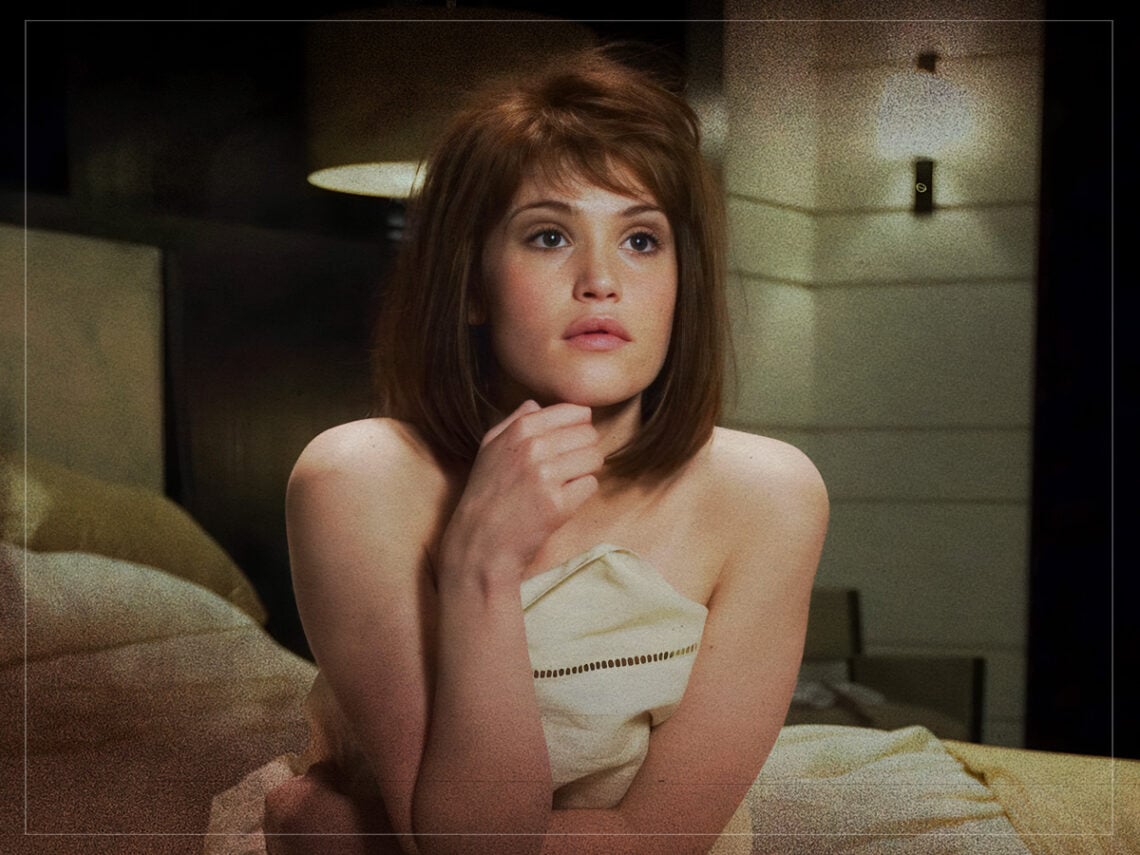
Gemma Arterton
Within three years of her screen debut, Gemma Arterton had played plum roles in a trio of high-profile blockbusters, as good a sign as any that Hollywood was confident it had found itself a major new star.
Quantum of Solace, Clash of the Titans, and Prince of Persia: The Sands of Time raised her profile among cinema audiences after combining to earn billions at the box office, but smaller projects like The Disappearance of Alice Creed and Tamara Drewe also showed she was a talented actor without the big budget bells and whistles.
Arterton admitted that “it didn’t sit well with me” becoming known as a sex symbol first and foremost, even if she acknowledged that “I was doing those roles because they were the ones I was offered.” When she was in a position to exert more control over her own trajectory, she prioritised independent fare and shunned the spotlight that had been shone so brightly on her right out of the gate.
Taylor Kitsch
The summer of 2012 was supposed to be the moment Taylor Kitsch emerged as the newest blockbuster leading man on the block, only for things to go about as disastrously awry as they possibly could. Not just for one movie, either, but two.
The year after his breakout role on the TV series Friday Night Lights had reached its conclusion, Kitsch was positioned as the focal point of a pair of inordinately expensive films that had the potential to make or break his above-the-line prospects in one fell swoop.
Unfortunately, Andrew Stanton’s John Carter and Peter Berg’s Battleship tanked in cinemas, losing a combined total of around $350 million. The former was the single biggest flop in cinema history; Kitsch has only appeared in seven features since and none since 2019, so it’s looking very unlikely he’ll ever book a leading role in an effects-heavy epic ever again.
Leelee Sobieski
By the time she’d even turned 20, Leelee Sobieski was on course to become known as one of her generation’s most ubiquitous young stars. Instead, she’d retired from acting completely before she hit 30 and now makes her living in the art world.
A two-time Golden Globe and one-time Primetime Emmy nominee while still in her teens, Sobieski had played Joan of Arc, worked with Stanley Kubrick in Eyes Wide Shut, dipped her toes into blockbuster waters with Deep Impact, and lent support in the hit rom-com Never Been Kissed.
Her performances were always reliably solid, and it was clear her potential as an actor was virtually limitless. However, Sobieski gradually began falling out of love with the industry, and she was gone altogether only a decade after her second Golden Globe nod.
Mickey Rourke
Mickey Rourke decided that getting punched in the face for a living was a much better use of his time than dealing with the political machinations, manoeuvring, petulance, and back-stabbing that run rampant in the movie business, which says it all about why he was so desperate to get out.
Ruggedly handsome with soulful eyes and an effortlessly naturalistic acting style, it was inevitable that the Marlon Brando comparisons were going to be made. They weren’t entirely without merit, though, and he even shared a notable trait with the iconic star by frequently being his own worst enemy.
Rourke’s career never came close to reaching its potential after his initial sabbatical, and even the goodwill generated by his stunning comeback performance in Darren Aronofsky’s The Wrestler was short-lived, leaving the veteran trawling the straight-to-video circuit in a string of forgettable genre films.
Sam Worthington
As the top-billed star in two of the three highest-grossing movies ever made, Sam Worthington has already secured his place in history as the focal point of James Cameron’s Avatar franchise, which has no doubt made him a very wealthy man.
When he’s not wearing a motion-capture leotard and helping the director push the boundaries of cinema to new limits, though, his filmography is less than stellar. Audiences were effectively told that he was going to be the next major action hero, only for his lack of such qualities as range, charisma, and screen presence to shoot him in the foot.
Worthington had never been in an American movie until his name and face were on the Terminator Salvation poster alongside Christian Bale, before Avatar shattered box office records and the Clash of the Titans remake came within a whisker of half a billion dollars in ticket sales. Those three films were released within ten months of each other, but that’s about as good as it got.
