


10 movies that made more money through merchandising than the box office

Making a dent at the box office is the most obvious barometer of any movie‘s success, and by far the most tangible as it applies to studio executives hoping to secure tidy profit margins.
It isn’t entirely the be-all and end-all, though, with major franchises having weaponised merchandise sales as a key method of drumming up additional business ever since George Lucas made the bold – and ultimately genius – call to take a pay cut for Star Wars in exchange for holding onto the merchandise rights.
Since then, every heavily-marketed release has come bearing an innumerable number of tie-ins, which, in many cases, has proven to be more lucrative than the tickets it sells by quite some margin.
Not many of the following ten titles were flops. However, a couple did significantly underperform relative to expectations. Still, the common denominator is that they all comfortably made much more through merch than they did at the box office.
10 movies that made more through merchandising than box office:
10. Power Rangers (Dean Israelite, 2017)
One of many examples of a would-be franchise bursting into a sprint before it had even mastered the art of crawling, Dean Israelite’s ill-judged Power Rangers reboot was heralded as the potential start of a six-film series, only to be abandoned after one.
A lukewarm take of $142million at the box office accelerated its demise, but there was a point where studio Lionsgate and owners Saban were considering a sequel based solely on the strength of the merchandise sales, with Toy News revealing a jump of almost 123% from the previous year. Annual sales before the movie averaged out at $200million, which was already above what the big screen reboot made before the bump was even factored in.
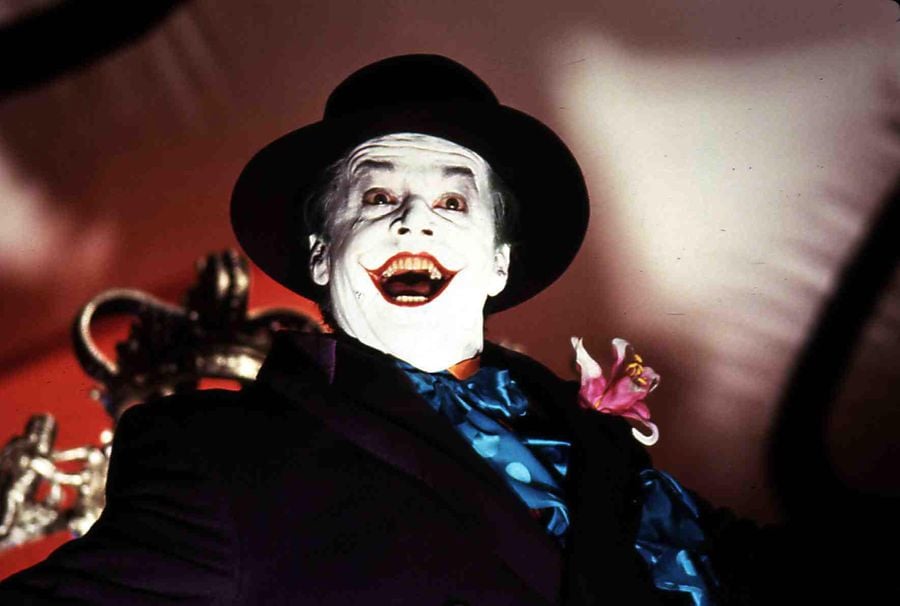
9. Batman (Tim Burton, 1989)
Audiences had been desperate to see the Dark Knight headline his own blockbuster feature film, and in addition to making a killing at the box office in the summer of 1989 after earning $411million, Tim Burton’s Batman would make even more in merchandise.
Jack Nicholson’s game-changing contract made him just one of many beneficiaries once the numbers were crunched, with the world gripped by the phenomenon that came to be known as ‘Batmania’. Everywhere anybody looked, there were tie-ins galore, with The New York Times estimating that at least $500million in revenue was generated from merch alone, although the real figure could be as high as $750million.
8. Transformers: Age of Extinction (Michael Bay, 2014)
Michael Bay’s Transformers movies got progressively worse the longer he remained in the director’s chair, but one thing that largely remained the same was the ludicrously profitable ancillary revenue streams, with the Autobots and Decepticons remaining best-sellers on shelves, even when their big screen counterparts were being torn to shreds by critics.
In the very same financial year Bay’s fourth instalment, Age of Extinction, was released. In its annual earnings report, Hasbro attributed the majority of its profit increase to the film and its associated toy lines, with $4.28billion posted. The movie may have comfortably cleared a billion in ticket sales, but that was barely a drop in the ocean.
7. Frozen (Chris Buck and Jennifer Lee, 2013)
Another monster-sized hit that made its box office run look like chump change compared to what happened in retail outlets across the globe, Frozen hauling in $1.2billion from cinemas was nowhere near the volume of cash it brought in from merchandise.
Two years after the film had released, Disney’s chief operating officer Tom Staggs noted (per the Wall Street Journal) that Frozen had been selling merch ten times faster than it had the previous year, with over $5.3billion worth of products shifted since the whimsical musical fantasy’s 2013 debut on the silver screen.
6. The Lion King (Roger Allers and Rob Minkoff, 1994)
The highest-grossing traditional hand-drawn animation of all time with $968million in the coffers, The Lion King comfortably outstripped its theatrical earnings in merchandise sales within the space of a few months, which came long before the stage adaptation would go on to provide yet another multi-billion source of income for the Mouse House.
Less than two months on from its premiere on the big screen, an investment firm dubbed The Lion King as “the most profitable picture Disney has ever had and the most profitable picture in the history of Hollywood.” That’s a lofty claim, but considering David Londoner told the Los Angeles Times that $1.5billion in merchandise sales was on the cards, it made it much harder to argue.
5. Jurassic Park (Steven Spielberg, 1993)
Becoming the highest-grossing film in the history of cinema upon its initial run on the silver screen, it may have taken Jurassic Park 20 years and a 3D re-release to finally cross the fabled billion-dollar threshold in ticket sales, but it was only a matter of months before it reached that figure in merchandise.
Per UPI, Universal confirmed in May 1994 that “sales of toys, books, video games and clothes inspired by the dinosaur blockbuster Jurassic Park have topped $1billion”. It took merchandise 11 months to reach the same number it took the movie two decades to achieve, underlining the massive cultural impact of Steven Spielberg’s classic blockbuster.
4. Toy Story 3 (Lee Unkrich, 2010)
The Toy Story trilogy ended on a note that was about as near-perfect as it gets, but Disney decided to make another one anyway. Toy Story 4 did much the same, only for a fifth entry to be officially announced in 2023. Why? Not to be too blunt, but because Woody and Buzz are merchandising monsters.
As part of Disney’s fourth-quarter earnings call following the threequel’s release, CEO Bob Iger highlighted how “almost $10billion in retail sales” had demonstrated how “these wonderful characters are clearly just as relevant and beloved as ever”. When he said “relevant and beloved”, what he really meant was “lucrative”.
3. Star Wars: The Force Awakens (J.J. Abrams, 2015)
The return of Star Wars to the big screen was always going to be a major event, and audiences responded in kind by propelling Star Wars: The Force Awakens to over $2billion at the box office. And yet, that was a drop in the ocean to the desperation for consumers to snaffle up as much merch as possible.
Analyst Tim Nollen projected that in the first year following Episode VII, new lines of merchandise derived directly from the return to the big screen of a galaxy far, far away reached $5billion. That isn’t just two and a half times more than what The Force Awakens would take in from cinemas, but more than Disney paid for the entirety of Lucasfilm.
2. Space Jam (Joe Pytka, 1996)
A childhood-defining classic for an entire generation, Space Jam may not hold up anywhere near as well when viewed through the jaded and cynical modern lens of what was first its target audience, but it can’t be argued that the combination of Michael Jordan and the Looney Tunes was a licence to print money.
The film’s $230million tally at the box office is positively quaint compared to its unbridled earning power, though, with Print & Promo Marketing estimating that Space Jam comfortably cleared a billion dollars in merchandising revenue, a figure that not even its long-awaited and ultimately terrible sequel A New Legacy could hope to match.
1. Cars (John Lasseter, 2006)
John Lasseter’s Cars is regarded as one of the weakest entries in the entire Pixar back catalogue, but it doesn’t really matter what the critics think when the film has gone on to spawn one of Disney’s most unstoppably profitable enterprises.
In the five years between Lightning McQueen’s first high-speed adventure and the arrival of sequel Cars 2, Disney confirmed (per The Hollywood Reporter) that the movie had crossed $8billion in retail revenue, making an absolute mockery of the opening chapter’s relatively tepid $462million tally at the box office.
