


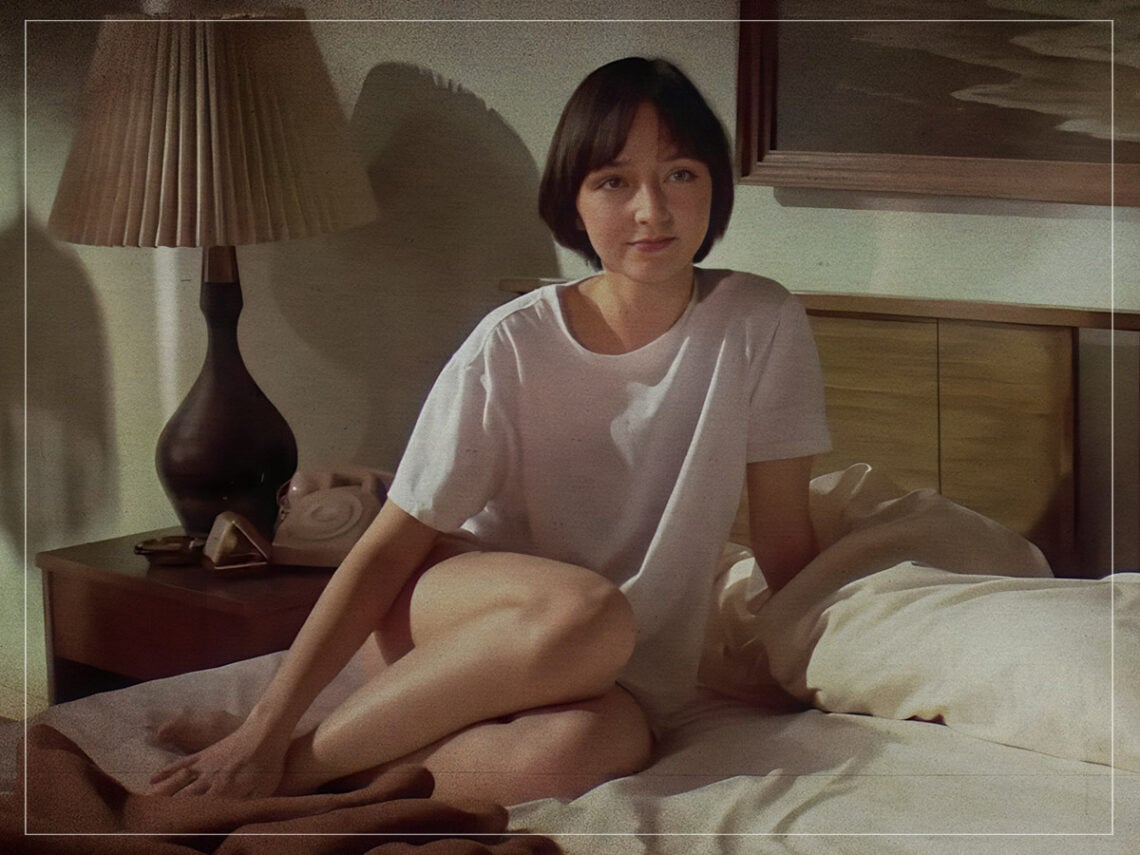
10 classic movies ruined by one annoying character

There’s no such thing as a perfect movie, and even a masterpiece can have its flaws, no matter how minor they may be. In some cases, the biggest issue a classic film can have is one completely misjudged character who tanks the audience’s enthusiasm every time they’re given something to do.
Sometimes, it’s through no fault of the actor tasked to play the part. It would be reasonable to expect that they’re reciting the dialogue they were given and performing the role in a way that was previously agreed upon by themselves, the director, and the key creatives involved.
Other times, it can feel as though they’ve accidentally wandered in from a completely different picture, and everyone else decided to go along with it. What remains the same either way is that there are more than a few phenomenal flicks to have been blighted with a constant onscreen annoyance.
It may not detract from the quality of the film as a whole when the positives drastically outweigh the negatives, but it’s inarguable that each of the following ten characters sticks out like a sore thumb when they’re surrounded by so much greatness.
10 irritating characters who ruined perfectly good movies:
Jenny Everdeane (Gangs of New York, Martin Scorsese, 2002)
As a passion project Martin Scorsese had wanted to make for decades, casting was just as key as the production design in ensuring Gangs of New York felt as lived-in, authentic, and immersive as possible.
Leonardo DiCaprio, Daniel Day-Lewis, Jim Broadbent, John C Reilly, Brendan Gleeson, Liam Neeson, Stephen Graham, Eddie Marsan, and many more talented thespians held up their end of the bargain. Cameron Diaz? Not so much. Even if her accent was up to scratch, which it absolutely wasn’t, her acting left even more to be desired.
Not only is she blown offscreen and exposed as miles out of her depth whenever she’s tasked with emoting opposite any of the ensemble’s heavy hitters, but poor Jenny is poorly written, poorly performed, and given very little substance to do. Anytime she’s onscreen, Gangs of New York noticeably suffers.
Carrie (Four Weddings and a Funeral, Mike Newell, 1994)
One of the defining romantic comedies of its era and a transatlantic cultural sensation, Four Weddings and a Funeral thrived despite Andie McDowell’s Carrie, who sucks the life right out of the movie every time she crossed paths with Hugh Grant’s bumbling Charles.
Yes, McDowell couldn’t do anything about having to wrap her laughing gear around one of the worst lines of dialogue in cinema history, and not even Laurence Olivier could have polished that verbal turd. Still, she remains the rude and self-obsessed embodiment of a red flag.
The audience is supposed to want the two leads to end up together, but thanks to the relentless annoyance of Carrie’s mere existence, most people would be left a lot happier if she simply fucked off instead.
Cameron Vale (Scanners, David Cronenberg, 1981)
Nothing will be able to knock Scanners from its perch as one of the best sci-fi splatter flicks ever made and the film that finally put David Cronenberg on the mainstream map, despite Stephen Lack’s Cameron Vale giving it his best shot.
For whatever reason, the actor seems unsure how to pitch his performance, so he decides to aim it all over the shop. On paper, the character is painfully dull and deathly uninteresting. In practice, Lack manages the impressive feat of giving an awful performance while simultaneously hamming it up for the cheap seats and making everybody wish somebody would blow his head up and put the audience out of its misery.
It’s a rare trifecta for a protagonist to be unlikeable, annoying, and wooden all in one fell swoop, but Lack inexplicably managed to tick three boxes that nobody should ever be aiming to tick in a movie that was fortunately good enough to rise above his dreadful contributions.
Fabienne (Pulp Fiction, Quentin Tarantino, 1994)
There are very few things wrong with Pulp Fiction, the influential and innovative crime thriller that’s in with the best shot of being remembered as Quentin Tarantino’s magnum opus if he lives up to his word and quits after his tenth and final feature.
The characters are unforgettable; the dialogue is iconic, the soundbites are burned into the pop culture consciousness, and the labyrinthine nonlinear epic cast a shadow over American independent cinema that too few filmmakers seemed interested in running away from.
Fabienne serves an important function in Pulp Fiction as arguably its only grounded character and the anchor that tethers the wayward Butch. That said, by the time her screentime is mercifully over, the overriding feeling is that she should go and get her own fucking blueberry pancakes.
Rachel and Robbie Ferrier (War of the Worlds, Steven Spielberg, 2005)
A two-for-one special, based solely on the reasoning that it’s incredibly difficult to decide which fictional child trying to outrun and survive an alien invasion alongside onscreen dad Tom Cruise can justifiably be called the most irritating.
They both state a solid case, albeit for entirely different reasons. Look, nobody’s going to go out on a limb and say that War of the Worlds is in Steven Spielberg’s top tier, and it’s not the best movie Cruise has ever been in. However, the first hour remains among the best self-contained acts of cinema either has ever crafted, after which the problems begin.
When the focus shifts to the family dynamic, it’s entirely forgivable if everyone’s first thought is just to let the aliens take the kids and make the life of Cruise’s Ray Ferrier a lot easier. Rachel screams constantly to an insufferable degree, whereas Robbie’s daddy issues run so deep he decides to abandon his old man and younger sister and runs away. It turns out he’s alive and well in the final scene, which is a shame.
Samuel Vanek (The Babadook, Jennifer Kent, 2014)
It’s kind of the point that Noah Wiseman’s Samuel is a handful in The Babadook, but fucking hell, that doesn’t make the film easier to sit through.
One of the major story points in Jennifer Kent’s modern horror classic is that his behaviour has become so out of control and erratic that it’s worn her down to such a point she even questions why he can’t be like every other kid of his age. The character was scripted as such, and Wiseman played it as such, so on that front there are no issues to be had.
On the other hand, it’s exhausting as an audience member and makes the prospect of a rewatch a daunting one. The actor obviously understands the assignment and did what he was asked, not that it makes the traumatised and haunted Samuel any less of an annoyance.
Willie Scott (Indiana Jones and the Temple of Doom, Steven Spielberg, 1984)
Steven Spielberg may not be the biggest fan of Indiana Jones and the Temple of Doom, but time has been kinder to the second instalment in the franchise’s second instalment since it first shocked the ratings board into ushering in the PG-13 era.
Ironically, time hasn’t been particularly kind to Kate Capshaw’s Willie Scott, who spends almost every second screaming, moaning, and screaming some more before mixing things up with yelling, howling, wailing, and shrieking.
Spielberg wasn’t a fan of the movie and audiences weren’t a fan of Capshaw. He evidently was, after the pair started a relationship during production that’s seen them happily married since 1991. They got their happy ending, but revisiting Temple of Doom requires the mute button to be within close proximity whenever Scott is involved.
Frankie (Django Unchained, Quentin Tarantino, 2012)
Even though he’s never shown anywhere near enough ability to convince the world he’s even remotely good at it, Quentin Tarantino has always fancied himself as an actor.
Filmmakers shoehorn themselves into their own movies all the time, and while Tarantino was inoffensive in short doses in the likes of Reservoir Dogs and Pulp Fiction, he went full M Night Shyamalan in Django Unchained by bumping himself up to monologue status as his ego threatened to run wild.
What’s worse than a limited actor forcing themselves into a scene that exists for no other reason than to stroke their own self-indulgent side? A limited actor forcing themselves into a scene that exists for no other reason than to stroke their own self-indulgent side, using a terrible accent and shattering the film’s immersion in one agonising swoop.
Ruby Rhod (The Fifth Element, Luc Besson, 1997)
The Fifth Element is one of the most batshit insane sci-fi blockbusters to ever exist, so on that front, Chris Tucker’s Ruby Rhod fits seamlessly into the unhinged world Luc Besson had created.
The high-pitched terror is even becoming more relevant as time goes on as the age of 24/7 influencers continues to cast an ever darker shadow over society, all of whom make it their life’s mission to engage the widest possible audience by being excessive, self-absorbed, and unstoppably attention seeking.
That doesn’t make him any more palatable, though, with the coiffed and catsuit-wearing assault on the senses pretty much what nails on a chalkboard would look, sound, and act like if they were distilled into human – or humanoid, in this case – form and unleashed upon an unsuspecting audience.
Joey Starrett (Shane, George Stevens, 1953)
Young Brandon deWilde was only 11 years old when the seminal western Shane was released, and he ended up on the shortlist for ‘Best Supporting Actor’ at the Academy Awards, so perhaps a degree of leniency should be reserved.
Then again, one of the genre’s greatest-ever movies is consistently hamstrung by the precocious kid’s unyielding hero worship of Gary Cooper’s title hero. It’s not a bad performance, given the amount of dialogue and dramatic heavy lifting deWilde is required to do, but it’s still a nuisance.
A lot of the story unfolds through his eyes, which emboldens director George Stevens to constantly cut to his face for reaction shots. The issue is that he only has one expression, and Joey’s cloying nature and “Bang! Bang!” interjections quickly get under the skin, and not in a good way.

Never Miss A Take
The Far Out Quentin Tarantino Newsletter
All the latest Quentin Tarantino content from the independent voice of culture.
Straight to your inbox.