


10 modern movies that have already aged terribly

It’s no secret that society is in a state of constant flux, with attitudes changing towards a variety of debates and conversations seemingly every day. Such has led to an increase in social awareness of issues such as mental health, race, gender and more, with our attitudes to these topics having adapted significantly since the start of the new millennium. For evidence of such, we just have to take a trip back through the movie calendar.
Movies certainly exist in a particular moment in time, reflecting the attitudes and cultural zeitgeist of a snippet of history, and whilst this can create important historical documents, it also has the potential to create countless movies that age like milk. It doesn’t take much to see this for yourself, with such classic films as American Beauty, Breakfast at Tiffany’s and Driving Miss Daisy having aged terribly over the years.
But what about more modern movies? Which releases show off dated CGI, present old political values and fail to properly represent people of colour? In our list of ten modern movies that have aged terribly, we aim to shine a light on a collection of 21st-century releases that have failed to live up to the standards of contemporary society.
Take a look at our list below, which includes films from such directors as Todd Phillips, Zack Snyder, Tom Hooper and more.
10 modern movies that have already aged terribly:
Blue Is the Warmest Colour (Abdellatif Kechiche, 2013)
Back in 2013, Abdellatif Kechiche’s lesbian drama Blue Is the Warmest Colour was praised by audiences and critics worldwide for its touching same-sex love story. Winning the Palme d’Or at the Cannes film festival, actors Léa Seydoux and Adèle Exarchopoulos were widely celebrated, but not everyone was too happy with the movie, with many criticising the film due to its behind-the-scenes controversies.
Although the film does a good job reflecting the lesbian relationship, the sex scenes are overly graphic, with many people criticising director Abdellatif Kechiche’s leering gaze during these moments. Moreover, both Seydoux and Exarchopoulos criticised the production for being “horrible” before saying they would never work with the filmmaker again.
Charlie’s Angels (McG, 2000)
Some people wouldn’t call McG’s Charlie’s Angels a ‘modern movie’, but it just sneaks into our criteria, having been released after the turn of the new millennium. Based on the TV series of the same name, the film follows three good-looking secret agents tasked with recovering a kidnapped business owner. Although it poses as an action flick, it’s not hard to see that the movie is really just an excuse to dress Cameron Diaz, Lucy Liu and Drew Barrymore in tight-fitted clothing.
Changing outfits constantly throughout the movie, from one scantily-clad costume to another, the movie is a pretty sleazy watch. What’s more, Liu has since reported that Bill Murray acted in an abusive manner on set too.
Crash (Paul Haggis, 2004)
We’ve already discussed a major award winner on this list, covering Kechiche’s Blue is the Warmest Colour, but the Palme d’Or recipient isn’t the only one to have aged terribly. The movie, which follows the lives of several people affected by social inequality and redemption, was an answer to the racial issues that have long pervaded American society, but it all comes across as a preachy, self-absorbed Hollywood back-rub.
‘Let’s just all get along,’ the movie preaches for 113 minutes, with this message, of course, being pretty simplistic for an issue that has long existed across the world.
The Danish Girl (Tom Hooper, 2015)
British filmmaker Tom Hooper was supposed to be the next big thing, releasing back-to-back hits The Damned United, The King’s Speech and Les Misérables in 2009, 2010 and 2012, respectively. But The Danish Girl in 2015 was the director’s first stumble, presenting a story that followed a fictitious Danish artist, loosely inspired by Lili Elbe, who becomes transgender and falls in love.
The problem with the film, aside from being quite pandering Oscar-bait, is that Eddie Redmayne stars in the lead role and not an actual transgender actor. It’s a decision that he himself calls a “mistake”, stating: “No, I wouldn’t take it on now…I made that film with the best intentions, but I think it was a mistake”.
The Hangover (Todd Phillips, 2009)
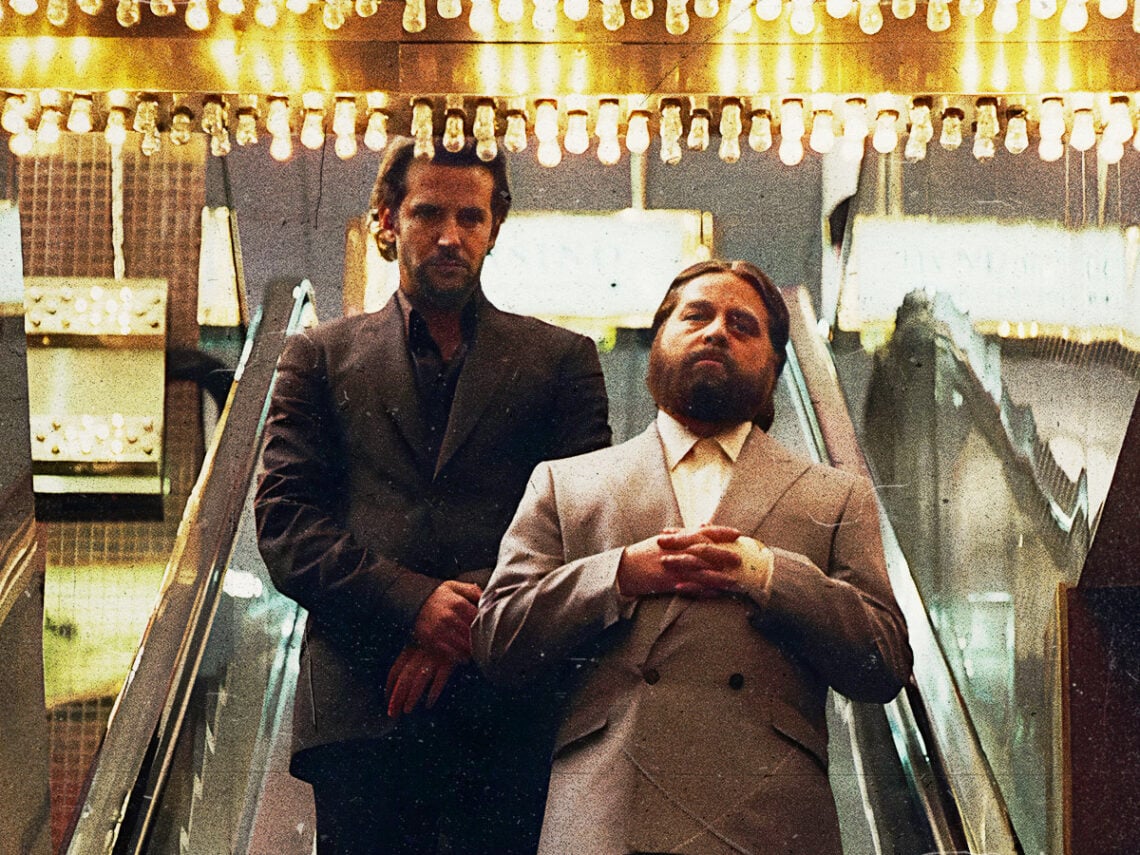
It’s an undisputed fact that back in 2009, The Hangover was a global comedy sensation, with the genre having never quite recovered from the success of the frat-boy Hollywood flick. Starring the likes of Ed Helms, Bradley Cooper and Zach Galifianakis, the film follows a group of middle-aged guys who decide to travel to Las Vegas for one last night of fun before their friend gets married.
Filled with racist, homophobic and sexist humour, the film is a good reminder of the kind of comedy we’ve thankfully left behind in the past. Many people will call the loss of these films ‘the death of comedy’, rather, the fact that audiences no longer accept such jokes merely forces writers and comedians to try a little harder.
The Help (Tate Taylor, 2011)
Another Oscar-winning movie that makes our list is Tate Taylor’s 2011 drama The Help, starring Viola Davis, Octavia Spencer, Emma Stone, Jessica Chastain and Bryce Dallas Howard. Despite being a little over ten years old, the film has dated considerably thanks to its ‘white saviour’ subtext that lies in its story that follows an aspiring author who decides to write a book about the black maids of 1960s America.
Overly simplistic in its approaches to race, The Help brushes over the history of the period without much conviction, with Davis later regretting her decision to appear in the film, saying that The Help was “created in the filter and the cesspool of systemic racism”.
I Now Pronounce You Chuck & Larry (Dennis Dugan, 2007)
Back to the Hollywood comedies of the early 2000s now, and Dennis Dugan’s rather homophobic movie I Now Pronounce You Chuck & Larry from 2007. Starring Adam Sandler, Kevin James, Steve Buscemi and many other staples of Happy Madison Productions, the film tells the story of two straight Brooklyn firefighters who pretend to be a gay couple in order to receive financial benefits.
Although they try and make things right with a conclusion that promotes gay relationships, it doesn’t do too much to redeem the whole movie that bombards the audience with homophobic jokes and ridicule of same-sex relationships.
Justice League (Zack Snyder, 2017)
So far on this list, we’ve covered a lot of movies that go against contemporary politics, but with this entry, we’re tackling something else entirely. Zack Snyder’s Justice League from 2017 was supposed to be an epic film for Warner Bros. and DC Studios, but the movie failed to hit critically and commercially, largely thanks to its troubled production process where Snyder’s vision was hampered by the contributions of Joss Whedon.
Though the film is inoffensive, it would later be followed by a four-hour version in 2021 titled Zack Snyder’s Justice League. The film is still rubbish, but it’s also undeniably better, making the 2017 original totally worthless in comparison.
Shallow Hal (Peter Farrelly, Bobby Farrelly, 2001)
Just like many of the comedies we’ve discussed on this list, Shallow Hal, from Peter Farrelly and Bobby Farrelly, features some truly dated moral positions. The 2001 film tells the story of Jack Black’s Hal, who falls in love with a 300-pound woman, Gwyneth Paltrow’s Rosemary, after he inherits a gift to see only people’s inner beauty. Indeed, the problems with this film should seem self-evident.
Mocking plus-sized people throughout the movie whilst encouraging negative perceptions of body image, Shallow Hal is a pretty depressing piece of cinema that is nowhere near as funny as it thinks it is.
Silent Night (Camille Griffin, 2021)
Right, so we’ve covered a ton of different subjects here, but this one’s rather unique. Camille Griffin’s Silent Night is a tonal nightmare, telling the (apparently hilarious) story of a large family gathering shortly before the presumed end of the world amid the arrival of a poisonous gas cloud. The gathering happens so that each family member can kill themselves (and their children) in the comfort of their loved ones.
One of the film’s many problems is that it was released right in the middle of the Covid-19 pandemic and seems to promote an anti-vax agenda during a moment in time when such debates were tense.
Whether irresponsible or merely being a case of ‘wrong place, wrong time’, Silent Night is unwatchable following the events of the 2020 pandemic.
