


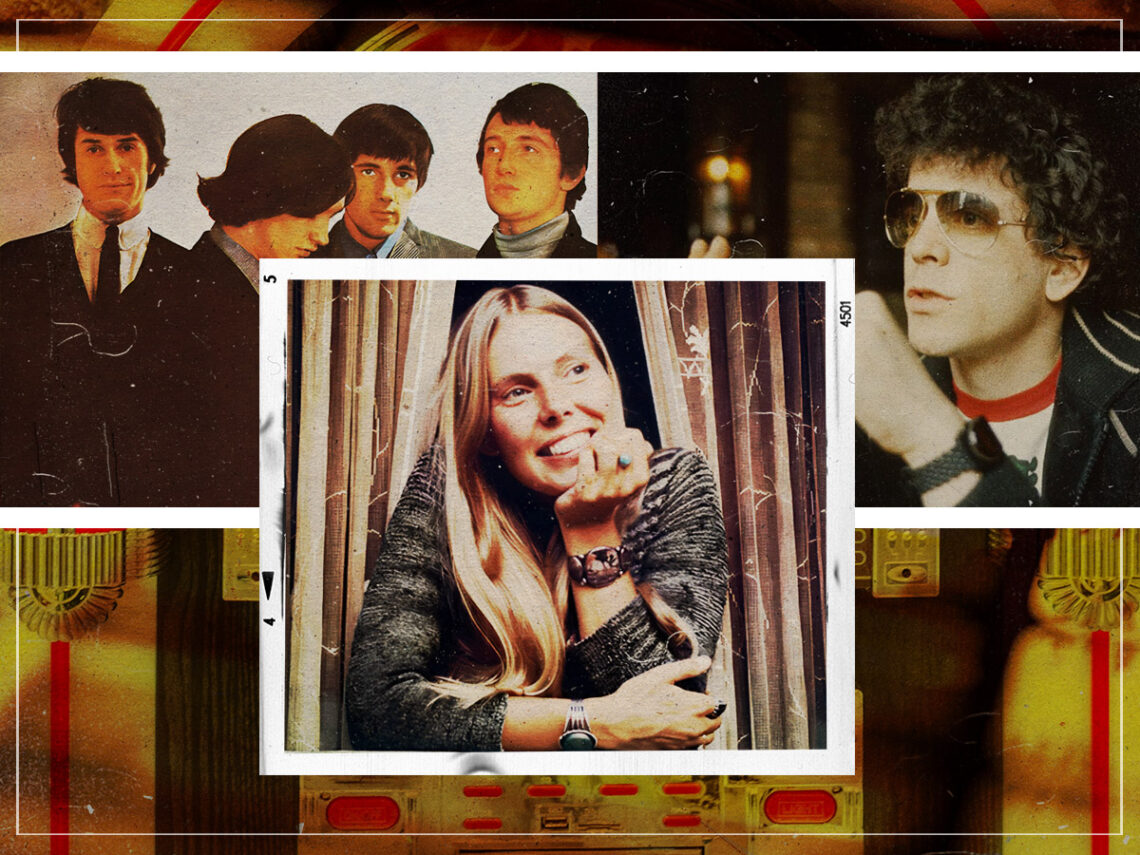
10 masterpieces that failed to break the US top 100 album chart

John Lennon failed his A-level exams, and his first year at art school saw him scrape a D grade. Stephen King’s debut novel, Carrie, was rejected 30 times before he managed to find a publisher. David Bowie failed on his way to success. And Francis Ford Coppola had to prove his worth behind the camera by directing what were essentially soft-core porn movies before anyone would give his films a shot. So, not every masterful icon arises out of nowhere. And the fellows above didn’t even have racism or misogyny to contend with.
Alas, the cream always rises to the top if it has been put forth with integrity. In 2003, Bowie reflected on this very notion and opined: “However arrogant and ambitious I think we were in my generation, I think the idea was that if you do something really good, you’ll become famous. The emphasis on fame itself is something new.”
Adding: “Now, it’s to be famous, you do what it takes, which is not the same thing at all. And it will leave many new artists with this empty feeling.”
So, I suppose the message for today’s artists is not to worry about floundering, for these masterpieces also failed to make a mark initially. It is exceedingly hard to imagine albums like Jeff Buckley’s Grace being anything other than an instant smash-hit as you listen, but hell, even Bob Dylan’s album that changed the world, The Freewheelin’ Bob Dylan, only charted at a disappointing 22.
Without further ado, let us delve into the flops that seemed fated to rise from the ash heap of history thanks to their creditable brilliance alone. After all, charts are arbitrary, and luck is an unruly beast. At least these stars have largely lived to see eventual success, unlike poor old folks like Herman Melville.
10 masterpieces that failed in the charts:
Joni Mitchell – Song to a Seagull (1968)
The fact that Song to a Seagull hit a shocking peak of 189 in the US charts is surely a symbol of the prejudices that Joni Mitchell faced when trying to break the folk scene. Hell, it even had the backing of a notable name, David Crosby, as a producer. However, her current legacy and the revered status of the album remain a symbol of hope for artists struggling to make it everywhere.
Speaking to Rolling Stone about the greatest guitarist of all time, Crosby was quick to point out just how talented Mitchell was and how she needed no extra help in the studio. “The strongest thing I did for Joni as a producer on Song to a Seagull, from 1968, was keep everybody else off of that record,” confessed the Byrds man.
“She was a folkie who had learned to play what they call an indicated arrangement,” continued Crosby in his glowing assessment of a star like no other. “Where you are like a band in the way you approach a chord and string the melody along. She was so new and fresh with how she approached it.”

Ramones – Ramones (1976)
Ramones are the quintessential New York punk band that spawned as many copycats as they have T-shirt sales. A symbol of rock ‘n’ roll iconography, we’re still reeling from them today, with their self-titled opus still proving their most singular work. However, they leapt off the ground like an anchored slug. Punk was in its infancy, and clearly, not enough of the public was tuned into the new zeitgeist.
How many copies did this iconic album sell in its first release? A measly 6,000 in its entire first year. Admittedly, the band did have a lot of external factors to contend with, from sex work to drug addiction; thus, the promotion campaign was always going to be hampered, but 6,000! There are videos of people taking pictures of ten years’ worth of lunches on YouTube that amass more views than that in a day.

The Stooges – The Stooges (1969)
A little while back, we chatted with Charlie Steen of Shame, who described The Stooges as sounding like a band treating rock ‘n’ roll as a venture with nothing to lose. “Only three albums to their name,” he stated, “And these three records seem to have altered the fate and direction of so much that came after them.” But the most notable quote he attributed to The Stooges was, “They had no willingness to sacrifice their sound in hopes of achieving a high rank in the charts.”
The rank that their self-titled debut achieved in the US charts was a pitiful 106. Apparently, 105 better albums were kicking about in record shops in the summer of ’69. This flop was mainly due to a critical lambasting of the album. Rolling Stone called it “loud, boring, tasteless, unimaginative and childless” – the word ‘boring’ in there sticks out like The Rock in a jockey’s locker room. Fortunately, tracks like ‘I Wanna Be Your Dog’ and ‘Real Cool Time’ are the surviving middle finger to the diatribe it was met with by a critical coterie too confounded by its punk ways to properly purvey its brilliance.

The Velvet Underground – Loaded (1970)
As Brian Eno once said, “I was talking to Lou Reed the other day, and he said that the first Velvet Underground record sold only 30,000 copies in its first five years. Yet, that was an enormously important record for so many people. I think everyone who bought one of those 30,000 copies started a band!” That iconic debut peaked at 171, the follow-up White Light/White Heat performed even worse, charting at 199, and Loaded, a masterpiece that now seems beautifully accessible, failed to chart entirely.
And for my money, of all those masterpieces of diminishing returns, Loaded is not only the most accessible but perhaps the finest. The album has its own sense of atmosphere. It might be a mishmash of themes with divergent sounds scattered throughout, but it occupies a space in the psyche like the whiff of a scent that takes you back to the past. This puts you in a cinematic world filled with your own corroborations of summer, sticky streets, dirty ankles and rock ‘n’ roll dreams. Loaded is one of the greatest albums, period. A sweet slice of what it means to be young, alive and adrift in the summer in the city. Alas, in November 1970, there were apparently over 200 better records to spend your money on.

Big Star – #1 Record (1972)
There are a plethora of records out there that underperformed through a tragedy of fate. The likes of Karen Dalton and Rodriguez spring to mind, but very few of those records can be considered iconic in the true sense of the word, the sense that they have reached a level of societal transcendence. However, even away from scrupulous music circles, Big Star’s #1 Record cuts a highly recognisable album cover, and ‘Thirteen’ is a much-loved classic that has escaped cultdom.
Sadly, back in the day, the ill-fated title proved an ironic portent of the future. The band would disband three albums later and fade even further from obscurity. Back in their native Memphis, a small band of followers still thought they had their very own Beatles, and slowly but surely, this faithful following would spread, eventually pushing the record into the realm of ‘iconic’ come the early ’90s. However, initially, in part due to Stax Records’ inability to produce enough copies, it sold less than 10,000 copies upon release.

Love – Forever Changes (1967)
It is a reality often forgotten that the success of a record does not hinge on the quality of the music alone. In-fighting and acrimony may well have served as fertile soil to draw inspirational nutrients for the album, but it was also a double-edged sword. Trouble has remained with the band’s frontman, Arthur Lee, ever since, with a criminal record list that would make Tony Soprano blush.
The album may well be a masterpiece that blended folk with rock and baroque-pop flourishes while propagating scintillating poetry, but it sadly flopped. The band’s previous records had been successful, but much like Pet Sounds, a change in sound for the better was met with a reaction for the worse. A year after its initial release, it peaked at 154 in the States.

The Kinks – The Kinks Are the Village Green Preservation Society (1968)
Sometimes, a band can hamstring their own efforts, and that is just about what happened with The Kinks Are the Village Green Preservation Society. While the sentiment of the record went against the grain of counterculture by promoting the importance of old English staples, the release tactics hindered it. Ray Davies deployed a last-minute delay after all press and promotion had already been done, creating confusion around the album.
Also, like a film besieged by damning re-shoots, this delay seeded the notion that something was rotten in Denmark. This was disastrous, and despite retrospective appraisal and huge influence, even in 1995, Ray still suggested: “Worldwide, we’d be lucky if it [sold] 100,000 [copies]”. And most of those would come after the fact as upon release, it failed to chart in both the UK and the US.

New York Dolls – New York Dolls (1973)
New York has a history of being ahead of the cultural curve. Their eponymous Dolls almost achieved this feat by accident, “We just said, ‘Hey, maybe this will get us some chicks.’ That seemed like a good enough reason,” Sylvain Sylvain famously said of the proto-punk group’s formation. Nevertheless, they could still write “three minutes worth of magic.”
But that magic failed to translate into commercial success. This riotous debut only hit 116 in the US charts, failed to chart entirely in the UK, and has since only shifted around half a million units despite the praise it has received as a truly pioneering piece of work. In truth, they simply weren’t that liked. Outside of the clique that ‘got’ them, they were largely derided by fellow bands, the press, and music fans alike. Now, this is a notion that Johnny Thunders’ incising guitar makes it hard to make sense of.

Tom Waits – Closing Time (1973)
As if to assert the ruggedness of this album from the get-go, Tom Waits and his producer, Jerry Yester, elect to open things on the damp footnote of a grumbled four-count. It’s a digression that might try its best to imply a level of dogeared imperfection to come, but the beauty of everything that follows on Closing Time proves – as Serge Gainsbourg once put it – that ugliness is, in a way, superior to beauty because ugliness endures.
Endure as the record might, it got off to a rocky start, failing to trouble the top 200 and casting Waits’ future into doubt. However, the quality was there for all to see, and the Eagles saw it clearly enough to cover ‘Ol 55’ and bring the songwriter to the attention of the masses. Was Waits grateful? Well, as he told WAMU back in 1975: “I frankly was not that particularly crazy about their rendition of it.”
Taken from their On the Border LP, Waits continued: “The song is about five years old, it’s one of the first songs I wrote, so I felt like it was kind of flattering that somebody wanted to do your song, but at the same time I thought their version was a little antiseptic.”

Jeff Buckley – Grace (1994)
Grace was a gloriously pretty contrast in an era when Britpop was boozing up the UK and grunge was growling away in the US. The only explanation that you can apply to the fact that such talent initially flopped is because Jeff Buckley was simply too contrasting. This resulted in it hitting a measly 149 in the US charts, a position it has never since surpassed.
However, thankfully, its sales have risen, and in various regions, promotion pushes surrounding reissues have launched it towards the upper reaches. There is a certain poetry to this arc. Speaking about the late musician in a BBC documentary, Brad Pitt revealed that Buckley was one of his favourite musicians of all time and mused: “I’m constantly surprised that so many people do not know about him still. And at the same time, there is something very, very beautiful about that, that he just keeps slowly building and expanding.”

