


10 long albums that should have been trimmed down

When a band reaches the top of the musical mountain, there comes the point it feels they can do no wrong. At that stage of their career, every one of their songs takes them to a new place. Therefore, it would only be natural to become more ambitious at the next juncture. While these extreme cases can make for the artist’s best songs yet, U2 and The Clash are among those to make a track listing that was much longer than it should have been.
Even though all of these records have strong cuts among the pack, they needed to go back to the drawing board before their creations were released upon the world, with many tracks that go nowhere. While fans are getting the full vision of an artist’s ethos on these albums, but not everything on the record is a masterstroke.
On the other hand, there’s a case to be made that these were meant to be taken in as the most extravagant listening experience in an artists’ catalogue, but it doesn’t always bode well next to the rest of the track listing. For as much as fans might like these artists, sometimes those ears need a breather.
Though cutting things may have risked their artistic integrity, it would have made for a far more soothing ride for the listener. Bands are always treading into dangerous territory when making progressive records like these, but if every one of these groups just tightened things up, the records below might not be that much of a chore to plough through.
10 long albums that should have been trimmed down
Nostradamus – Judas Priest
Judas Priest operates on the operatic side of metal. Rob Halford is among the best metal vocalists of all time, and their announcement to make a sprawling double album about astrologer Nostradamus was bound to be a slam dunk. Though the idea was golden, the execution was a whole separate thing.
As much as Priest incorporated the teachings of Nostradamus into this rock opera, there comes the point where they start to tire across the record. Aside from the fast-paced juggernauts on the album, such as ‘Pestilence and Plague’, the title track is a perfect example of everything wrong with the project, taking a sprawling, epic song and making it sound like the stone age of metal going through the motions.
Although Priest look back on this record fondly for the risks they took, no amount of orchestral arrangements behind the songs automatically makes it good. With all of the haze surrounding this record, Priest needed an album like Firepower to remind their fans how they used to kick ass.
Load/Reload – Metallica
After the massive success of The Black Album, Metallica had two distinct choices. They could either go back to their thrash roots and become the band that the underground demanded or spend the rest of their days making the brand hard rock in the mould of ‘Enter Sandman’. When fans got to the one-two punch of Load and Reload, they were instead greeted with neither.
Although these records are the most mainstream that Metallica has ever released, their runtimes make them feel like a chore all the way through. Despite boasting that Load was as long as the CD medium could hold at the time, a few songs could have been cut, like the retreading on ‘Wasting My Hate’. In fact, there are a handful of cuts on these projects that tend to complement each other more if they were released together, like ‘Mama Said’ and ‘Low Man’s Lyric’, which offered a stripped-down version of Metallica.
The original plan was for Metallica to break things down even more and make the Load era into a double record. Though fans got two monster-sized albums out of the deal, there’s a Metallica classic hidden in here if they condensed the best of both discs.
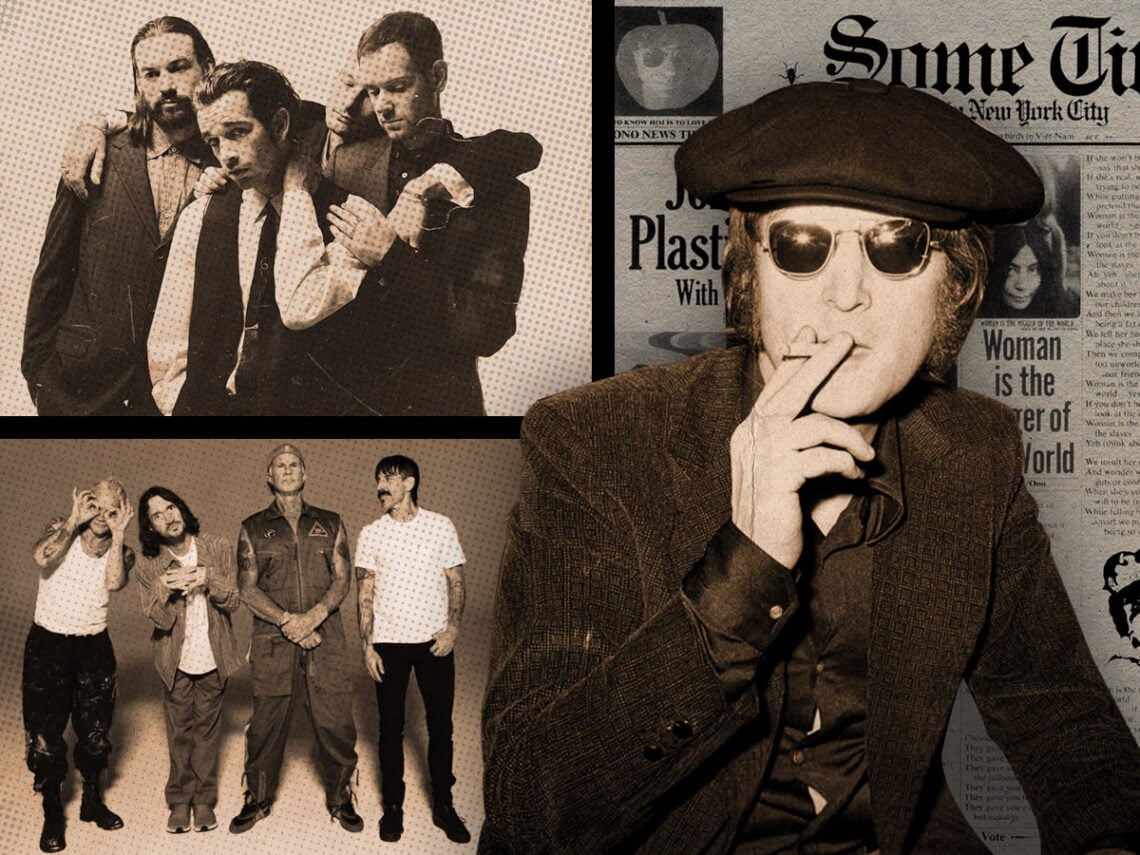
Some Time in New York City – John Lennon
After leaving The Beatles, John Lennon became the most intellectual of the bunch. While Paul McCartney tried to recapture the magic of the band with Wings and George Harrison delved into mysticism, Lennon was hard at work rallying against political tyrants, with Yoko Ono always by his side. While Lennon and Yoko always made music collaboratively, Some Time in New York City is where everything got called into question.
Granted, the core record at the heart of this album is fine. Despite some dated topics based around their in-the-moment writing style, Lennon sounds re-energised on a lot of these songs, getting in touch with his rock and roll roots. There is an asterisk around this record, and it revolves around the live disc on the other side.
Featuring two performances on each side, these were the kind of wild performance pieces that Lennon and Ono always were ridiculed for, from Lennon making white noise on guitar to Ono shrieking her brains out in front of a crowd. Some Time in New York City is far from a bad album, but the live portion should have been saved for a deluxe edition or an obscure indie release.
Rattle and Hum – U2
At the end of the 1980s, U2 had firmly established themselves as the most prominent band in the world. Although they had their roots in the punk scene in the ‘70s, Bono turned his songs about a better world into the most dosage hopeful rock and roll ever made on The Joshua Tree. However, when a band is on top of the world, they often make some questionable decisions, such as Rattle and Hum.
Even though U2 have had some shoddy judgement in the past, the massive size of this album makes it look like even they’re sold on their own hubris. Though the live portion of the record featured some great footage, some of the originals could have used a bit of work. While ‘Desire’ deserves to be considered among U2’s best, some of their collaborations with acts such as BB King sound like they were trying to do more than what they were musically capable of at the time.
It also doesn’t help U2’s down-to-earth campaign when Bono decides to change the words to songs like ‘All Along the Watchtower’, somehow thinking that Bob Dylan’s immortal poetry needed some improvement. Once the band reached this height of spectacle, it’s only fitting that Achtung Baby worked as a deconstruction of those same heights.
Notes on a Conditional Form – The 1975
Over the last decade, The 1975 have been one of the most in-demand pop-rock acts. Although they veer from almost every genre imaginable, there’s nobody else who can pull off their schtick this well. We all live in a streaming world these days, though, and having a track list like Notes on a Conditional Form was tiring before fans had even pressed play.
Before the low points, this record has some of the best The 1975 songs on it, such as the bliss of ‘Me and You Together Song’ and ‘Guys’. However, the main hurdle of this album is the interludes, taking up nearly a half hour of runtime, making the album feel like it’s crawling to the end.
By the time the record starts picking up some steam towards the middle of it, another interlude will come on and pull the listener out of the experience again. It’s easy to see why the band did it this way, too, looking to make their album flow more like a playlist for Spotify than a proper record to spin on vinyl. The business model may be great, but the band crossed some wires when they worried about making the right amount of tracks rather than an artistic statement.
Second Coming – The Stone Roses
The British music scene would have looked a lot different if The Stone Roses hadn’t set the world on fire. As Madchester started getting more and more out of control, this band played a unique hybrid of danceable music with some of the greatest guitar licks ever courtesy of John Squire. Once acts like Blur and Oasis arrived to dethrone their position in British music, The Stone Roses went down a studio rabbit hole and never came back out.
As much as Second Coming feels grand from the opening song ‘Breaking Into Heaven’, most of the record feels like the band aren’t sure what they want to do. Going through everything on the album is a slog, as they try out different things and stretch them out over seven minutes of a song, settling for atmospheric fluff instead of mindblowing offerings.
The morale in the band wasn’t much better either, with drummer Reni quitting a short time after the album was released and the group fizzling out shortly afterwards. The Roses may have indirectly birthed the Britpop scene, but the kings of the genre went out with a whimper instead of a bang.
Long Road Out of Eden – The Eagles
The chances of fans getting a new album by The Eagles were slim to none in the early ‘00s. After Don Felder got kicked out of the band yet again, the California rockers had settled for releasing the odd single here and there while collecting their pay-cheque from touring around the world. When they took a break, they had more songs than they knew what to do with, so why not throw them under one roof?
Being the only double album they have ever released, Long Road Out of Eden has both the best and worst songs that The Eagles ever made. On the one hand, the group’s harmonies are their most tuneful yet, from the country-tinged ‘How Long’ to Timothy B Schmidt’s gorgeous turn on ‘I Don’t Want To Hear Anymore’.
However, when the album isn’t making delightful dad rock, it gets painfully boring fast, including a slog of songs on the second disc where nothing seems to be happening. The title track makes for a great epic at ten minutes long, but the integrity of the album would have been much better if they had cut it after that track was over.
A Thousand Suns – Linkin Park
As the ‘00s turned a corner, Linkin Park were determined not to be pigeonholed as nu-metal has-beens. Whereas acts like Staind were starting to fade into obscurity, Linkin Park were willing to adapt to the times, going for an arena rock sound on their next album Minutes to Midnight. If that was a subtle risk for the fanbase, A Thousand Suns was the swan dive into uncharted territory.
Although the band’s flirtation with electronics made for an intriguing listen across the album, the pace of this record is marred by one too many interludes. Since this album is about what happens in the wake of nuclear Armageddon, the interludes at least make sense, including quoting Robert Oppenheimer on a few tracks to give more weight to the scenario.
At worst, the interludes drastically get in the way of what Linkin Park are trying to say, making some of the solemn moments a lot less authentic in their wake. There are all the pieces for Linkin Park’s magnum opus on this record, but they just needed a few songs off the track listing to make a lean rock opera.
Stadium Arcadium – Red Hot Chili Peppers
Once John Frusciante returned to the Red Hot Chili Peppers, everybody was in a fantastic place. After years of battling addiction and bad blood in the band, the morale was high to start creating magic in the streets of California. As much as they may have wanted to share that love with the fans, Stadium Arcadium proved that there is such a thing as too much of a good thing.
Up combing through this record, there are some of the best songs the Chili’s ever wrote, from the sensational ‘Dani California’ to the slower, ‘Slow Cheetah’. Red Hot Chili Peppers records are typically always on the long side, and having something this gargantuan spread across two discs makes the whole album bloated.
The scope of this record was originally supposed to be even grander, though, with the original plan being to release three albums over time as part of a collection. California might have been kind to them, but having three albums worth of material about California is where most fans will tap out.
Sandinista – The Clash
In this discussion, double albums are their own separate beast. Although the plan might have been to get some of the best songs an artist has in their canon onto two slabs of vinyl, the tunes have to be golden for listeners to hang around for two albums. The Clash previously proved they were capable of that double-album magic on London Calling, but that didn’t mean going more over-the-top for the follow-up.
As The Clash got involved with more genres, they made Sandinista. It’s a three-record set of new music, traversing through genres including dub and hip-hop as well as the punk rock they grew up on. While the idea of using elements of dub works within the confines of The Clash, the songs seem to be more about experimentation than the integrity of the creation, especially when they interpolate their old tracks like ‘Career Opportunities’ into the mix.
Despite London Calling being a cornucopia of different influences from dub to reggae, the experimentation behind this album screwed up the band dynamic, trying to go even further on Combat Rock before dissolving in the MTV era. While Sandinista might look intriguing, fans are better suited to cherry-picking their favourite songs from this album and making a playlist out of that.
