


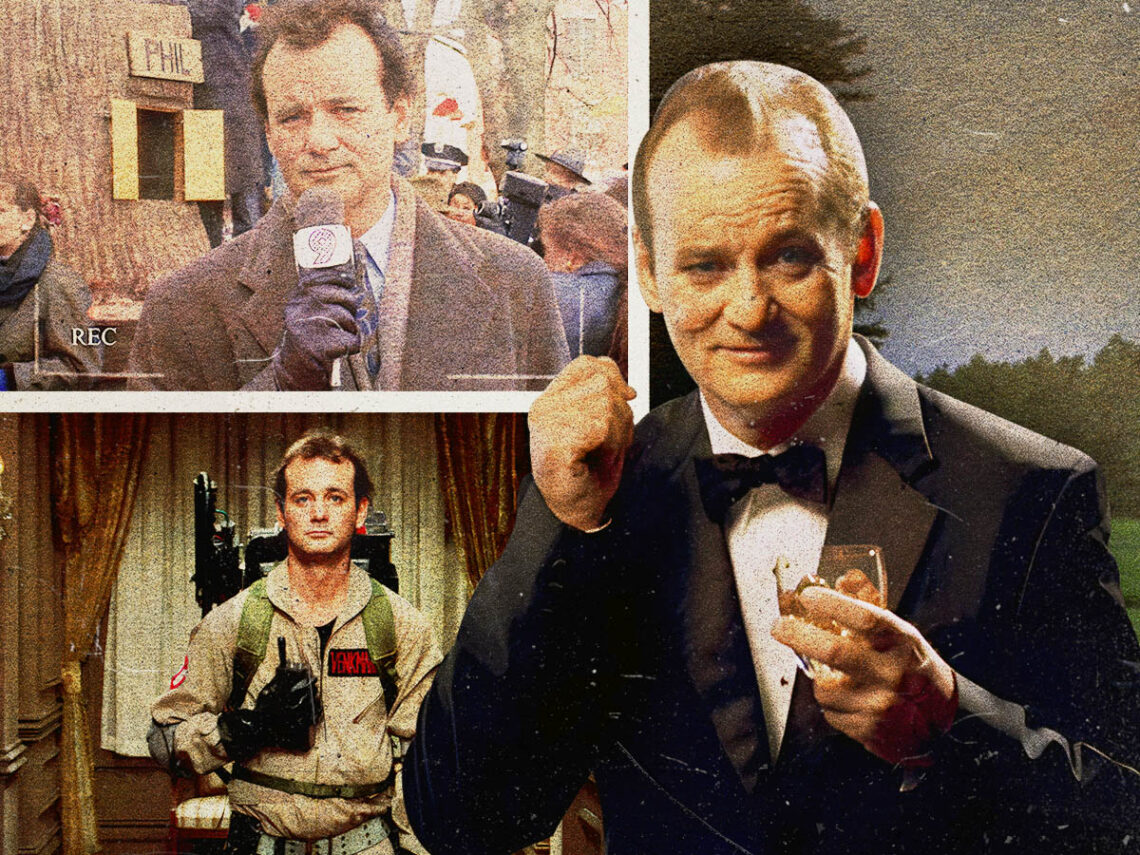
10 iconic scenes that define Bill Murray

From SNL graduate all the way to the MCU, there’s no denying the insane contrast between the movies of Bill Murray. Often regarded as one of cinema’s few true characters, Murray is capable of putting an audience through so many emotions, from laugh-out-loud comedy to pulling on your heartstrings.
In the same film, he can have you howling in your seat, turning to your partner in confusion at his latest oddball story, and gently dabbing a tear from the corner of your eye. When speaking to people about the best Bill Murray film, it can often create a level of separation between the members of the public you ask, and the debate can go on for days.
In the 21st century, he found a collaborating partner in Wes Anderson, which has come to define Murray’s twilight years, playing roles in some of the most offbeat, colourful and unique films whilst also acquiring him a score of fans he probably never expected to get.
Bill Murray is an icon. He is someone who has transcended every role to be one of Hollywood’s most unique stars. Even after being on screen for almost fifty years, modern directors are still desperate to cast him in their films for that ‘Bill Murray flair’ that no one else can add.
As a way of honouring the eclectic roles of Murray, we have compiled a list of scenes that have defined Murray, and that will sit fondly in the minds of film fanatics for decades to come. Some of these scenes may come from some of his more obvious films, while others may be a little off the beaten track, showing some of the slightly more nuanced Murray that we all still adore.
10 iconic scenes that define Bill Murray
Caddyshack (Harold Ramis, 1980) – The Dalai Lama Story
One of Murray’s earliest and scene-stealing roles is the unhinged green keeper Carl Spackler. This film’s success at the box office brought worldwide fame to stars such as Rodney Dangerfield, director Harold Ramis and Murray.
In this scene, when you see Spackler begin his story, you can see the dedication to comedy Murray has by being able to be completely absorbed by the role and the story he is telling. He recalls a time when he was once the caddie for the Dalai Lama, who didn’t tip him, and, despite the lengthiness of the story, Murray manages to keep you engaged.
Ghostbusters (Ivan Reitman, 1984) – Peter Venkman’s ESP Test
Ghostbusters still remains one of the most cherished comedies from the 1980s. Despite the franchise being unable to pick up steam after the beloved original, people still hail Ghostbusters as one of the best sci-fi comedies ever.
The opening scene for Murray’s Peter Venkman manages to encapsulate his character better than any of the other Ghostbusters in just four minutes. Throughout the scene, Ramis allows the audience to see just exactly how much of a womaniser and lazy scientist Peter Venkman is. It’s Venkman’s traits, paired with the other three Ghostbusters, which create an interesting dynamic.
Ghostbusters (Ivan Reitman, 1984) – Ballroom scene
The ballroom scene is the first time you see the Ghostbusters actually accomplish a goal. Once they capture Slimer and trap him, you can clearly see how effective they are as a team and really begin to believe in the Ghostbusters’ success.
Murray manages to play the nonchalant, wise-cracking Venkman with precision here as he shows no fear at the world-ending weapon in his hand or the ghost in front of him.
Groundhog Day (Harold Ramis, 1993) – ‘Again’ scene
Murray’s role as the narcissistic, self-obsessed weatherman Phil helps elevate this same-day comedy into a 1990s classic. Murray’s Phil being so unlikeable to begin with, having by far the most redemptive arc in Murray’s entire film career, is what helps the film stand out and engage you with a plot which has been repeated time and time again.
Murray, in the clip below, begins to slowly realise that he is reliving Groundhog Day again and again. He is at first sceptical that this can’t be happening and is still confused and unable to understand what is going on by the end of the scene.
Groundhog Day (Harold Ramis, 1993) – Stealing the Groundhog
To end this list of scenes which define Bill Murray, I wanted to end on one from my personal favourite of his, Groundhog Day. As years go by, Groundhog Day, still manages to keep universal humour, and for this, in tribute to Murray’s effortless way of delivering hilarious dialogue, it will forever be timeless.
In this scene, he attempts a mad last-dash attempt at stopping this incessant cycle by stealing the town’s gopher and driving off a quarry. Predictably, he wakes up at 6:00 AM again to the sound of Sonny and Cher.
The Life Aquatic with Steve Zissou (Wes Anderson, 2004) – “Let Me Tell You About My Boat”
Some will argue that the best thing Bill Murray ever did was get involved with Wes Anderson, the quirky comedy director with a passion for style and always helming a unique screenplay. The inclusion of Bill Murray in a Wes Anderson film is a common trope of his.
The Life Aquatic with Steve Zissou, the somewhat wonky film about an oceanographer setting sail for revenge against a shark which ate his partner, is a real delight and feast for the eyes – with Anderson’s perfect miniatures and models used heavily throughout to tell this colourful and original story. At this point in the film, for two minutes, Anderson masterfully moves the camera slowly around the boat, showing each nook and cranny while explaining how everything works. It is all expertly narrated by Murray, with the dialogue casting the tone for the movie.
Lost in Translation (Sofia Coppola, 2003) – “Does it get easier?”
Murray’s sidestep of his usual funny-man roles with Lost in Translation led him to receive his first and only Academy Award nomination. Sofia Coppola’s film centred around the alienation and disconnect of modernity, starring Murray as a washed-up movie star who meets a young college graduate (Scarlet Johansson) who is desperately searching for some meaning in her life.
Despite Coppola not moving the camera at all, nor the actors, this simple dialogue moves forward excellently between Johansson and Murray. Murray’s straight-faced answers to her questions echo the loneliness and the separation both characters are feeling. This feeling is very prevalent throughout the film – with the gap between them as they lay in this scene, a perfect visual metaphor. A stand-out moment for one of Murray’s rare, non-comedic roles.
Meatballs (Ivan Reitman, 1979) – King of Sexual Awareness Week
Murray’s breakout film role as an eccentric camp counsellor is just as iconic today as it was back in the late 1970s. Making such a large impact on the screen at such a young age has helped Murray completely dominate cinema for the last fifty years.
Murray is well known for fast-talking monologues of ludicrous dialogue. Think back to Spackler in Caddyshack, and no better is it shown below as he explains some of the antics of what goes on at his summer camp.
St Vincent (Theodore Melfi, 2014) – Horse Racing
The little-spoken-about, mid-2010s gem St Vincent showcases Murray’s softer side. Not often found in lists citing some of Murray’s best, it definitely has a strong cult following who praise the excellence of the cast.
Oliver, Vincent’s young neighbour, takes a shine to his grumpy, old neighbour, and in this moment of the film, from the joy Vincent has from winning a large horse racing bet, you see him want nothing more than to share happiness with Oliver. It acts as a turning point in the film.
What About Bob? (Frank Oz, 1991)- Dinner Scene
What About Bob? may well be Bill Murray’s most underrated film. Murray plays the loveable hypochondriac, Bob, who goes up against Richard Dreyfuss’ Dr Marvin, Bob’s personal doctor, as Bill sabotages his family vacation.
This dinner scene showcases Bob’s infiltration of Richard’s nuclear family. While the rest of the family loves his company, you can see how much Bob irks Dr Marvin’s happy family dynamic – which makes for much of the film’s comedy.
