


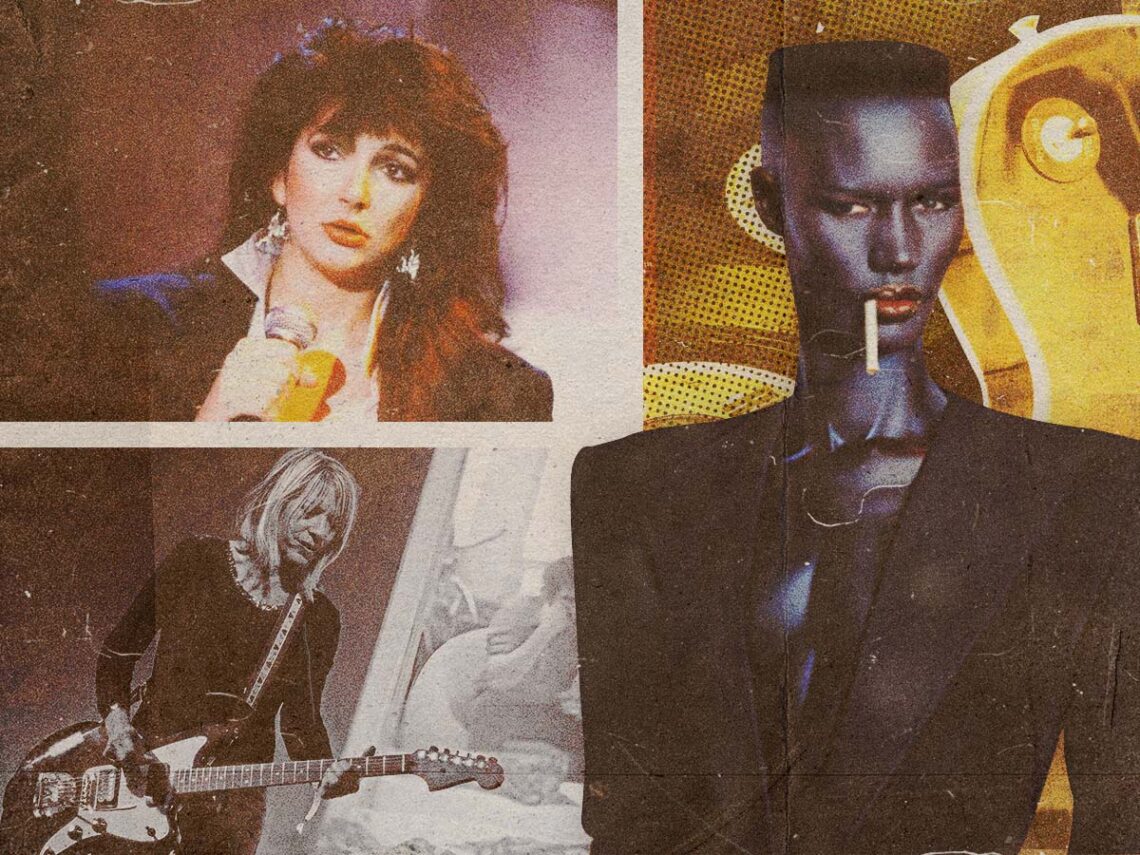
10 groundbreaking female artists shamefully overlooked by the Rock and Roll Hall of Fame

Recently, Courtney Love, the former vocalist and guitarist of Hole, wrote an essay questioning the lack of female inductees in The Rock and Roll Hall of Fame. Following its establishment in 1983, the first ceremony inducted all male artists, singlehandedly casting aside all of the extraordinary women that have shaped the course of rock and roll.
Love writes for The Guardian: “The initial inductees were Chuck Berry, James Brown, Ray Charles, Little Richard, Sam Cooke, Fats Domino, the Everly Brothers, Buddy Holly, Jerry Lee Lewis and Elvis Presley; not a woman in sight.”
She continued: “The Rock Hall’s canon-making doesn’t just reek of sexist gatekeeping, but also purposeful ignorance and hostility.”
The first woman inducted into the Rock Hall was Aretha Franklin in 1987. The Supremes followed the next year, and LaVern Baker and Tina Turner appeared in 1991. Female inductees are few and far between, reflecting the music industry’s rampant misogyny.
Love explains: “The Rock Hall has covered itself in a sheen of gravitas and longevity that the Grammys do not have. Particularly for veteran female artists, induction confers a status that directly affects the living they are able to make. It is one of the only ways, and certainly the most visible, for these women to have their legacy and impact honoured with immediate material effect.”
Unfortunately, only 8% of inductees are female, and some of the music industry’s most iconic female voices and musicians are nowhere to be seen. From Chaka Khan to Kate Bush, here are ten women that deserve a place in the Rock and Roll Hall of Fame.
10 female artists that should be in the Rock and Roll Hall of Fame:
Big Mama Thorton
Big Mama Thorton was a true pioneer of rock and roll, yet, due to her race and gender, she was never credited for her contributions to shaping the genre as far back as the early 1950s. She was the first to record ‘Hound Dog’, which Elvis Presley popularised, yet Thorton’s version possesses so much more vigour and emotion.
Thorton wrote 20 blues songs, including ‘Ball ‘n’ Chain’, which was made famous by Janis Joplin. Although the song was featured in the Rock and Roll Hall of Fame’s list of ‘500 Songs That Shaped Rock and Roll’, is Thorton an inductee? Sadly not. The failure to acknowledge her in the rock and roll canon signals blatant misogyny and racism – it’s as simple as that.
Björk
What hasn’t Icelandic icon Björk done for music? Following a career as the vocalist for one of Iceland’s most successful alternative rock outfits, The Sugarcubes, the musician began a solo career that transformed the course of popular music. Her first album, Debut, released in 1993, blended various genres, including house, rock, trip-hop, pop, jazz, ambient, and electronica. By experimenting so widely, Björk paved the way for future musicians to attempt ambitious and genre-bending compositions, from Radiohead’s Thom Yorke to Grimes and Lady Gaga.
Björk’s career is more than impressive, and she has never failed to release an album any less than spectacular. From 1995’s Post to 1997’s Homogenic and 2001’s Vespertine, the multi-talented musician – who possesses a powerhouse of a voice – has consistently demonstrated incredibly vulnerable songwriting skills. It’s about time the Rock Hall honours her contributions.
Chaka Khan
It’s really quite cheeky of the Rock Hall to nominate the legendary ‘Queen of Funk’, Chaka Khan, seven times and enlist her as an inductor in 1991, yet never award her with a membership in the organisation. Beginning her career in the ’70s as the lead vocalist of the band Rufus, Khan transitioned into a solo artist at the end of the decade, finding success with the Prince-penned hit ‘I Feel For You’. It was the first R&B hit to feature a rapper (Melle Mel) also and sold over one million copies.
The singer has won ten Grammys and sold over 70 million records worldwide, which is no small feat. According to Love, “Khan changed music; when she was on stage in her feathered kit, taking ‘Tell Me Something Good’ to all the places it goes, she opened up a libidinal new world. Sensuality, Blackness: she was so very free. It was godlike. And nothing was ever the same.”
Dionne Warwick
Despite being one of the biggest-selling US artists ever, selling over 100 million records worldwide, Dionne Warwick only received her first nomination in the Rock Hall in 2021. However, she was not selected as an inductee. Between 1962 and 1998, 56 of the musician’s singles charted on the Billboard Hot 100, making her one of the most-charted vocalists ever. Moreover, Warwick has been accepted into the Grammy Hall of Fame and R&B Music Hall of Fame and even has her own star on the Hollywood Walk of Fame.
However, where is her acceptance into the Rock and Roll Hall of Fame? In Love’s essay, she points out the lack of Black female artists inducted, stating, “If so few Black artists, so few women of colour, are being inducted, then the voting process needs to be overhauled.” Warwick’s outstanding contributions to music deserve celebration.
Fiona Apple
In 1996, at just 18 years old, Fiona Apple released her debut album, Tidal, a stunning collection of songs that reflected the experiences of being a young girl that simultaneously sounded wise beyond her years. Although the record was praised, winning a Grammy for the track ‘Criminal’, Apple’s admirable outspokenness has been criticised by many male critics. Thus, although Apple has consistently released incredible albums, she has never reached the levels of fame that her music is worthy of.
However, with the release of her stunning 2020 album, Fetch the Bolt Cutters, Apple garnered a whole new generation of fans, proving the enduring nature of her work. It’s easily one of the best albums of the 21st century, and few contemporary artists possess the skilled lyricism she does. Apple became eligible for induction in 2022; thus, there is no reason why she shouldn’t be nominated.
Grace Jones
Grace Jones has left a sizeable mark on popular culture. Rebellious in every sense of the word, Jones plays with racial and gender expectations through her music and image. According to Olivia Aherne, a curator of the Grace Before Jones: Camera, Disco, Studio exhibition, “Grace challenged people. She pushed everyone who was around her to think differently about images that they were producing whether that be returning the gaze in photography or speaking back in her music.”
The musician was a central figure in New York’s disco scene in the late ’70s before blending new wave, post-punk, pop, and funk into her sound. Despite her influence on modern icons such as Lady Gaga and Rihanna, Jones is yet to receive a place in the Rock Hall.
Kate Bush
When Kate Bush was 19, she became the first female artist in the United Kingdom to hit number one with a song she’d written herself. ‘Wuthering Heights’ was a huge success, starting Bush’s career as one of the most enthralling pop vocalists ever with a bang. She recently enjoyed a new wave of success after her song ‘Running Up That Hill (A Deal With God)’ topped the charts worldwide after being featured in Stranger Things. Like Björk, Bush helped transform the landscape of alternative pop and demonstrated the potential of performance.
Although Bush has been nominated four times, she should’ve been inducted into the Rock Hall as soon as she was eligible. As Love states, “Never mind that she was the first woman in pop history to have written every track on a million-selling debut” and a “pioneer of synthesisers and music videos” – her lack of recognition from the Rock and Roll Hall of Fame is blatant sexism.
Kim Gordon
When Sonic Youth emerged from the grimy underground of New York’s no-wave scene, they became one of the most influential alternative rock bands of all time. Their music was a vital inspiration to artists such as Nirvana’s Kurt Cobain, who was inducted in 2014. Although Sonic Youth are revered as cult favourites, their hand in shaping the course of alternative rock deserves to be recognised further.
The band wouldn’t have been able to achieve what they did without their bassist and part-time vocalist, Kim Gordon, who was their driving force. Her fearlessness and championing of feminist lyrical themes and attitudes in a male-dominated sphere was a vital influence on Kathleen Hanna, who shortly dominated the riot grrrl movement as a member of Bikini Kill, spurred on by the encouragement of Gordon.
PJ Harvey
In the ’90s, PJ Harvey was one of the few women in alternative rock that were able to make waves as a solo artist. Her raw and unapologetic display of femininity, which wasn’t always so pretty, was an inspiration to many, proving that female artists don’t have to adhere to one specific image to make what they want to create. Harvey moved through sounds that were both delicate and light as well as abrasive and harsh, depicting the multitudinous of womanhood with impressive accuracy.
Although her best-known work emerged from the ’90s, such as Rid of Me and Is This Desire?, her output has remained solid and vast, making her a true icon of British rock. Although she has won multiple Mercury Prize awards and even an MBE, her induction into the Rock Hall is long overdue.
Roberta Flack
Roberta Flack has topped the Billboard charts many times with her breathtaking performances that solidified her as one of the most influential female voices in the industry. ‘Killing Me Softly With His Song’, ‘The First Time Ever I Saw Your Face’, ‘The Closer I Get To You’ and ‘Where Is The Love’ all reached the number one spot, yet Flack’s induction in the Rock and Roll Hall of Fame is yet to take place.
She was a significant figure in the development of the R&B subgenre known as quiet storm, which continues to influence artists today. Flack interpreted other artists’ songs with a striking vision, revising classic tracks to suit her style, making her a revolutionary and inventive pioneer.
