


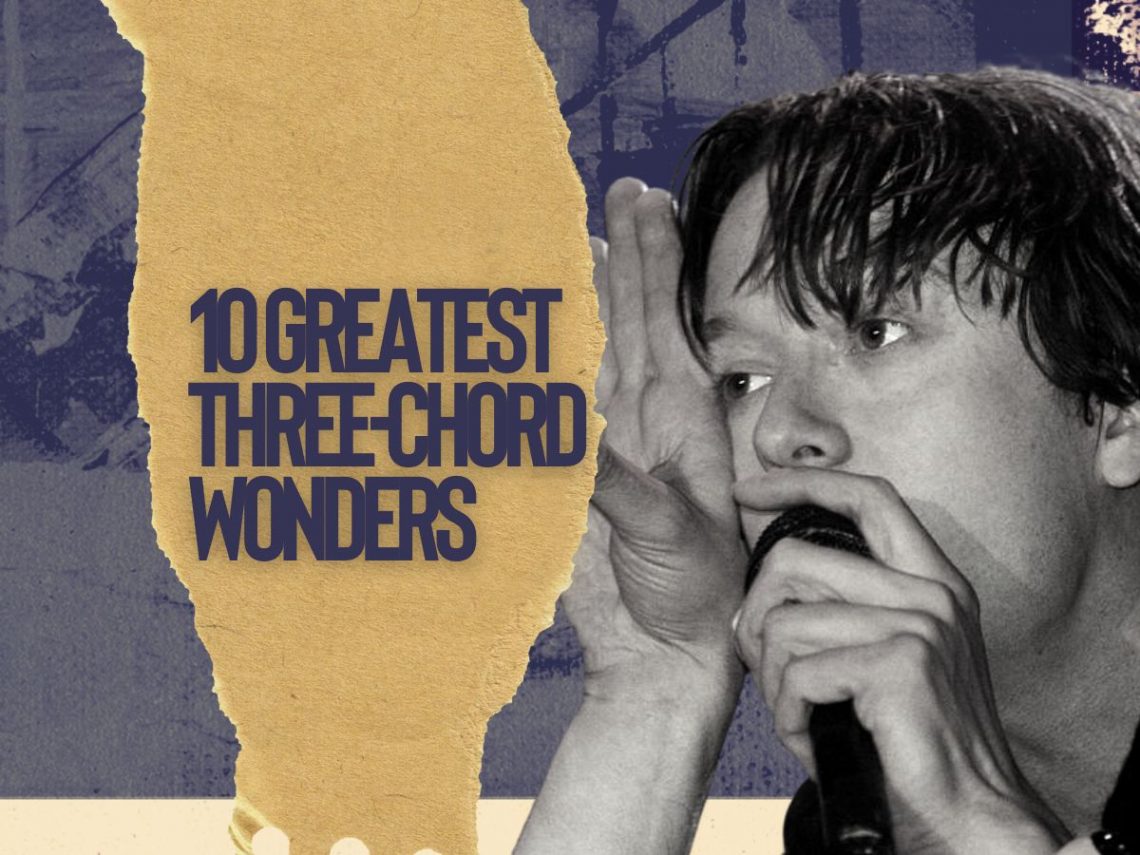
Three chords and the truth: The 10 greatest three-chord wonders

“Three chords and the truth”: that’s all country singer Harlan Howard felt was necessary for crafting a good song. It remains one of music’s most important and famous quotations – and for a good reason. Popular music has gone through many changes since the advent of recording, but one thing remains essential: often, less is more. That’s where the three-chord wonder comes in.
Why that is will always be a mystery to me. Loads of people love jazz music, and most jazz standards have chord changes coming out of the metaphorical wazoo. The thing, I suppose, is that jazz is cerebral – it deals in abstractions. This is obviously wonderful, but pop is different. Pop is all about immediacy. A good pop song doesn’t need to be processed and digested; it flows through you, filling you with giddy warmth and relieving pent-up tension. It’s no surprise the whole “three chords and the truth” mentality returned during the punk era.
Three-chord wonders are, unsurprisingly, almost always brilliant examples of popcraft. The best of them are also deeply profound, perhaps because there’s less for the lyricist to hide behind. Here, we’ve bought you ten of the greatest three-chord wonders around, ranging from Bob Dylan to Blondie, all of which are perfect for beginner guitarists. Enjoy.
The 10 greatest three-chord wonders:
10. ‘Ring of Fire’ – Johnny Cash
This classic piece of three-chord wizardry was penned by June Carter and Merle Kilgore – manager of Hank Williams and best man at Johnny and June’s wedding.
‘Ring Of Fire’ uses G, C and D and is as cyclical in lyric as it is in harmony. Carter wrote the words about her relationship with Cash, which she felt was like being stuck inside a giant “ring of fire”. It’s with noting that Cash was heavily involved with drugs at this time and had a very chaotic lifestyle.
“There is no way to be in that kind of hell, no way to extinguish a flame that burns, burns, burns,” Carter once told Rolling Stone. The song was written while June was driving around aimlessly one night, presumably after a row with her husband. These were turbulent times for the couple. But, later down the line, Cash would thank Carter for weening him off drugs and saving his life.
9. ‘The Tide Is High’ – Blondie
Formed of A, D and E, the ‘Tide is High’ was originally written by the Jamaican vocal group The Paragons, who recorded the track in 1967. Blondie decided to put their own spin on it after Debbie Harry and Chris Stein heard it on a compilation tape they’d picked up during a trip to London.
Like a lot of classic reggae, ‘The Tide is High’ utilises very simple chords, which are repeated in a groove-laden loop. It was perfect for Blondie, who, like so many punk groups of the era, celebrated the “three chords and the truth” philosophy.
Blondie’s version was a big hit, landing the number one spot in the UK and the US. As fans of the British ska revival, Harry and Stein asked The Specials to back them on the track, but they refused.
In 2006, Sean Lennon revealed that the only modern song he could remember his father, John Lennon, listening to was Blondie’s ‘The Tide Is High’, which he “played constantly”. “When I hear that song, I see my father, unshaven, his hair pulled back into a ponytail, dancing to and fro in a worn-out pair of denim shorts, with me at his feet, trying my best to coordinate tiny limbs.”
8. ‘Wild Thing’ – The Troggs
‘Wild Thing’ remains one of the most easily accessible songs of the 1960s, with countless guitar teachers across the world using it to introduce their young students to three foundational chords: A, D and E. Really, when you’re ten, that’s all you need to impress your love interest.
The song was written by Chip Taylor, who ended up using a lot of the revenue he earned from it to gamble. For years, he bet something like $10,000 a day. In the end, he was barred from every casino in Las Vegas for card counting.
The simplicity of ‘Wild Thing’ is a product of The Trogg’s (short for troglodyte, meaning “cave dweller”) so-called Neanderthal brand of “Caveman Rock”. By the late ’60s, however, they’d ditched their original sound and moved on to increasingly complex pastures with songs like ‘Love Is All Around’.
According to Rolling Stone, when Taylor demoed this song for the first time in 1965, he couldn’t take it seriously because it was so basic: “I was on the floor laughing when I was through.” Taylor later told Mojo in September 2008: “‘Wild Thing’ came out in a matter of minutes. The pauses and the hesitations are a result of not knowing what I was going to do next.”
7. ‘Save It For Later’ – The Beat
Formed in Birmingham in 1978, The Beat’s music is an immaculate blend of Latin, ska, soul, reggae and punk rock. This particular number stands a little outside their usual sound but is an absolute masterclass in how to generate an infectious pop song using just three chords.
During an interview with Songfacts, songwriter, singer, and guitarist Dave Wakeling said: “I wrote it when I was a teenager. I wrote it before The Beat (outside of the US, the group is known as The Beat) started. And it was about turning from a teenager to someone in their 20s and realising that the effortless promise for your teenage years was not necessarily going to show that life was so simple as you started to grow up.”
He continued: “So it was about being lost, about not really knowing your role in the world, trying to find your place in the world. So, you couldn’t find your own way in the world, and you’d have all sorts of people telling you this, that, and the other, and advising you, and it didn’t actually seem like they knew any better. So it was like keep your advice to yourself. Save it – for later.”
The track also features a number of sexual puns, the best of which arrives between the verse and chorus, when Wakeling leaves the line “Just hold my hand while I come” hanging, only to add “..to a decision on it.”According to the songwriter: “The actual hook line itself was just a dirty joke, I just thought it was hilarious that you could get in a song: ‘save it – comma – for later – F-E-double L-A-T-O-R.'”
6. ‘Mr. Tambourine Man ‘ – Bob Dylan
Regarded as one of the most influential songs of the 1960s, Bob Dylan’s ‘Mr Tambourine Man’ first found fame with The Byrds, who learned it from a demo Dylan gave to their manager, Jim Dickson. It wound up as number one on both sides of the Atlantic.
Not long after, Dylan released his own version on Bringing It All Back Home. While Dylan’s version features just an acoustic guitar, voice and harmonica, The Byrds made use of the infamous Wrecking Crew session band, who added bass, piano and guitar on top of Roger McGuinn’s 12-string guitar line. It’s often said that The Byrds’ jangly rendition convinced Dylan to go electric.
Many assumed ‘Mr. Tambourine Man’ was a product of the writer’s drug use, with lines like “take me for a trip upon your magic swirling ship,” seeming to predict the LSD craze of the late 1960s. Dylan smoked a lot of cannabis at the time of the song’s creation, but he has since dismissed claims that this influenced his lyrics, noting that the song was inspired by a Greenwich Village folk musician, Bruce Langhorne.
5. ‘Brimful of Asha’ – Cornershop
Another much-cherished fixture of practically every beginner’s guitar book published post-1997: ‘Cornershop’s impossibly catchy ‘Brimful of Asha’. Released on When I Was Born For The 7th Time and later remixed by Norman Cook, this brilliant track was written about India’s film industry, with references to stars like Asha Bhosle woven throughout.
It’s no accident that “Asha” means “hope” in Hindi. Songwriter Tjinder Singh’s lyrics are forward-thinking, optimistic and joyful. “And singing /
Illuminate the main streets /And the cinema aisles,” he sings in soft defiance. “We don’t care about no Government warning / ‘Bout their promotion of the simple life / And the dams they’re building.”
Cornershop’s original version failed to make much of an impact on the charts. The Norman Cook remix, on the other hand, became a huge hit, changing the band’s fortunes for better and worse. “It’s a lovely song to be remembered by,” Singh told Songfacts. “But the way it brought success falling from the skies also meant that it changed focus on to the remix, so it took the carpet away from underneath us as an album artist. We’ve never been able to fully recover.”
He continued: “So, though it’s been very good in many respects, it’s also meant that we’ve been pigeonholed very easily, and that we’ve been put down very easily. The slow process of people getting into us through the albums as such has been even more elongated.”
4. ‘Crash’ – The Primitives
Penned by English indie outfit The Primitives, this slice of ’80s proto-pop-punk appeared on the band’s 1988 debut album, Lovely. The track peaked at number five on the UK singles Chart and rocketed to number three on the US Modern Rock Tracks chart. It was also a big hit in, of all places, Sweden, where it soared to number two.
Like ‘Save It For Later’, ‘Crash’ pivots on an expertly-rendered, infectious and wonderfully jangly guitar riff, which provides the track with all the motion its title implies.
In 1994, a remixed version of the track featuring added guitars, percussion and organ appeared in the 1994 movie Dumb and Dumber. By this point, the song was clearly out of The Primitives’ hands, as none of the original members were actually involved.
Several other artists have covered ‘Crash’ since, including Matt Willis, whose version appeared in Richard Curtis’ Mr Bean’s Holiday. In fact, if you want to have a really good time, I recommend experiencing this song in the same way Mr Bean does: speeding along on a bicycle.
3. ‘Bad Moon Rising’ – Creedence Clearwater Revival
Inspired by a movie called The Devil and Daniel Webster, in which a hurricane destroys an entire town, ‘Bad Moon Rising’ has become synonymous with the cultural upheaval of the 1960s. “I feel the hurricane blowin’, I hope you’re quite prepared to die,” John Fogerty sings above a D, A, G riff.
Released in the April of 1969, ‘Bad Moon Rising’ served as the lead single for Creedence’s classic Green River album. On July 28th, it peaked at number two on the US charts, just eight days after the Apollo 11 moon landing.
Though the song has nothing to do with space travel, the “I see a bad moon rising” line was perfectly timed. Indeed, some academics have argued that the Apollo mission completely changed people’s attitude toward their planet, which bought the first images of earth from space to the general public. Sat there in the inky blackness of space, it suddenly became much more precious.
It’s interesting, then, that Fogerty’s lyrics seem to warn of a coming apocalypse. “I see the bad moon a-risin’ / I see trouble on the way / I see earthquakes and lightnin’ / I see bad times today.” Never has such a happy song contained so much dread.
2. ‘Common People’ – Pulp
This anthem from Pulp’s A Different Class remains one of the most celebrated songs of the 1990s. Pulp had already earned a devoted fanbase with their (arguably much better) album His ‘n’ Hers. But this deceptively simple three-chord wonder earned them both commercial and critical success.
Speaking to Q Magazine many years later, Jarvis Cocker, said: “It was clear ‘Common People’ was a significant song. Eight other songs on the album were written while it was in the charts. Knowing that you had a mass audience for once in your life gave me the confidence to bring certain things out of myself.”
Cocker wrote ‘Common People’ after bagging a second-hand Casio keyboard at a Record and Tape Exchange in Notting Hill: “When you buy an instrument, you run home and want to write a song straight away. So I went back to my flat and wrote the chord sequence for ‘Common People,’ which isn’t such a great achievement because it’s only got three chords. I thought it might come in handy for our next rehearsal.”
On release, it peaked at number two, losing out to Robson Green and Jerome Flynn’s version of ‘Unchained Melody’. Today, it is regarded as one of the greatest songs of the Britpop era, alongside The Verve’s Bittersweet Symphony’ and Oasis’s ‘Don’t Look Back In Anger’.
1. ‘All The Small Things’ – Blink 182
Say what you like about the Blink reunion, ‘All The Small Things’ still slaps. The track was written by guitarist, singer and UFO enthusiast Tom Delonge after his girlfriend complained that he was always writing songs about other girls. To be fair, Tom, that’s not good form.
Tom was anxious that the song would be a dud, so he kept it quiet. Eventually, it became a massive hit, which must have pleased his girlfriend, who did in fact leave roses by the stars after a long night in the studio. Bassist Mark Hoppus also met his future wife Skye Everly on the shoot for the ‘All The Small Things’ Video.
Tom Delonge has since admitted that he can’t stand listening to the song today, which doesn’t stop fans from demanding the band play it live whenever they reunite. Speaking to NME back in 2014, Delonge said: “It came on the radio the other day,” he said, “and I was like, ‘I sound like I’m f–king eleven.”
He added: “It’s still played everywhere, but I don’t know why. Blink has some really great songs that I think have legs to stand around for a long period of time. But that’s not one of them and it haunts me!”

Never Miss A Tale
The Far Out Bob Dylan Newsletter
All the latest stories about Bob Dylan from the independent voice of culture.
Straight to your inbox.