


The 10 greatest multiverse movies of all time

From the dominance of the western genre in the 1950s to the slasher obsession of the 1980s, popular cinema has been built on the idea that trends come and go with staggering haste. Often reflecting the zeitgeist of the contemporary era, these trends are usually unpredictable, arriving just as quickly as they depart, with the latest recipe for cinematic success being the movie multiverse.
Breaking the perceived boundaries of storytelling (and the laws of physics), tales that take place in the multiverse deal with characters who exist in concurrent parallel lives, which often entwine to create one big time-bending narrative. These stories can be small, like in Duncan Jones’ 2011 thriller Source Code, which tells the story of an army pilot who is tasked with repeating a threatening scenario in order to find a killer, to Disney’s limitless Marvel franchise, which deals with intricately tied blockbuster movies.
The influx of such stories reflects the interest of studios to pack as many franchise stars into one movie as possible, as well as the desire of filmmakers wanting to best reflect the hyperreal aspects of modern life in which fake news and disinformation swirl. Indeed, modern life may feel like falling down a multidimensional wormhole, where fact is inextricably tied to sparkly fiction.
It might feel like a modern filmmaking phenomenon, but multiverse movies have been thrilling audiences for decades. Let’s explore the very best from directors such as James Wong, Henry Selick and Tom Tykwer below.
The 10 greatest multiverse movies:
10. Sliding Doors (Peter Howitt, 1998)
From Pretty Woman to Clueless, 1990s rom-coms are regularly celebrated in the contemporary zeitgeist, yet, for whatever reason, Sliding Doors is often omitted from lists of the greatest films of the era. Telling the story of a woman’s life, which hinges on whether she catches a train or not, Peter Howitt’s film takes significant creative license from Krzysztof Kieślowski’s Blind Chance but is nonetheless a riveting watch.
Starring Gwyneth Paltrow, John Hannah, John Lynch and Jeanne Tripplehorn, Sliding Doors perfectly utilises a multiverse plot for its touching romance tale.
9. The One (James Wong, 2001)
A direct product of early 2000s action genre flicks, which were in turn inspired by the bombastic nature of ‘90s blockbusters, James Wong’s The One is an insane Hollywood sci-fi with sleek leather suits and dated technological interfaces. Starring Jet Li, the film has the kind of plot that sells itself, telling the story of a rogue multiverse agent who goes on a manhunt for alternate versions of himself.
If this story didn’t sound mental enough, things get crazier when it becomes clear that the rogue agent is becoming increasingly more powerful with each new kill. It’s a wild and admittedly very silly ride.
8. Coraline (Henry Selick, 2009)
A marvel of stop-motion animation, Henry Selick’s 2009 movie Coraline might have been marketed as a children’s movie, but we’d argue it is anything but. Based on Neil Gaiman’s novella of the same name, the film tells the story of a young girl who discovers an idealised parallel universe behind a secret door in her new home, taking her to a dark world of sinister secrets.
Featuring a voice cast that includes Dakota Fanning, Teri Hatcher, Jennifer Saunders, and Dawn French, the debut feature film from animation company Laika is an artistic delight that eerily meddles with the multiverse.
7. Coherence (James Ward Byrkit, 2013)
An example of how the multiverse narrative can be used to inspire small-scale dramas, James Ward Byrkit’s 2013 indie movie Coherence is a thrilling sci-fi gem. Taking place over the course of one night, when a group of friends gather for a dinner party, and a mysterious comet passes across the night sky, the film follows the mystery that ensues once the guests venture out into the night and return changed.
Eerie and well-balanced, this tight 90-minute thriller, starring Emily Baldoni, Nicholas Brendon and Lorene Scafaria, has long been considered a diamond in the rough for science fiction lovers.
6. Donnie Darko (Richard Kelly, 2001)
An iconic piece of early 21st-century filmmaking that well-illustrates the cultural mood and sentiment of an imminent millennial generation, Donnie Darko is an angsty coming-of-age tale fuelled by some ingenious sci-fi elements. Touching on parallel universes, Richard Kelly creates a story following a troubled teenager who narrowly escapes a bizarre accident before being plagued by visions of a man in a large rabbit suit.
Striking a chord with young audiences, the film is a poignant reflection of anxiety-ridden millennials, speaking to the uncertainty and lack of control that pervades modern society.
5. Mr. Nobody (Jaco Van Dormael, 2009)
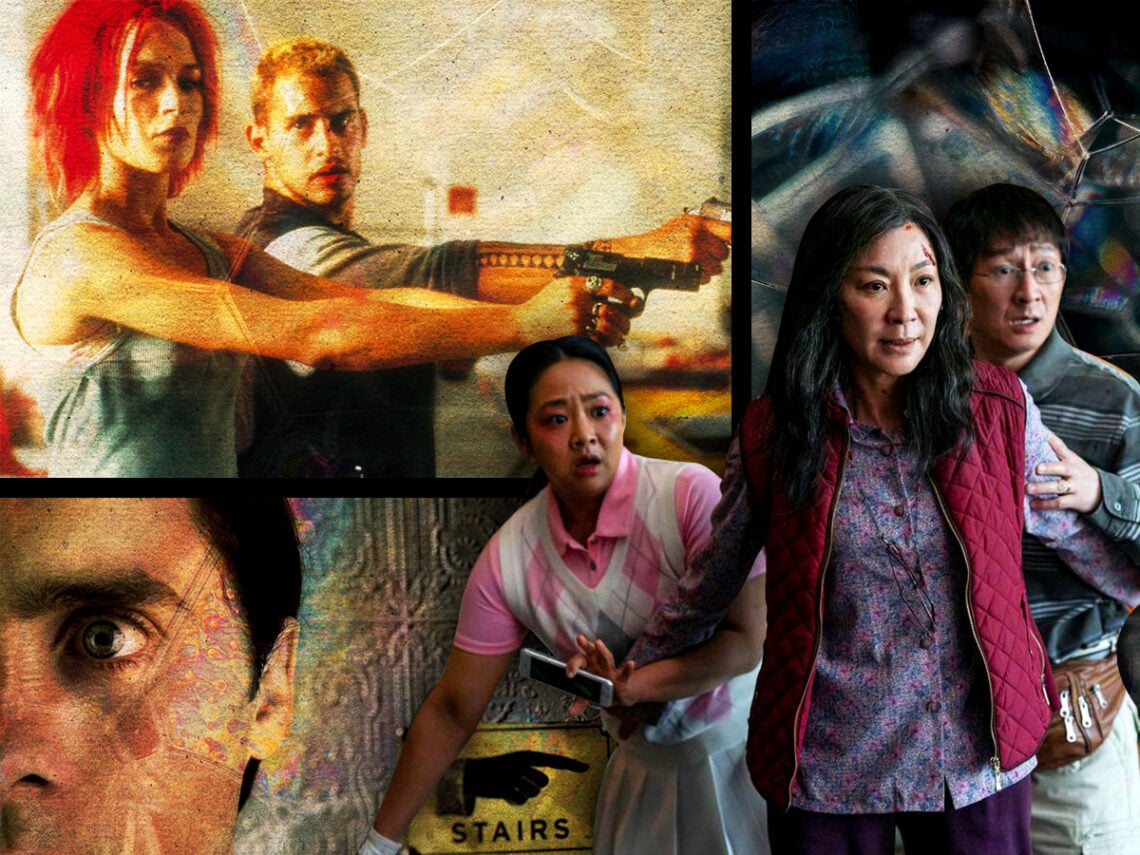
Naming the movie as the film that “changed his life”, Jared Leto stars in Jaco Van Dormael’s sci-fi drama Mr. Nobody as Nemo, a boy, man and pensioner who looks back on his life and glides in and out of different parallel universes. An extraordinarily ambitious piece of cinema that features scintillating visuals and a spritely soundtrack, which includes the likes of Buddy Holly, Pixies and The Chordettes, Mr. Nobody has become a bold favourite of many.
Starring Leto alongside an eclectic cast that includes Sarah Polley, Diane Kruger, Juno Temple and Rhys Ifans, Mr. Nobody is an ambitious multiverse movie that manages to strike a number of surprising emotional chords.
4. Spider-Man: Into the Spiderverse (Peter Ramsey, Bob Persichetti, Rodney Rothman, 2018)
We’ve chosen just one film to represent Marvel’s iconic multiverse narrative, opting for the influential animated flick Spider-Man: Into the Spiderverse, which doesn’t even exist in the main MCU timeline of movies. Blending a plethora of 2D and 3D animation styles to recreate the look and feel of a comic book, Spider-Man: Into the Spider-Verse uses all the tools in its arsenal to put together a playful cinematic masterstroke.
As well as an extraordinary visual feast that toys with frame rate, colour palettes and styles, the film itself, which follows Miles Morales, a teenage Spider-Man, who teams up with a group of other versions of himself from across the multiverse, is an utter thrill ride.
3. Blind Chance (Krzysztof Kieślowski, 1987)
So far on this list, we’ve discussed both Mr. Nobody and Sliding Doors, two films that place the concept of missing a train at the centre of their stories. Released decades before both movies, Blind Chance by the Polish filmmaker Krzysztof Kieślowski originated this multiverse concept, telling the story of Witek (Boguslaw Linda), a man who runs after a train whose life is changed forever depending on whether he catches the locomotive or misses it entirely.
Part of the Criterion Collection, Kieślowski’s film is proof that a multiverse narrative can take place in art movies as well as stunning blockbusters. Initially censored in Poland, the film is also a fascinating comment on the uncertainty of the communist government.
2. Everything Everywhere, All at Once (Daniel Kwan, Daniel Scheinert, 2022)
Beloved by audiences upon its release in 2022, Everything Everywhere, All at Once – by writer and directors Daniel Kwan and Daniel Scheinert – tells the story of a middle-aged Chinese immigrant who is swept up in a wild multiverse adventure where different versions of herself interact. Whilst it might sound like a complex thriller, the award-winning movie is actually more of a family drama, dealing with the pain of regret and the quandary of adolescence.
Featuring stellar performances from the likes of Michelle Yeoh, Stephanie Hsu, Ke Huy Quan and Jamie Lee Curtis, Everything Everywhere, All at Once is a manic multiverse movie that cannot be matched in scope.
1. Run Lola Run (Tom Tykwer, 1998)
Arguably, it was Tom Tykwer’s bizarre Euro-thriller Run Lola Run that germinated the seed of the movie multiverse, which would flourish into the MCU later in the 21st century. Hypnotising viewers with its wacky style and subversive narrative ideals, the 1998 German thriller follows a woman named Lola (Franka Potente), who is tasked with the near-impossible job of collecting and delivering Deutschmarks to save her boyfriend from being killed.
Just like a video game character, however, every time Lola dies in the film, she awakes with the same past experiences, reliving the same scenario time and time again until she ‘succeeds in the mission’. Mixing the multiverse narrative together with a stylish thriller that defines the vibrancy of 1990s European cinema, Run Lola Run is a timeless trippy sci-fi.
