


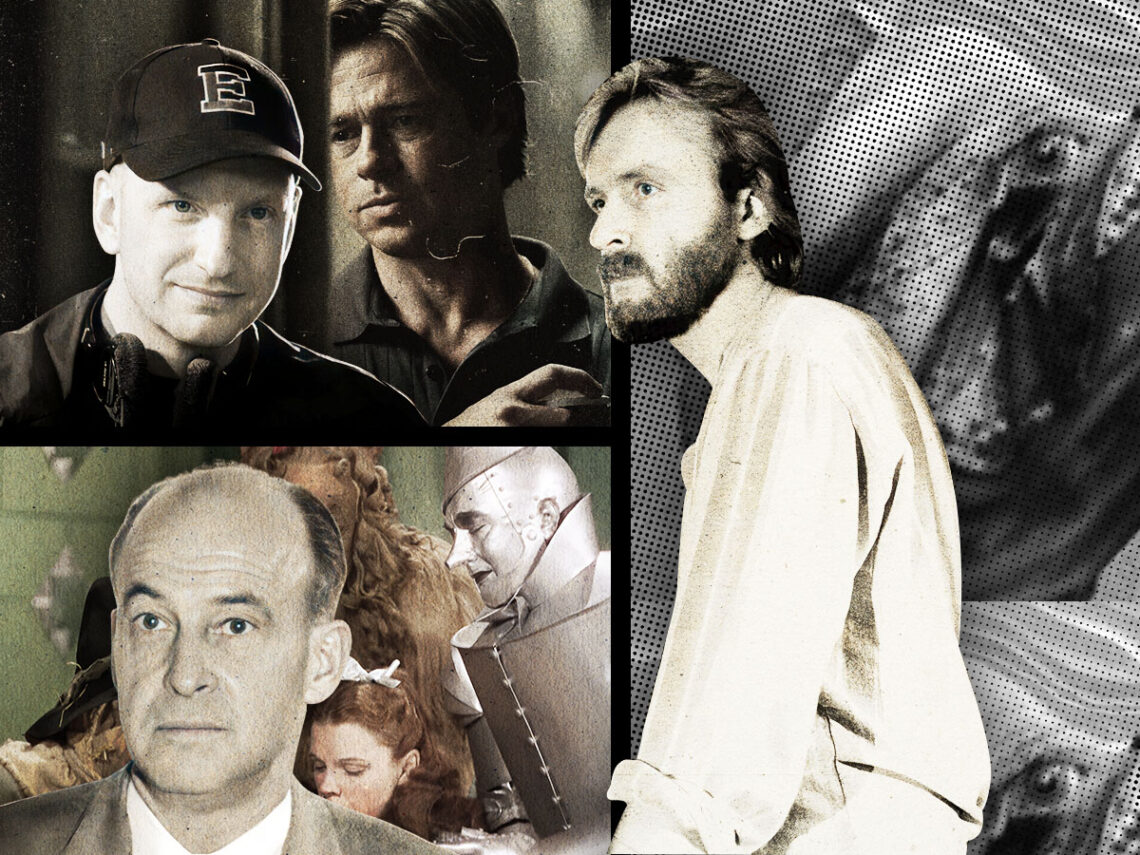
10 directors who were fired mid-movie

Hollywood is a place of magic, where dreams come true, and cotton candy floats down from the clouds like feathers. Except, of course, it’s not so heavenly, and we’re here to pop your bubble, stamp on your science project, and tell you the truth about the industry, where ill-feeling festers like the drone of tinnitus and controversial scandals between creatives are about as common as an explosion in a Michael Bay movie.
OK, so we’ll tone it down a bit, but the truth is that beneath its glamorous sparkle, the Hollywood industry is teeming with behind-the-camera logistics and difficulty. Much of the time, this difficulty is hidden from the audience, though sometimes, like with Olivia Wilde’s 2022 film Don’t Worry Darling, the ethereal veil of the industry is dropped for just a moment, and the true venom of its existence is revealed.
Sometimes, studios and producers will assign a director to a certain project, only to totally change their minds a few months into a project, with our list of ten directors who were fired mid-movie covering this topic in detail. Whilst some left of their own accord, others were booted from the project and left to run across the Hollywood hills in desperate search of more industry work.
Take a look at our list below, which includes such filmmakers as James Cameron, Paul Schrader, Alex Cox and more.
10 directors who were fired:
Alex Cox – Fear And Loathing In Las Vegas (1998)
The 1998 film Fear and Loathing in Las Vegas finally gave fans of American writer Hunter S. Thompson a faithful film adaptation of his 1971 novel of the same name. The final product was directed by Terry Gilliam, with Johnny Depp in the lead role. However, Gilliam was not always meant to be the man in the chair.
The film had changed hands a number of times, and at one point, it seemed to be going ahead with Repo Man director Alex Cox at the helm and Rhino Films producing. Rhino producer Stephen Nemeth believed Cox could get the movie up and running quickly and cheaply and even used him as a threat against Depp, who owned the rights to the film version. In the end, though, Cox was replaced with Gilliam.
Anthony Mann – Spartacus (1960)
The only film that the legendary Stanley Kubrick did not have complete control over was 1960’s Spartacus, the historical epic starring Kirk Douglas in the titular role as the leader of a slave revolt in the Third Servile War in Ancient Roman times. However, Kubrick was not always the director of the film.
Initially, David Lean had been offered the project, and after he turned it down, Anthony Mann, who had been known for his western films, was given the nod. However, Douglas, whose company Bryna Productions was making the film, fired Mann just a week into the shoot, later claiming that the director “seemed scared of the scope” of the film and he hired a young Kubrick instead.
Brenda Chapman – Brave (2012)
The 2012 Pixar animated fantasy film Brave was celebrated for being the first Pixar film with a female protagonist. So too did director Brenda Chapman become the first female director to take charge of a feature-length film for the production company. Or so she thought…
Chapman had played a large part in writing the film and claimed she had been inspired by the works of Hans Christian Anderson and the Brothers Grimm, as well as her relationship with her own daughter. Sadly, disagreements between Chapman and producer John Lasseter meant that Chapman was replaced with Mark Andrew, an experience she found “devastating”.
Bryan Singer – Bohemian Rhapsody (2018)
The filmmaker behind the celebrated 1995 movie The Usual Suspects was forced off the Queen biopic Bohemian Rhapsody in 2018, despite having only three weeks left of production. Disappearing off set on several occasions, leading to cinematographer Thomas Newton Sigel sitting in the director’s chair, Singer’s erratic behaviour on the set of the movie caused too much frustration for the producers behind the project.
Singer was replaced by the British filmmaker Dexter Fletcher, who helped guide the project to considerable success, helping it to earn four Academy Awards and even a nomination for ‘Best Picture’.
James Cameron – Piranha II: The Spawning (1981)
Piranha II: The Spawning, the sequel to the 1978 original horror film, was meant to be James Cameron’s directorial debut. Cameron had previously been a special effects artist and found his place in the director’s chair after executive producer Ovidio G. Assonitis sacked his predecessor Miller Drake.
However, Assonitis’ tyranny didn’t stop there. Taking an extraordinarily large amount of creative control from the crew, Assonitis forbade the future Terminator director from viewing any of the footage he shot in the editing process and eventually fired him just two weeks into the shoot, completing the film on his own.
Paul Schrader – Exorcist: The Beginning (2004)
Naturally, the 2004 horror film Exorcist: The Beginning serves as a prequel to the widely-admired 1973 original. The film was made out of Paul Schrader’s Dominion: Prequel to the Exorcist because Morgan Creek Productions were worried about its future success. They believed the film was too long and lacked scary moments and gore.
The studio demanded that Schrader re-cut the film and add more scenes, but Schrader wasn’t happy about it. In the end, Morgan Creek brought in Sheldon Kahn to re-cut the film, which left Schrader “livid”, demanding that Kahn exit the production. However, Morgan Creek responded by sacking Schrader and replacing him with Renny Harlin, who finished the film. Funnily enough, though, the film flopped, and Schrader was allowed to release his version anyway.
Pete Travis – Dredd (2012)
Ask any lover of the 2012 comic-book movie Dredd, written by Alex Garland, and you’ll hear first-hand the passion that some people have for this admittedly underrated sci-fi flick. Pete Travis was the director of the movie all the way through the production but was booted off the film during the editing process when he clashed with the producers over mere creative differences.
Garland took charge of the post-production and made some pretty significant changes that meant, if he wanted it, he could have claimed a co-director credit. After some thought, Garland turned down the offer.
Richard Stanley – The Island of Dr. Moreau (1996)
Without doubt one of the strangest movies ever made, the 1996 flick The Island of Dr. Moreau, based on the novel of the same name by H. G. Wells, was a complete nightmare to make. Starring a number of big egos such as Marlon Brando, Val Kilmer and David Thewlis, the stars clashed with the original director Richard Stanley, with the volatile Kilmer having a particular problem with the filmmaker.
Eventually, the feud got so bad that Stanley was fired from the film on just the third day of production, with the filmmaker behind Ronin and The Manchurian Candidate, John Frankenheimer, taking over the reins.
Richard Thorpe – The Wizard of Oz (1939)
From a rather forgettable movie to one of cinema’s most impressive feats, 1939’s The Wizard of Oz is undoubtedly one of the greatest films of all time. Though the film is known to be directed by Victor Fleming, Richard Thorpe was the original choice from the studio, but he was fired just nine days into the film’s production, with the production team believing that he was rushing the making of the potentially revolutionary movie.
It didn’t help Thorpe’s case that, shortly into production, the Tin Man actor Buddy Ebsen had a severe allergic reaction to the aluminium powder in his makeup, with the director getting the boot not long after.
Steven Soderbergh – Moneyball (2011)
Speaking of ‘Best Picture’ nominees, the 2011 movie Moneyball was in the running for Hollywood’s top prize but was pipped to the post by Michel Hazanavicius’ The Artist. Maybe Moneyball would have had a better chance of winning if it had been headed up by the Palme d’Or winner Steven Soderbergh as originally planned instead of the eventual director Bennett Miller, who was known for helming 2005’s Capote.
Soderbergh was removed from the project when he made Moneyball look too much like a documentary, with this style significantly clashing with what Sony had in mind.
