


10 authors who hate their film adaptations

Adapting a novel into a film always seems like a good idea. The whole story is right there, written out in painstaking detail for screenwriters like Mario Puzo to cut parts out and elevate others, and sometimes the result is an excellent film that faithfully tells the story whilst bringing a cinematic and dramatic edge to proceedings.
However, on other occasions, film adaptations do not stand up to the excellence of their source material. They can’t quite adequately capture the emotion of the dialogue or accurately portray the action and the setting, and ultimately, they fall flat on their faces.
Prospective film adapters must also contend with the fact that, quite often, the original books already have legions of die-hard fans who are anxious to find they have done their beloved fictional stories justice. Then there’s the fact that the authors themselves must be appeased.
This latter point has often proved to be the case, so today, we’re taking a closer look at ten authors who can’t stand the films made from their books. So, from science fiction sagas to chilling horror classics, let’s begin.
10 authors who hate their film adaptations:
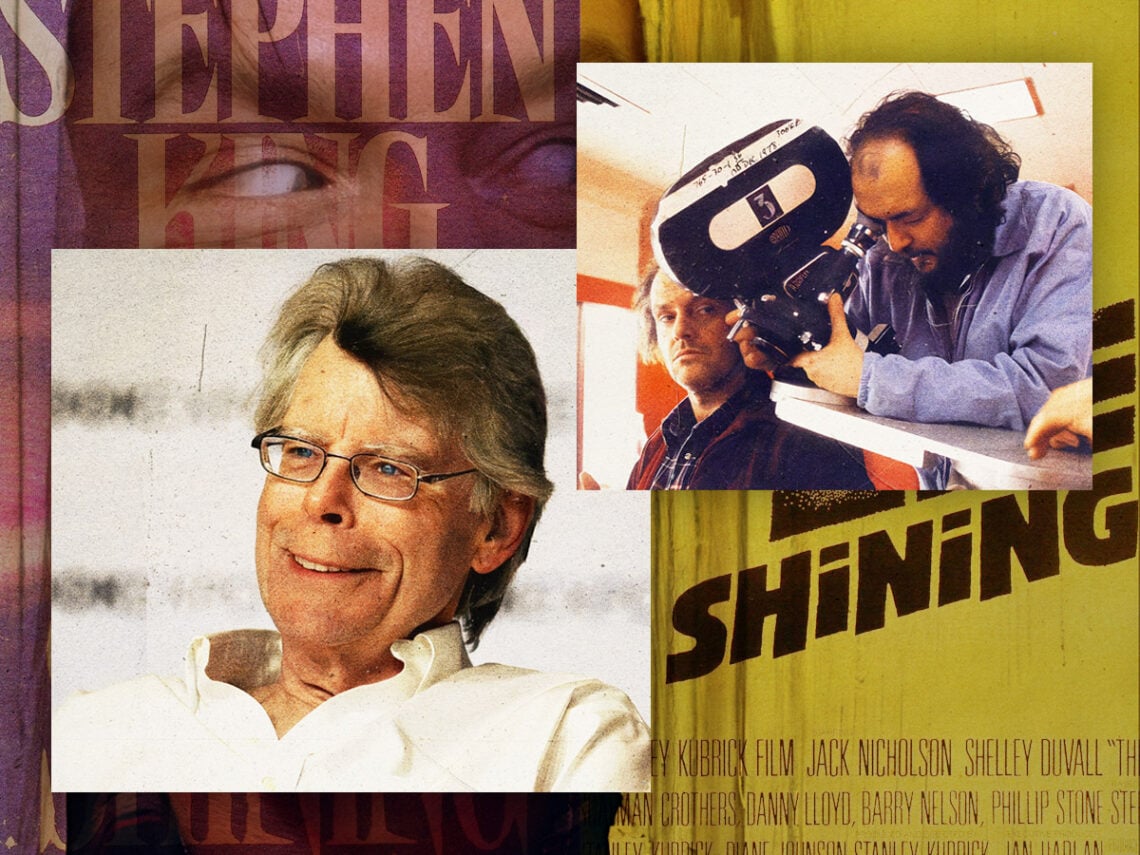
Stephen King – The Shining
King’s works are always good for an adaptation, and there have been countless made over the years, with one of the best certainly being Stanley Kubrick’s 1980 horror classic The Shining, starring Jack Nicholson in the lead role. However, King was less than impressed with the screen version of his story.
He was particularly disappointed by the fact that Kubrick made Jack Torrence into the story’s antagonist rather than focusing on the fact that he is, at heart, a well-meaning man possessed by the hotel’s evil forces. King was equally upset by Wendy Torrence in the film, claiming, rightfully, that she did nothing else but scream.
Ken Kesey – One Flew Over The Cuckoo’s Nest
If this list is anything to go by, then adaptations of novels starring Jack Nicholson are not admired by their original authors. Milos Forman’s One Flew Over The Cuckoo’s Nest saw Nicholson earn his first Academy Award, and Louise Fletcher also took home ‘Best Actress’ for her role as Nurse Ratched.
However, author Ken Kesey hated Forman’s version of his story. He had been offered the opportunity to write the screenplay for the film, but things didn’t work out. When the job went to someone else, a hatred for the final product grew, and Kesey remained in devout distaste of the classic drama.
Truman Capote – Breakfast at Tiffany’s
Audrey Hepburn’s performance in Breakfast at Tiffany’s is one of her most admired. However, the original book’s author, Truman Capote, had less than kind things to say about her and the film version. Capote has always wanted Marilyn Monroe to play Holly Golightly, so when Hepburn got the role, he was never going to like the final product.
Capote spent much of his life calling the 1961 movie “miscast” because it appeared that Holly was his favourite character of his own creation. So it’s fair to see why an author might be a bit miffed off that they could not themselves choose who ought to play their darlings. Never mind, Truman.
Bret Easton Ellis – American Psycho
Mary Harron’s 2000 version of Bret Easton Ellis’ novel American Psycho, starring Christian Bale as Patrick Bateman, is one of the best book-to-movie adaptations of this Century. However, Ellis was not best pleased with Harron’s efforts. In fact, he felt that there shouldn’t have been a movie version at all.
He once said, “American Psycho was a book I didn’t think needed to be turned into a movie. I think the problem with American Psycho was that it was conceived as a novel, as a literary work with a very unreliable narrator at the centre of it and the medium of film demands answers.” Evidently, Ellis felt that a film simply could not stand up to the storytelling method of his own novel.
Anthony Burgess – A Clockwork Orange
Stanley Kubrick was known for adapting source material into a film, from Lolita to Eyes Wide Shut, and he did the same with Anthony Burgess’ novel A Clockwork Orange, widely considered a cinematic masterpiece. However, Burgess himself regretted letting the film happen.
“The book I am best known for is a novel I am prepared to repudiate. It became known as the raw material for a film which seemed to glorify sex and violence,” he once claimed. “The film made it easy for readers of the book to misunderstand what it was about, and the misunderstanding will pursue me till I die. I should not have written the book because of this danger of misinterpretation.” Ouch.
Winston Groom – Forrest Gump
Tom Hanks delivered one of his most memorable performances in Robert Zemeckis’ adaptation of Winston Groom’s novel Forrest Gump. He played the titular daft, happy-go-lucky dimwit who chronicles the history of the 20th Century. However, Groom ended up hating the novel for financial reasons.
Groom had been promised three per cent of the profits of the movie but didn’t receive a dime when the producer said they deducted production costs from income. When Groom wrote a sequel novel, he began with the lines, “Don’t never let nobody make a movie of your life’s story. Whether they get it right or wrong, it don’t matter.”
Anne Rice – Queen of the Damned
So far in this list, the films have been critically admired in one way or another, but the original authors still haven’t liked the adaptations. So what happens when the final product isn’t remotely good? Anne Rice did not enjoy the second adaptation of her The Vampire Chronicles series.
The first book had been made into a decent film with Tom Cruise and Brad Pitt called Interview with the Vampire in 1994, but when Queen of the Damned came out in 2002 with no star actors, she was less than pleased. For starters, the producers had skipped the second book in the novel and then took liberties with her source material, making it one of the less faithful adaptations of all time.
Roald Dahl – Charlie and the Chocolate Factory
Like Stephen King’s horror novels, the children’s fiction of Roald Dahl has been adapted for the screen several times, whether for live-action or animation. However, Dahl did not enjoy the classic 1971 version of Charlie and the Chocolate Factory one bit.
The big problem for Dahl was that Willy Wonka seemed to take character precedence over young Charlie, who’d featured prominently in the novel. Add that to the fact that Dahl was not best pleased with Gene Wilder’s performance as Wonka, wanting Peter Sellers to take on the role instead, and, understandably, the author did not like the film created out of the bones of his fiction.
Richard Matheson – I Am Legend
Richard Matheson hasn’t been keen on any of the adaptations of his novel I Am Legend. He felt that Vincent Price was “miscast” in the first adaptation, The Last Man on Earth and that the direction was subpar. Perhaps the most famous version is The Omega Man, starring Charlton Heston, but this also left little impression on Matheson.
“The Omega Man was so removed from my book that it didn’t even bother me,” Matheson once said. Before the next remake was made, faithfully titled I Am Legend, with Will Smith in the lead role, Matheson had already disavowed any film version of his novel, saying, “I don’t know why Hollywood is fascinated by my book when they never care to film it as I wrote it.” It’s just as well he didn’t see Smith in action then.
Ursula Le Guin – The Earthsea Cycle
Like Matheson, there’s been more than one attempt at bringing Ursula Le Guin’s The Earthsea Cycle novels to the screen, but she was happy about neither. She took issue with a 2004 TV version because of whitewashing, turning “a boy with red-brown skin” to a “white kid”, missing the point of race in the novel entirely.
Le Guin wasn’t much happier with the 2006 Studio Ghibli version either. She’d been keen on Hayao Miyazaki taking control of the project, but when the film went to his son Goro in his feature debut, she seemed put off, if remaining polite. “Yes. It is not my book,” she told him. “It is your movie. It is a good movie.” At least the author was being kind on this occasion.
