


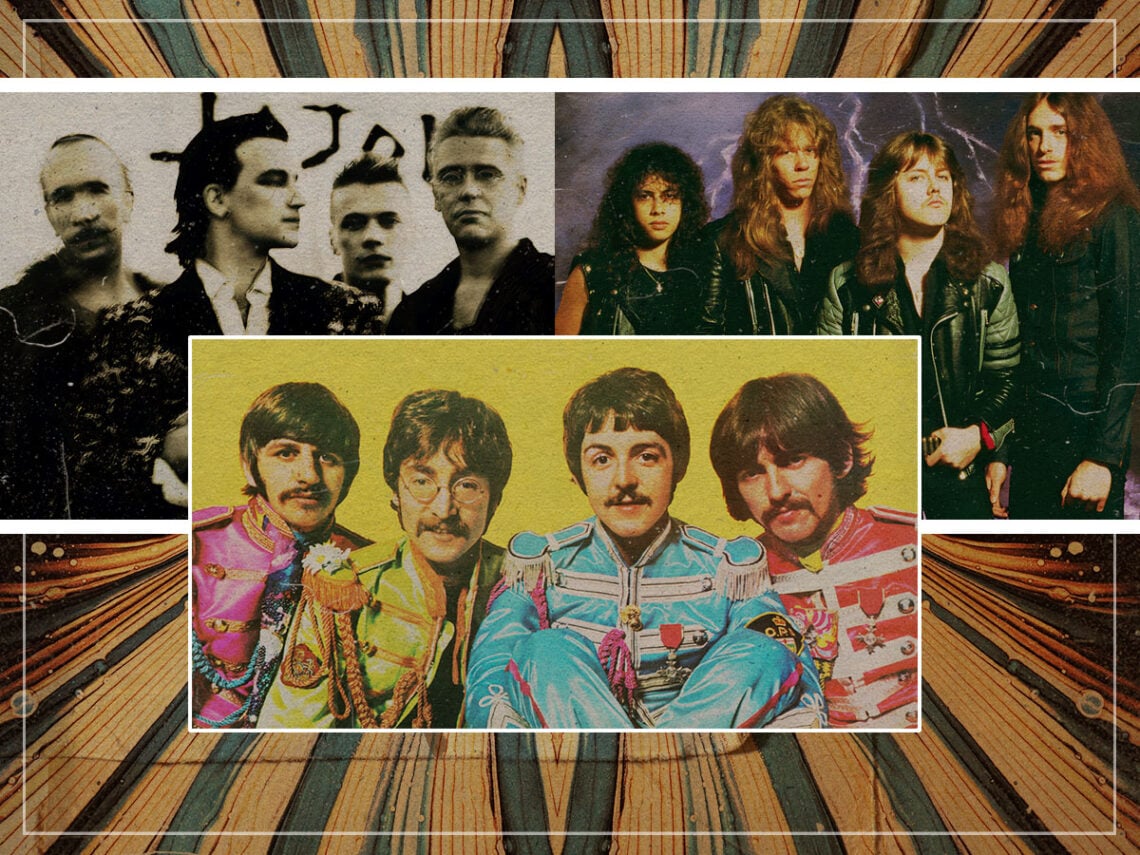
10 musicians that drastically changed their image

From the minute any band walks on stage, they are building an image whether they know it or not. Whether it was the sound of prog-rock in the mid-1970s or the reign of hair metal in the 1980s, there was usually a specific look that went with a style of music along with the instrumentation. Although it might be fun to cultivate a particular aesthetic, artists like The Beatles and U2 found it more fun to toy with people’s expectations.
For as long as artists remain in the public eye, there will always be trends that go out of style, and each of these artists found a way to defy expectations by deliberately going against the grain. While they may have set expectations with their previous output, moving in the opposite direction confused fans and excited those looking for something new than the average rock and roll song.
While the biggest success stories often come from going against the grain, the best examples of artists changing their image come from them warping their sound to fit the times. Trends come and go every few years, and part of the appeal of a new direction is using those new styles, like a sonic costume, to try out different ideas.
Despite initial pushback from fans, each artist would go on to be respected amongst fans and critics for going outside the box and trying something new when they went into the studio. The music may stay the same, but the aesthetic behind everything looked a lot different the minute these albums were released.
10 bands that changed their image:
10. A Thousand Suns – Linkin Park
By the time Linkin Park had begun taking over the world, their genre had already started to reach its end. Even though Mike Shinoda and Chester Bennington were the perfect combination of rapping and singing, the amount of nu-metal acts that were talking about their shallow problems was starting to make the entire scene look like a parody of itself. Linkin Park never wanted to stay in that mould for too long, though, and A Thousand Suns is where they learned to embrace the electronics.
While the band always had an electronic side to their early work, their concept album centred around nuclear fallout was when they drew a line in the sand for their old sound. Rather than use turntables to fill out the sound of the roaring guitars, Joe Hahn was creating new beats that could be musical on their own, like ‘Waiting For the End’ and ‘The Catalyst’, each of which thrives on the relentless electronic rhythms droning throughout the song.
The band did manage to incorporate their old sound back into the fold as well, with songs like ‘Wretches and Kings’ being electronic takes on what a metal song was supposed to sound like. Linkin Park may have been dangerously close to being yesterday’s news, but A Thousand Suns helped save them, and rock in general, from becoming stagnant in the early 2010s.
9. Warning – Green Day
The biggest mistake that any pop-punk band could make was to take themselves too seriously. Even though the idea of punk is to go against the establishment, the juvenile sounds that Green Day paved the way for on Dookie relied on sounding snotty by nature. When the band started to experience the ins and outs of a touring rock band, though, Warning saw them peel things back further away from their punk roots.
Although Green Day had been on a slippery slope away from their roots, Warning marked where they pivoted towards more folksy material. Inspired by artists like The Kinks, Billie Joe Armstrong created an album that was as concerned with the world around him as it was about his self-destruction, looking at the hollow shell that could never be filled in someone’s heart on ‘Macy’s Day Parade’.
While most fans were perplexed by hearing their favourite punk band suddenly turn towards acoustic rock, the sound of songs like ‘Deadbeat Holiday’ would pave the way for the band’s political commentary later down the line, pointing a middle finger back at the Bush administration just a few years later. Despite fans not liking it at the time, there’s a good chance that a song like ‘Holiday’ might not have happened if not for the band’s ambition on ‘Minority’.
8. Grace Under Pressure – Rush
There has never been a genre that Rush has willingly turned down. Since progressive rock has always been about expanding one’s horizon, every single album the Canadian power trio made felt like a new creative endeavour, looking to test what they could do with just three people and a willingness to create. While fans may have loved the gargantuan songs that made up their 1970s material, Grace Under Pressure ushered them into the 1980s with squelchy synths galore.
While the band had toyed with synthesisers in the past, this was the first time they deliberately tried to make more commercial music, with no song going past the ten-minute mark. Although the progressive side of their fanbase was disappointed to see them going in a (then) mainstream direction, the band created the most emotional music of their entire career on this album as well.
Compared to the flowery tales that Neil Peart would write on earlier projects, songs like ‘Distant Early Warning’ and ‘Red Sector A’ are dripping with melancholy, detailing the harsh realities that face humanity, be they in the past or present. Even though the synthesisers may sound cold, Rush’s beating heart is still present across every track.
7. Fleetwood Mac – Fleetwood Mac
When discussing the different eras of Fleetwood Mac, it’s important to pay attention to the lineups. Although John McVie and Mick Fleetwood have been the main consistents in the band throughout their tenure, the musicians around them have taken the group through every genre imaginable, starting with Peter Green’s blues-infused period in the late 1960s. Once his replacement, Bob Welsh, fell out, the band got the biggest second wind they could ask for with Lindsey Buckingham and Stevie Nicks.
Born out of the folk-pop tradition, Buckingham and Nicks were humble songwriters when Fleetwood had the idea of bringing Buckingham in as the group’s guitarist. Insisting that Nicks be included in the package, Fleetwood Mac reinvented themselves with their self-titled album, with Nicks and Buckingham penning their first major hits for the group like ‘Rhiannon’ and ‘Monday Morning’.
While it took some time for the band to get used to each other, the stage was set for Rumours, a landmark piece of 1970s pop which paired beautiful melodies with the seasoned musicianship of Fleetwood and McVie. Although Fleetwood Mac may have had an identity crisis throughout their career, their most iconic period was just on the horizon.
6. Achtung Baby – U2
It would make sense for U2 to never make another again after The Joshua Tree. After four albums making the most militant rock music ever made, their look at the world around them after touring America made them global superstars, creating songs that felt like they may be able to impact the world around them. Just when the band were set to make their next grand statement, Achtung Baby showcased a band that was too frazzled by fame.
Going in the opposite direction of their previous work, Bono reinvented himself as the ultimate parody of a rock and roll frontman, adopting the stage persona of ‘The Fly’ as he played odes to self-irony like ‘Zoo Station’ and ‘Even Better Than the Real Thing’. Although Bono was playing up the macho rock star, the core ethos behind the album was full of pain about the pitfalls of becoming the biggest celebrity in the world.
Despite the hopeful tone of ballads like ‘One’ and ‘Who’s Gonna Ride Your Wild Horses’, Bono was practically giving his audience a warning about what could become of someone when they lose themselves to their own hubris. While some would argue that U2 eventually turned themselves into that parody of a rock star in real life, they never sounded more human than on Achtung Baby.
5. Heaven and Hell – Black Sabbath
It seemed impossible for Black Sabbath to replace a frontman like Ozzy Osbourne. Although Osbourne never claimed to be the most talented member of the group, his tortured vocals across Sabbath’s greatest material brought a voice to Tony Iommi’s riffs of doom, perfectly complimenting the horrid stories behind ‘War Pigs’ and ‘Children of the Grave’. While a frontman of that calibre is tough to match, Sabbath made the perfect choice by going in the opposite direction.
Drafting Ronnie James Dio after his work with Rainbow, Sabbath rebranded itself as a more grizzly metal act. Coming from a more musical background, Dio could communicate his ideas more thoroughly than Osbourne could with Sabbath, turning Iommi’s riffs into modern epics on the title track and the wayward ballad, ‘Children of the Sea’.
While Osbourne moved on to his solo career, Heaven and Hell proved that Sabbath could hang with the new kids on the block, giving artists like Judas Priest and Diamond Head a run as the next heavy metal era was dawning. Osbourne may have been the face of the band, but all of Black Sabbath’s gloom originates from Iommi first and foremost.
4. Kid A – Radiohead
Most Radiohead fans will point to OK Computer as the moment when everything changes. Although the band had spent years trying to outrun the shadow of ‘Creep’, their third album brought a mournful spirit that resonated with millions around the world as Thom Yorke moaned on about being scared of what a future with technology could bring. If OK Computer was the warning, Kid A was the dark prophecy coming to life.
Wanting to run away from their normal sound, Radiohead sunk their teeth into every electronic sound they could find, starting from scratch with their core sound and feeding it through different processors. Although the results weren’t necessarily rock and roll, the band’s need to become cyborgs paid off, making the sound of synthetic instruments emote on tracks like ‘Idioteque’ and ‘How To Disappear Completely’, the latter of which being the closest thing to a normal Radiohead track on the project.
Even though the band have dipped their toes into rock-tinged moments ever since, they have never looked back from Kid A, using every album as a new opportunity for them to expand their horizons. Radiohead may have outrun one-hit-wonderdom, but Kid A turned them from rock gods to the most sophisticated musical thinkers of their time.
3. The Black Album – Metallica
By the time Metallica reached the end of the 1980s, they had come to the end of the line. While they had brilliantly recovered from the death of bassist Cliff Burton on And Justice For All, it was clear that they had done all they could do with their standard thrash sound, with songs stretching out into nine-minute exercises that left hardened metal fans exhausted by the end of the album. The band needed a course correction, and Bob Rock knew how to get them there.
Having worked on the biggest records for bands like Bon Jovi, Rock went into the studio with the intent of getting the band to record simpler material. Rather than the extended jams of the past few years, the band turned inward to create their most accessible material to date, from the nursery rhyme nightmare ‘Enter Sandman’ to James Hetfield opening up his heart to his fans on ‘Nothing Else Matters’.
Despite many fans calling them “sellouts” for daring to write commercial music, Metallica would become the go-to ambassadors for heavy metal, making the genre easier to digest for fans who were on the fence about listening to anything too heavy. Metallica may have left their thrash roots in the past, but it was well worth the trade if they could still make something as heavy as ‘Sad But True’.
2. Station to Station – David Bowie
When talking about the many phases of rock and roll history, it would be easy to put David Bowie in every single category. From the minute that he started to create music, Bowie was never going to settle for any one genre, sampling every sound he could get his hands on throughout every phase of his career. Though he found his niche as one of the kings of glam rock, Station to Station was his first major pivot into unchartered territory.
While Young Americans saw him embracing the sounds of Philly soul, Bowie’s next album was a completely different animal. Standing at only six tracks, Station to Station takes Bowie’s usual sound and feeds it through the krautrock mould. Being inspired by the work of artists like Kraftwerk, Bowie assembled the album as a new auditory experience, creating a new character in ‘The Thin White Duke’ to throw darts into all lovers’ eyes.
This would only be the beginning for Bowie, kicking off his next run of albums by moving to Berlin and getting in touch with the mechanics of what his sound was supposed to be. Though Bowie would return to more accessible material in the 1980s with Let’s Dance, Station to Station captured the moment where his sound became completely elastic.
1. Sgt Peppers – The Beatles
Towards the mid-1960s, there was some serious debate about whether The Beatles were going to break up. Having been through the highest heights that any rock band could have asked for at the time, the lives of the Fab Four were bound to change once they arrived home. While the band had become at home in the studio on previous albums like Revolver, Sgt Peppers was enough to turn the entire music world on its head.
While the band began production with the single ‘Strawberry Fields Forever’, Paul McCartney developed the concept of an imaginary band across one album, making songs that these fictitious identities may want to write. Outside of the concept, each member was toying with what traditional rock songs were supposed to be, with McCartney dipping his toes into jazz on ‘Fixing a Hole’, John Lennon embracing whimsy on ‘Being for the Benefit of Mr. Kite’, and George Harrison showcasing his spirituality on ‘Within You Without You’.
When the audience heard ‘A Day in the Life’, they knew that The Beatles had created something more than a good rock album. This was the sound of an entire generation of kids pivoting towards psychedelia, and The Beatles were leading the way one song at a time.

Never Miss A Beat
The Far Out Beatles Newsletter
All the latest stories about The Beatles from the independent voice of culture.
Straight to your inbox.