


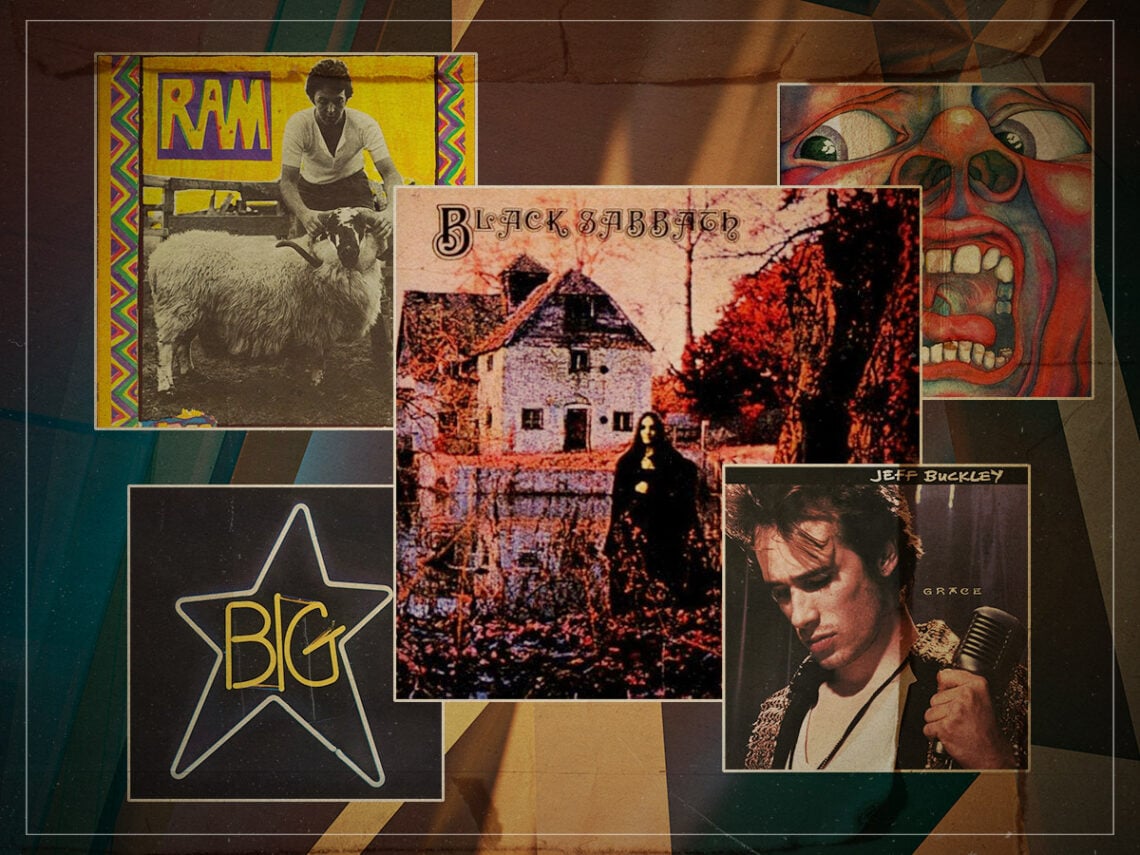
10 albums that predicted the future of rock

Rock and roll has always been about living in the moment. The whole idea behind the genre was about partying like there was no tomorrow, but evidently, the non-stop party that Chuck Berry generated over half a century ago has lasted far longer than anyone thought it would. But even by the standards of rock and roll, some songs by artists like John Lennon inadvertently predicted what the future of the genre was going to sound like.
Granted, no one here is the musical incarnation of Nostradamus by any stretch. Many of them were simply following their muse the same way everyone else does, but the minute that they started working on something new that no one had heard before, people started to look at their own approach to music and follow their example, whether because of a certain solo, chorus line or even the first ten seconds of the tune.
And the strange part is that most musicians didn’t even realise they were defining a generation when they were doing it. They only wanted to play the music that they heard in their heart, but fortunately for the rest of us, that kind of tone was profitable for a few more years. It might not have been what the world needed then, but considering how much has come and gone in rock and roll, they were almost necessary for the genre to carry on.
So, while most of the artists had the right idea and the wrong timing, most of us are better off not knowing that they didn’t realise what they were doing. Had they known the power they wielded, they would have needed to be studied in a lab so that people could discern the genius that they possessed for that short period of time.
10 albums that predicted the future of rock
‘Grace’ – Jeff Buckley

Every generation has those blink-or-you’ll-miss-them artists. Anyone growing up in the 1960s will tell you what it felt like to breathe the same air as Jimi Hendrix, and anyone coming of age in the 2000s will remember the drastic shift that happened the moment they heard Amy Winehouse for the first time. Although Jeff Buckley tragically belongs to that same company, he did eventually give some clues to his demise in his only official studio album.
While much of Grace tells the story of a love that has gone stale throughout its runtime, a lot of the imagery towards the end of the album gets a little bit uncomfortable knowing what happened to Buckley afterwards. He had been talking about the problems that he had that put him in a dream state, but listening back to him sing a tune like ‘Dream Brother’, it gets incredibly on the nose when he talks about getting pulled down by the tide, given the fact that he drowned only a few years after the record came out.
Compared to every other album on this list, this is the one that gets almost eerily precise. Buckley was said to have gone out while singing pieces of Zeppelin’s ‘Whole Lotta Love’, and the fact that the album’s final moments sound a lot like Robert Plant at his most unhinged is almost frighteningly coincidental. It could all be a strange case of fate lining things up, but you’d have to wonder if Buckley knew his time was running this short.
‘Black Monk Time’ – The Monks

Any self-respecting music critic has always had fun unpacking the miracle of punk rock. There are many instances when rock has gone through a change, but the minute everything got disassembled and everyone started from scratch again was when people truly started to appreciate the power of the genre as they did in its prime. And while Sex Pistols and The Clash deserve a mention alongside the first major punk acts, The Monks were the definition of what the words “proto-punk” should be.
Since this came out around the same time The Beatles were making Help! and before Lou Reed had even formed The Velvet Underground, this is one of the clearest instances of punk rock finding its feet. None of them knew the first thing about what the genre was, but listening to them play their hearts out and shriek their way through their songs is the kind of thing that you’d expect coming out of some 1960s equivalent of a hardcore outfit, even when using a banjo on some of their material.
Although The Monks never planned to have the same kind of musical career that The Rolling Stones had by any stretch, their one flirtation with music history indirectly inspired millions of punks without thinking about it. Most people consider songs like ‘My Generation’ by The Who or even the early sounds of The Sonics as the first true punk rock, but that was garage rock in its truest form. The core identity of punk rock sounded angry, and The Monks are absolutely pissed throughout every second of this record.
‘Concert for Bangladesh’ – George Harrison

The entire premise of stardom is a very self-serving practice for rock stars. No one goes into the industry trying to get other people famous, and when looking at the biggest names in music, they have practically turned themselves into more of a brand than a person half the time they step up to the microphone. George Harrison never saw himself in that light, though, and if he was going to make a statement, he wanted to make sure that he could help as many people as he could.
Then again, The Concert For Bangladesh wasn’t meant to be some earth-shattering gig by any means. Harrison had heard about the famine and strife going on in Bangladesh, and when asked by Ravi Shankar, he put together as many famous names as he could to raise money for the event. Although the star-studded event became one of the biggest concerts of the 1970s, the model that he set wouldn’t be truly appreciated until Bob Geldolf started getting the same idea a few years later.
Years before the likes of Live Aid, Farm Aid, and any other charity event, Harrison pioneered the idea of how rock and roll could give back to the people, even if all they had to give was their time and their love of music. Many people could take a few cues from how Harrison conducted himself here, but like all of his preaching, Harrison never meant to lecture people. He led so that other people could follow in his footsteps, and if this is what he used his platform for, we probably didn’t realise the musical prophet we had on our hands.
‘#1 Record’ – Big Star

The entire concept of power-pop should be a sure-fit win whenever it gets on the charts. The age of classic melodies had been started by The Beatles, but when people like Cheap Trick and The Cars started putting some genuine muscle behind their work, it felt lik every single great rock and roll got a huge shot of adrenaline. It’s easy to trace that sound back to the Fab Four themselves, but outside of the wonders of Apple Records, Big Star proved that America could have even more hooks on their records.
Although Alex Chilton and Chris Bell were the power-pop answer to Lennon and McCartney in many respects, #1 Record is probably one of the cheekiest album titles of all time. There was hardly anything from this record that got played on the radio in the same way that The Osmonds were from around that time, but looking through every tune, the band had the perfect combination of rock fury and pop smarts, like ‘The Ballad of El Goodo’ and ‘Don’t Lie To Me’.
Even if they couldn’t get arrested in the US with the tune, hearing everyone from The Replacements to Counting Crows reference them is a solid enough legacy for them to leave behind. They were certainly shooting to be far bigger than they ended up becoming, but Big Star are proof that as long as you have good hooks, it doesn’t matter if you don’t happen to place in the Top 20. Because if people can sing your stuff, you will be remembered.
‘A Thousand Suns’ – Linkin Park

Linkin Park’s debut seemed to come out at a strange time for rock. Depending on who you ask, the entire nu-metal genre that they were cribbing from had either completely burned itself out or was going through its waning years, and even when they were at the height of their fame with Meteora, people were questioning whether rap-rock had a place in modern culture any more. But while Minutes to Midnight saw them in a state of transition, A Thousand Suns projected into the future to see what the next phase of rock and roll was going to sound like.
When talking about the record, every member of the band talked the record up as their equivalent to Dark Side of the Moon or Kid A, and while you can definitely hear those elements there, something else is going on. In between the conceptual pieces about the fallout after a nuclear blast, the synthetic side of their music seemed to sound a lot more slick than any rock band that had come before, and no mainstream act has forgotten about it since.
Although this was a change for the worse in many respects, A Thousand Suns is responsible for the washed-out electronic rock that has been dominating the cultural conversation in recent decades, with everyone from Twenty-One Pilots to Imagine Dragons taking pieces of what they had started on here. Building a legacy is all that someone could hope to do, and while Linkin Park walked so Bring Me the Horizon could run, the fact that things got so oversaturated probably wasn’t what they had in mind.
‘In the Court of the Crimson King’ – King Crimson

The entire premise of the late 1960s was for artists to experiment with everything under the sun. The Beatles had broken down barriers the minute that Sgt Peppers was released, and while that album does stand tall in the pantheon of Beatles records, it does feel like a fine time capsule of the Summer of Love and a statement than an album that was predicting the future. No, that came from when Robert Fripp began making the kind of musical shapes that people didn’t think could be made in rock and roll.
Although King Crimson has always had the loosest parameters around their lineup, In the Court of the Crimson King is as solid as they ever were. From the opening of ‘21st Century Schizoid Man’, the band set the precedent for what progressive rock was going to be, whether that was not worrying about the traditional verse/chorus structure or going on long sweeping solos that took people on a journey rather than having them sing along.
And let’s not forget the actual songs that warmed people up to new styles, like ‘Epitaph’ predicting the softer moments on Emerson, Lake and Palmer’s ‘Tarkus’ or Fripp eventually developing his unique phrasing on guitar that would carry on into other prog-rock bands that followed. People were already searching for new musical avenues, but the biggest lesson King Crimson taught was that it was better to live without a set of rules.
‘RAM’ – Paul McCartney

For a little while, there was a very real possibility that Paul McCartney would be looked at as the joke musician in The Beatles. Every member of the band had finally said their piece on the matter, and while McCartney was the first one out of the gate with his self-titled McCartney, the backlash behind that record and RAM made him seem like the lightweight who never contributed everything. But looking at what the indie scene had turned into as of late, every single person who dragged him through the mud owes him an apology.
While not every song on RAM is aces from back to front, it does have the same infectious off-the-wall energy that comes from any great indie album. There are the cutesy moments like breaking out the ukulele for ‘Ram On’ and having Linda take the mic on pieces of ‘Long-Haired Lady’, but the production value on the epic tunes is far more ambitious than most people thought, like the piercing guitar on ‘Too Many People’ or the pummelling energy behind ‘Monkberry Moon Delight’.
Even though the album’s critiques convinced Macca to scale things all the way back when working on Wings’ first album Wild Life, RAM not getting the love it deserved feels like a real missed opportunity. Because had McCartney received encouragement that he was moving in the right direction, imagine what other songs he could have made that would have ben considered revolutionary in 1971.
‘Grievous Angel’ – Gram Parsons

By the end of the 1960s, California had become as important a location for rock and roll as England had been at the start of the decade. The Beatles and The Stones ushered in a new era for what kids could look like, but after the hippy dream came and went, there was nowhere else for people to go once Charles Manson turned the Sunset Strip scene into a horror show. Everyone was on the comedown, and Gram Parsons was more than happy to be the person telling us things were going to be okay.
Although it took a while for him to find his feet after leaving The Byrds, Grievous Angel is the album that should be looked at as ground zero for country rock. Many of Parsons’s tracks with The Flyin’ Burrito Brothers laid the groundwork, but there are predictions of everything from Eagles to some of Keith Richards’s best country tunes in the album, which are made even more beautiful when Emmylou Harris sings along with him.
While all that’s left of Parsons in the mainstream are the touching words from Richards and Eagles’ ‘My Man’, it’s better that he be remembered for this music above all else. Because if anyone wanted to hear how Don Henley sounded on ‘Witchy Woman’, it was worth it to dig this album back up and revisit the sun-soaked cowboy.
‘Black Sabbath’ – Black Sabbath

In the 1960s, there were only two real genres of rock: rock and roll and hard rock. There were bands like The Beatles that would flirt with every genre under the sun, but when broken down, there were those that made songs that could get on the radio and those who simply wanted to jam whenever they got together. And while Black Sabbath definitely fell into the latter camp, Tony Iommi created one of the biggest watershed moments for the genre the minute that he hit upon their debut.
There were many instances where rock and roll had sounded dark or even dangerous, but if the hardest thing that anyone listened to was The Rolling Stones, Sabbath was practically dug up from the crypt. They always stayed out of the public eye, but listening to their hymns of doom on their first record, the lack of attention around them only made them scarier in the eyes of parents, who took one look at Ozzy Osbourne and were horrified.
But as much as Sabbath liked to sing about the paranormal and certain occultist topics, they were never ones to practise for the sake of it. Osbourne may have jokingly told everyone that they got their talent from sacrificing mice in a fiery cauldron, but what they really did was take the blues, add some natural edge to it, and out popped the first official heavy metal album the world had ever seen.
‘Plastic Ono Band’ – John Lennon

There’s no question surrounding who broke up The Beatles. While everyone likes to paint someone as the villain in every version of the truth they subscribe to, John Lennon truly was the one to bring the axe down when he said he wanted a divorce from the group in the late 1960s. That kind of emotional separation doesn’t happen so easily, though, and when Lennon came up for air, he realised that he had a lot more than his inter-band drama to get off his chest when making his first solo record.
From front to end, Plastic Ono Band serves as a confessional from Lennon, talking about everything that was on his mind after coming out of primal therapy. There was a lot that wasn’t comfortable for mainstream audiences, like the feral cry of ‘Mother’ or the profanity laced throughout ‘Working Class Hero’, but when judging the album as a whole, this was the beginning of what alternative rock was supposed to be.
Throughout its runtime, every tune is another piece of alternative brilliance, from him inventing alt-pop on ‘Love’, turning the blues into something stranger on ‘I Found Out’, and even predicting the grunge scene by a few decades judging by the way he screams in pain on ‘Well Well Well’. While those screams were real in many respects, it wasn’t about trying to get the best vocal take. It was about making something authentic, and out of all his bandmates, Lennon walked away with the solo debut that both laid The Beatles to rest and pointed the way forward for modern artists.
