


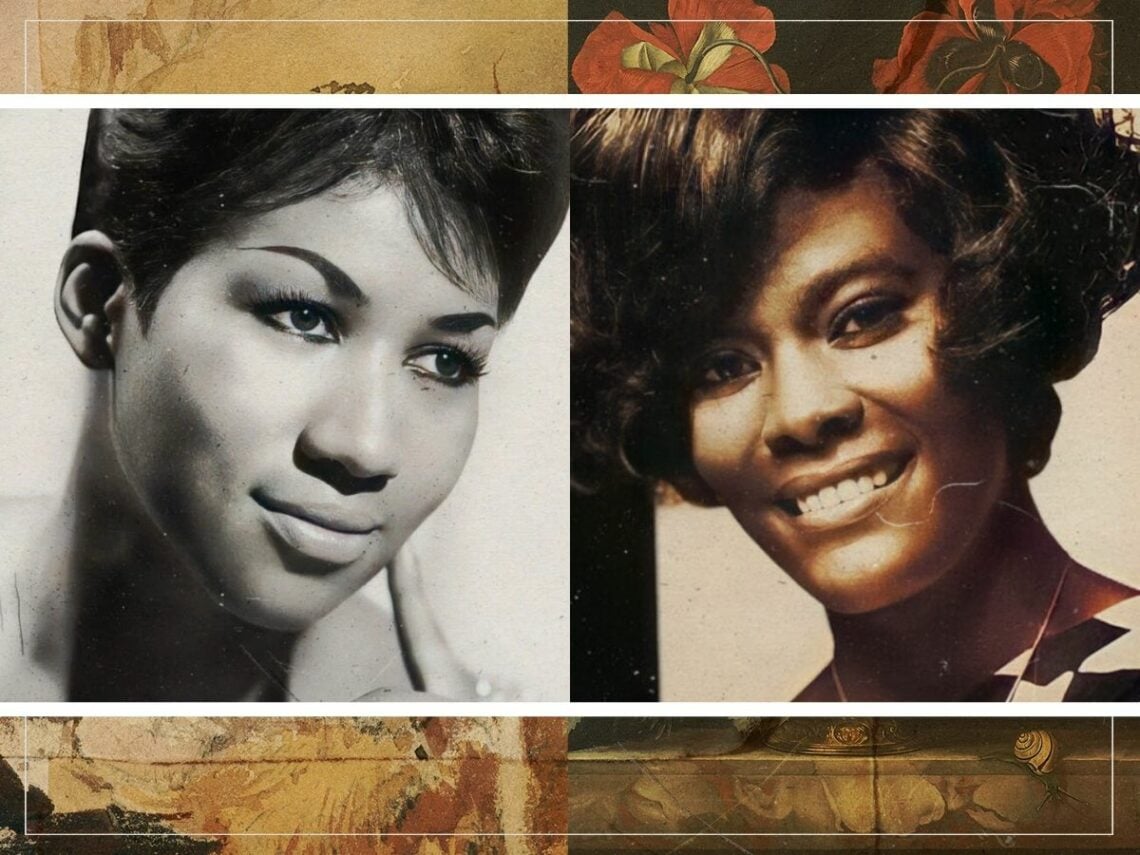
The strange bitter feud between Aretha Franklin and Dionne Warwick

In the 1960s, Aretha Franklin and Dionne Warwick emerged as two respective powerhouses. The development of soul, R&B, and pop wouldn’t have been the same without each of their contributions, including how Franklin drew from the anguish of anti-prejudice movements and the way Warwick adopted a certain crossover appeal that made diverse audiences unite.
Their differences are what made them both powerful—instead of pitting two black female musicians against one another, the industry embraced their distinctive offerings as they guided the industry forward into a more equitable space. While Franklin was firmly rooted in soul and gospel, Warwick gravitated more towards pop audiences with her focus on intricate arrangements and storytelling.
However, like many prominent artists who rose to fame around the same time, Franklin and Warwick were not immune to a bit of rivalry. During the ’60s, Franklin covered Warwick’s hit ‘I Say a Little Prayer’, but rather than simply paying homage to her fellow contemporaries, this move seemed like a strategic play to assert her dominance on the charts.
To make things even more intriguing, Franklin’s version featured backing vocals by Warwick’s aunt, and it also received a glowing endorsement from Burt Bacharach, the very songwriter who had helped launch Warwick’s career. In the following years, Franklin and Warwick shared a mutual mentor in Clive Davis, who had signed the pair to the same label. However, at this time, another threat that would introduce embittered, red hues to Franklin’s world is Whitney Houston.
To understand Franklin’s ongoing sourness towards her female counterparts, it’s perhaps best analysed through her sister’s words, who explained in 2014 that “her fantasy is to eliminate the competition.” Therefore, instead of celebrating those working towards the same end goal, it’s widely assumed that Franklin grew angry at anyone who came along and seemed a threat to her career.
When Houston entered the scene, she was much younger than Franklin, with an exceptional vocal range that excited everybody at the label. Davis threw everything behind her debut album, which likely upset Franklin. And, after all of this, the icing on top of the cake was that Whitney was also Warwick’s cousin. Even after Davis set up a timeless duet with the two, Franklin’s feuding would prove to be far from over.
Decades later, at Houston’s funeral, Warwick ignited old flames by uttering the infamous line: “[Franklin’s] not here, but she is here. She loves Whitney as if she was born to her. She is her godmother.” This, to Franklin, was a direct jab because she responded with, “She blatantly lied on me . . . fully well knowing what she was doing.” She then added, “We’ve never been friends, and I don’t think that Dionne has ever liked me.”
However, according to those close to the two, the feud has always been one-sided, with Franklin leading the charge when creating a hostile atmosphere. However, it also feels necessary to add an element of understanding to why Franklin might have felt so threatened by her peers—here was a woman who, against all odds, managed to be given a shot, and anything that came along could be viewed as a threat to the opportunities she had been given a taste of.
In this sense, given her own position as a black woman making her way in a brutal industry, feeling insecurity is likely to rear its head in one way or another. However, whatever the real story is, one thing is clear: the positive change they incited and the excellence of their music far outweighed any rivalry between them.
